Description
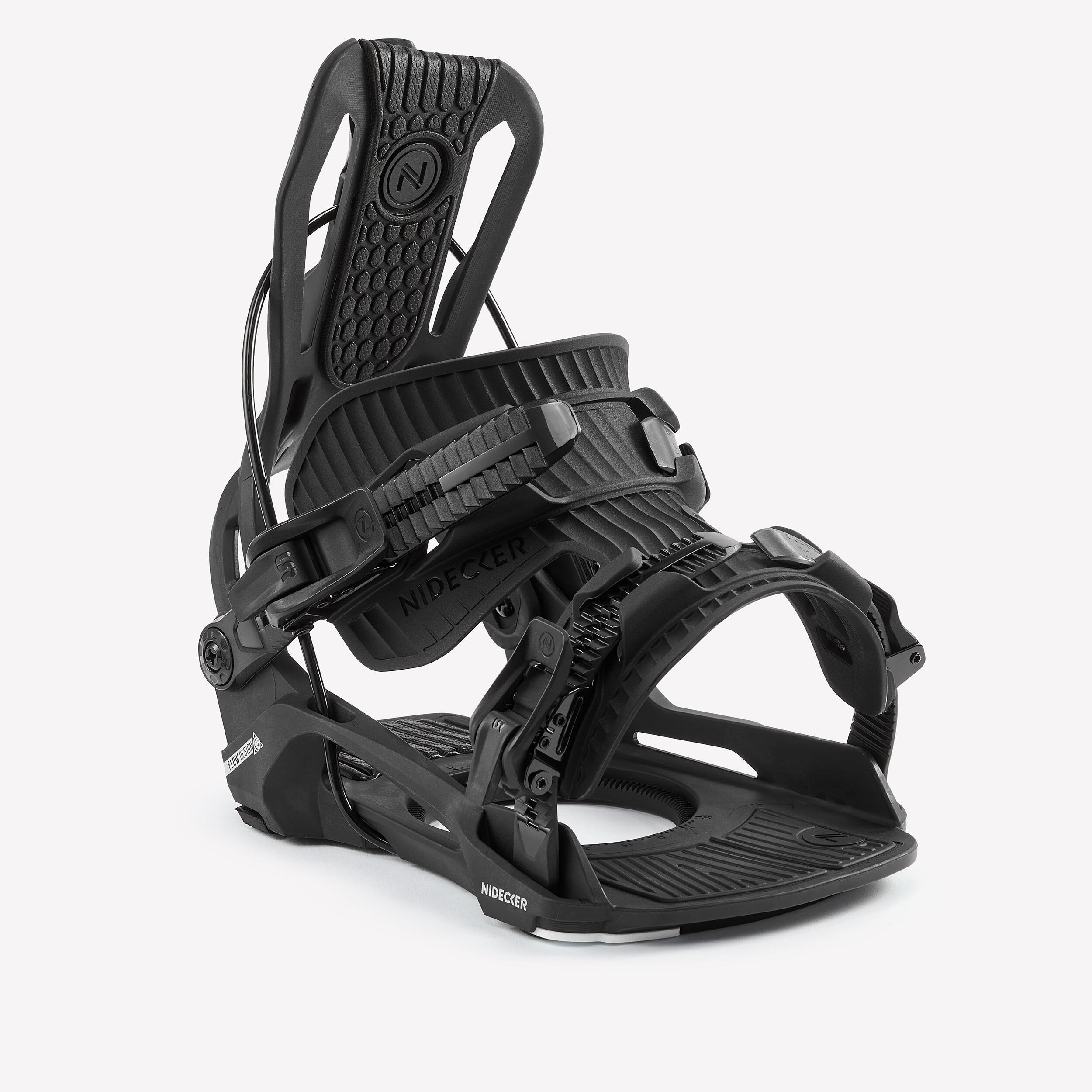
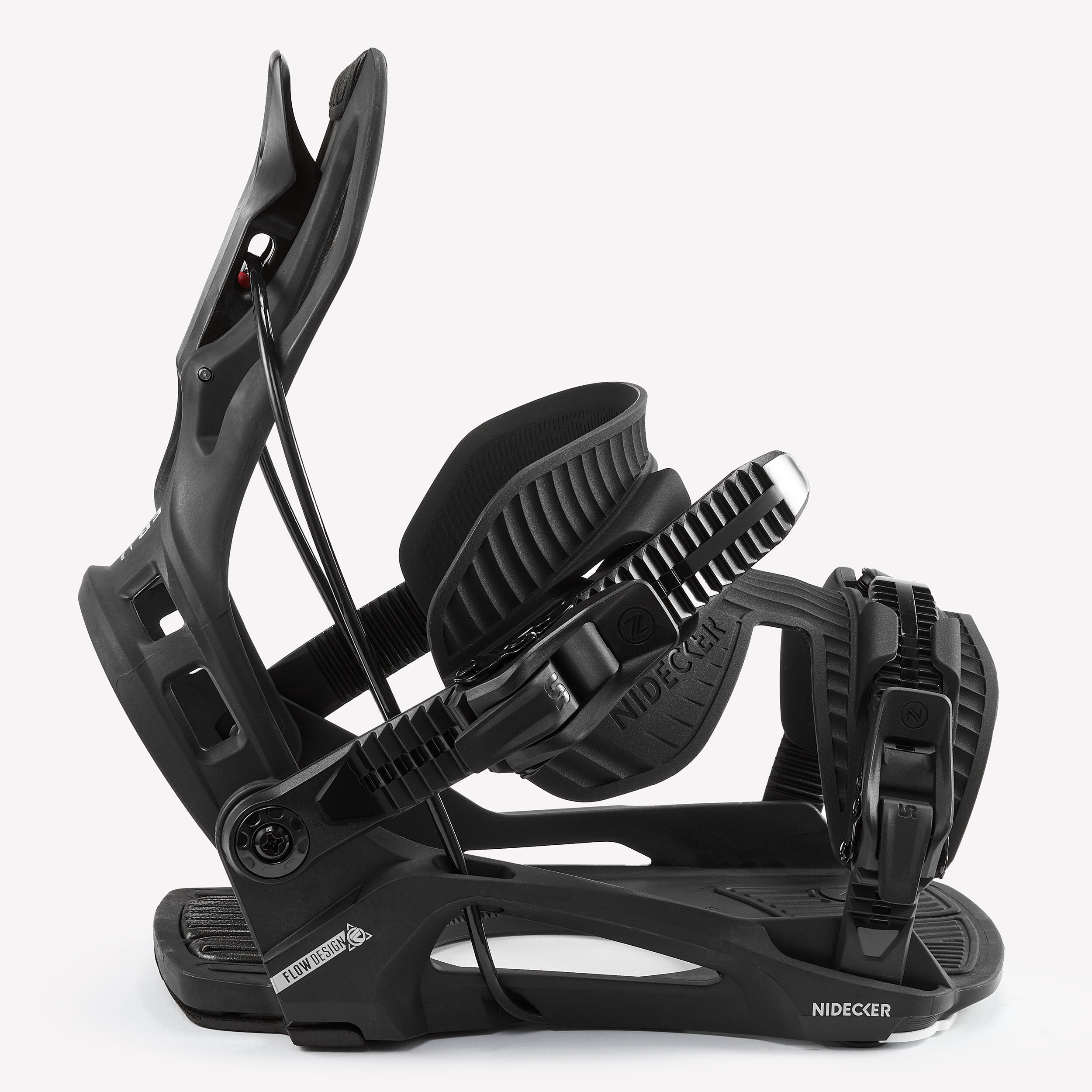
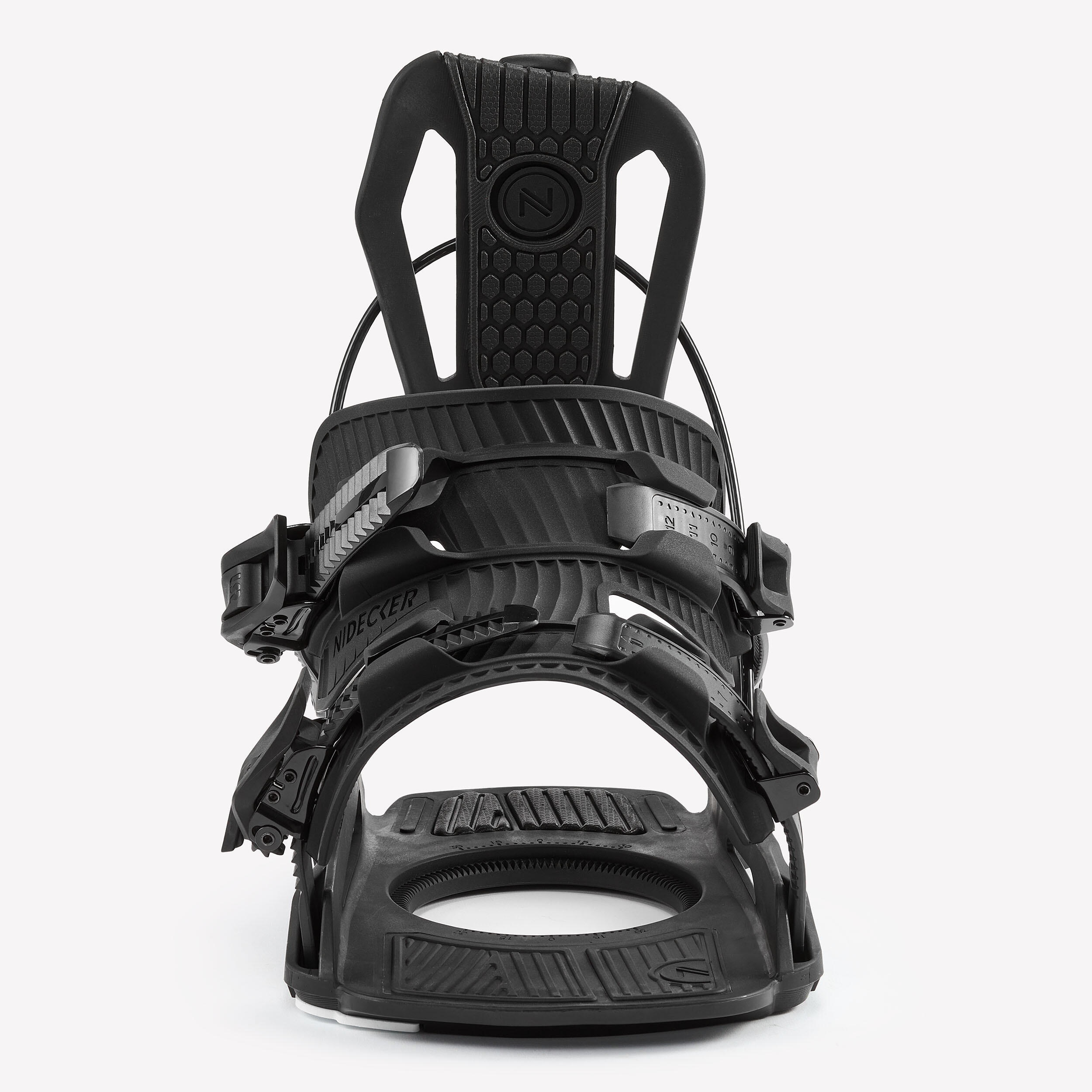
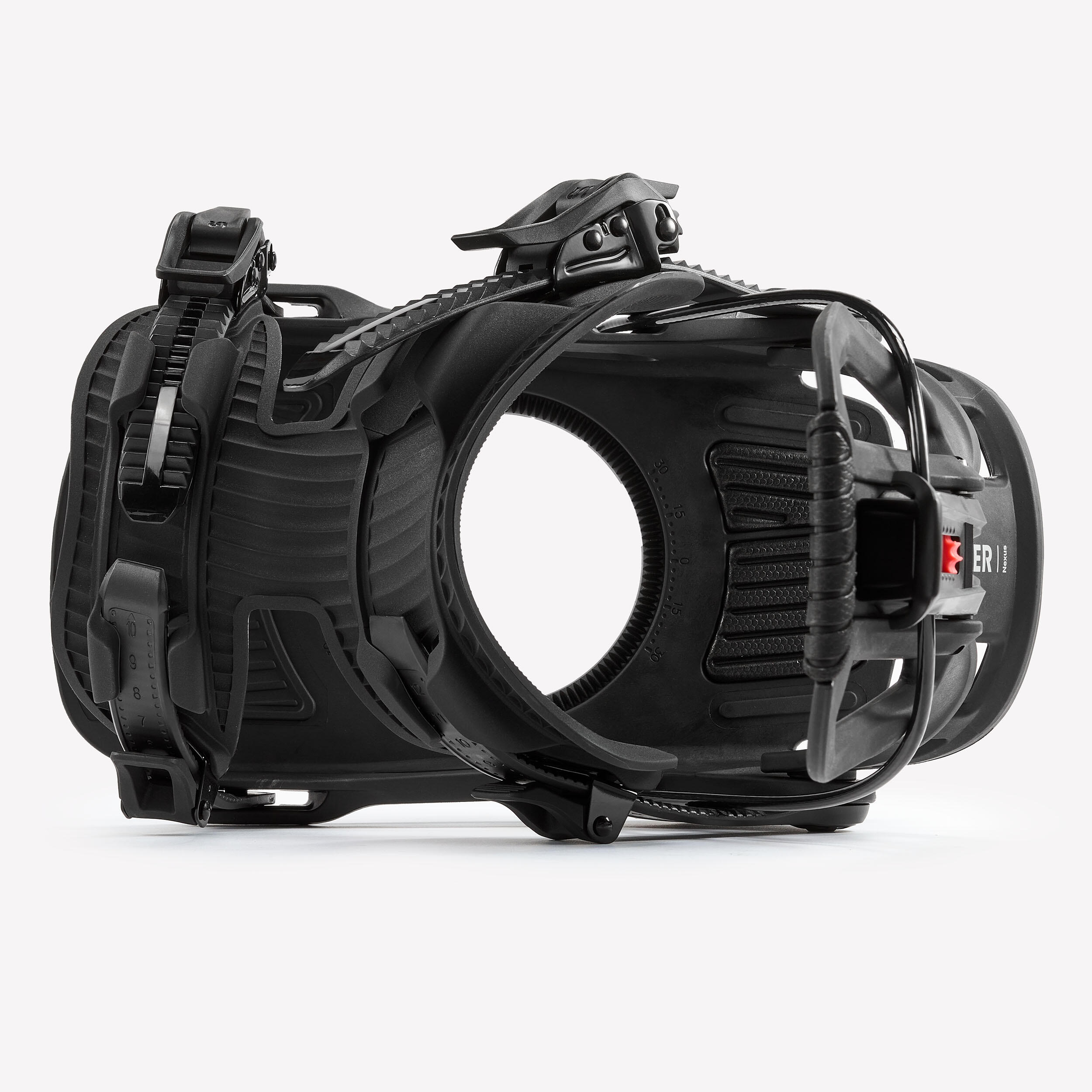
Featuring the most supple FLEX in our Flow Design range, the Nexus is the perfect choice for beginner and intermediate riders who want to spend more time riding and less time strapping in. The one-piece strap design works in conjunction with the tilting highback to get you ready in a matter of seconds. Whether you’re hitting the slopes or the park, that relaxed thrill gives you the confidence you need to push your riding to the limit without ever feeling nervous
Base
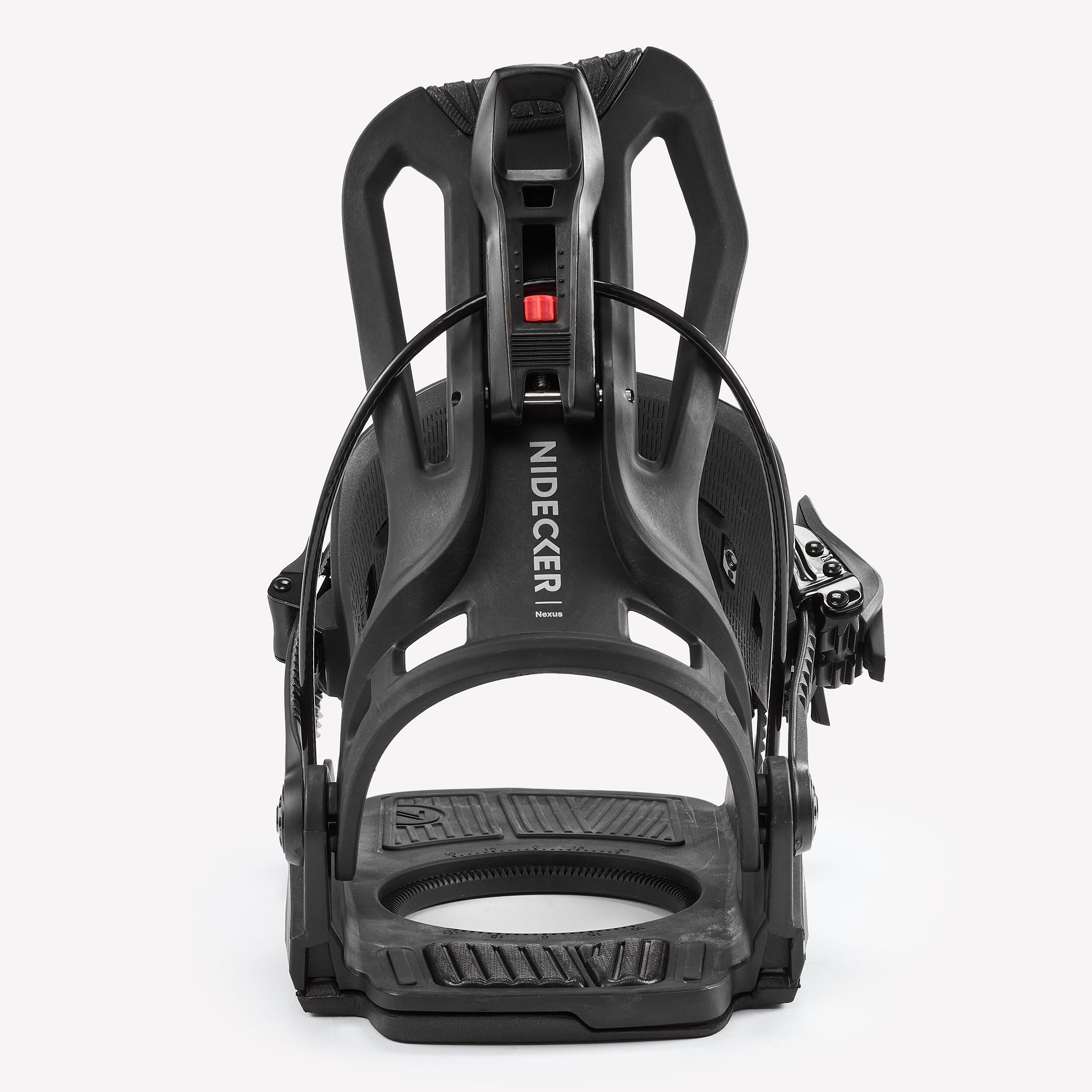
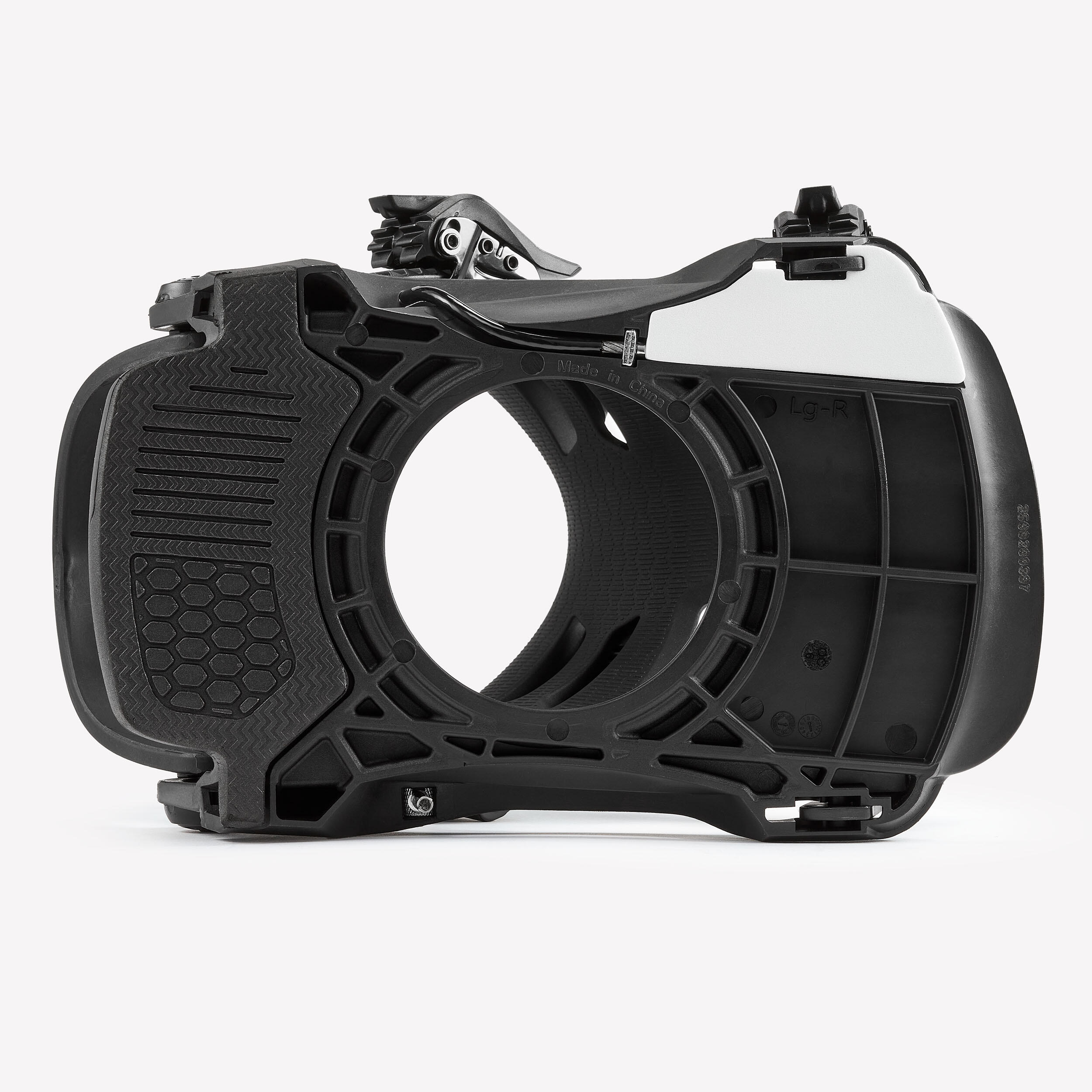
The Axis chassis combines a fibreglass-reinforced nylon construction with a wider platform for greater stability and easy entry. The asymmetrical PowerBeams and offset cables maximise response, whilst the angled corners enhance the board’s natural flex. 30% fibreglass / 70% nylon
UNIBACK spoiler
The Uniback Nylon+ Axis combines a backbone that offers good support with a forgiving lateral flex, blending all-mountain power with freestyle freedom. Its asymmetrical shape moulds to the contours of your boot for a smooth backside response. 30% fibreglass / 70% nylon
Comfort-Fit Fusion Strap
A strap with traditional stitching and a supple foam core. Its all-in-one Fusion design makes it easier to step into Flow Design bindings and covers a larger area of the boot to optimise power transfer.
LSR buckles
Our original LSR buckle lets you slip in and out of your bindings however you like. Press the release lever to lock in the desired strap tension between runs (for quick-fit use) or tighten it each time as you would with a standard two-strap system.
Stance, binding spacings
The stance is the distance between the 2 bindings in cm. It can be adapted according to your body shape but be aware that all snowboards have a recommended stance for bindings (shown by a mark between the binding inserts). If you want to position your feet further apart or closer together on the board, do the test to see if you are best placed.
How do I change my stance on the board?
For piste / off-piste boards:
If you want to tighten the feet then it’s best to move the binding forwards only.
On the other hand, If you want to move the feet apart then it’s best to move the binding backwards. The aim is to be a little further back to take the bends better on piste and to float on the powder snow.
For freestyle boards (symmetrical):
It is best to move the 2 bindings to remain centred on the board.
At what angle should I put my snowboard bindings?
For a freeride run, we recommend +18° at the front and 0° at the rear. For a versatile freestyle run, try +18° et -6°. The rear foot opening lets you change when riding switch. For pure freestyle runs, choose completely symmetrical angles such as +15° et -15° for example.
Angle choice on bindings is a very personal thing. Feel free to check out what others are doing and try out different options. You might be pleasantly surprised!
Don't forget to centre your boot on your board!
Disc bindings with 4 screws can slide along a single axis and generally have 5 possible settings. This setting is used to centre the boot on the snowboard and prevent the foot from protruding over the edge of the board too much (otherwise you will fall!). Make sure that your boot goes over the 2 sides of the board equally. You can also rotate the disc by 90 ° to put more or less stance than anticipated by the inserts. In this case, the bindings can’t be centred laterally.