WHAT IS
ECO-DESIGN?
Eco-design consists of incorporating a product's environmental impact into its design from the very beginning, taking into account the product's entire life cycle. Incorporating environmental impact, means minimising the impact our products have on the environment, starting with their design. A product that is designed (or redesigned) within an environmentally-conscious framework is a product that performs the same functions while also providing environmental benefits.
It's about making a positive change at every stage, from material sourcing to end-of-life.
This is how we put Eco-Design into action!
Recycled Plastic
Recycled Materials
Dope Dyed
Dope Dyed Technology
Bi-ton
Bi-ton Process
Recycled Polyester
Recycled Polyester
Sustainability
Discover our Eco-Designed Products
We are passionate about more than just sports at Decathlon. Sustainability is something that we take very seriously when looking at our business practices, stores and more importantly the many products that we sell each day. We make effective and positive changes to ensure our products are not only environmentally conscious, but long lasting and repairable too. To find out more about how our products have an environmental advantage with Eco Design, read the article below.
Shop Eco-Design Now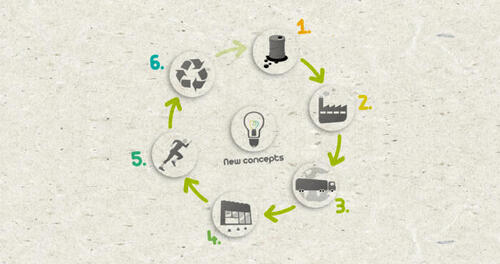
THE 6 STAGES OF THE PRODUCT LIFE CYCLE
1 - Raw Materials: Extraction and processing
2 - Production: Manufacturing techniques
3 - Transportation: From where it's made to where it's sold
4 - Retail: Place and method of sale
5 - Use: How it is used, cleaned, and maintained
6 - End of life: Repair, recycling, destruction