How to choose the right wetsuit (Part 1)
The first selection criterion when choosing a surfing wetsuit is the water temperature. Water temperature varies according to the location and the time of the year. Systematically make sure that the water temperature at your spot corresponds to the recommended temperature range:
- Water at 21°C
- Water between 17 and 22°C
- Water between 12 and 17°C
- Water between 7 and 12°C
Consult the seatemperature.org website to find out the temperature of your spot.
How to choose the right wetsuit (Part 2)
The 2nd criterion to take into account is the length of your sessions.
- If your sessions last less than an hour, the 100 models are suitable.
- Up to 2 hours: opt for the 500 models and for up to 3 hours, the 900 models. Compared to the 100 models, the 500 models will be more efficient at reducing fatigue (more freedom of movement) and irritation. The same is true for the 900 models compared with the 500 models.
NOTE: the 100 and 500 models are easier to put on.
Choose the right size
To make the most of the features of your wetsuit, it is necessary to choose the correct size. A surfing wetsuit should be a tight fit and there should be no visible folds. When dry, it is perfectly normal to feel like it is too tight, this discomfort disappears as soon as the wetsuit gets wet. If you pick a wetsuit that is too big, folds will form and may cause irritation.
Try it on before you buy it!
Materials: natural rubber
The foam component has insulating properties.
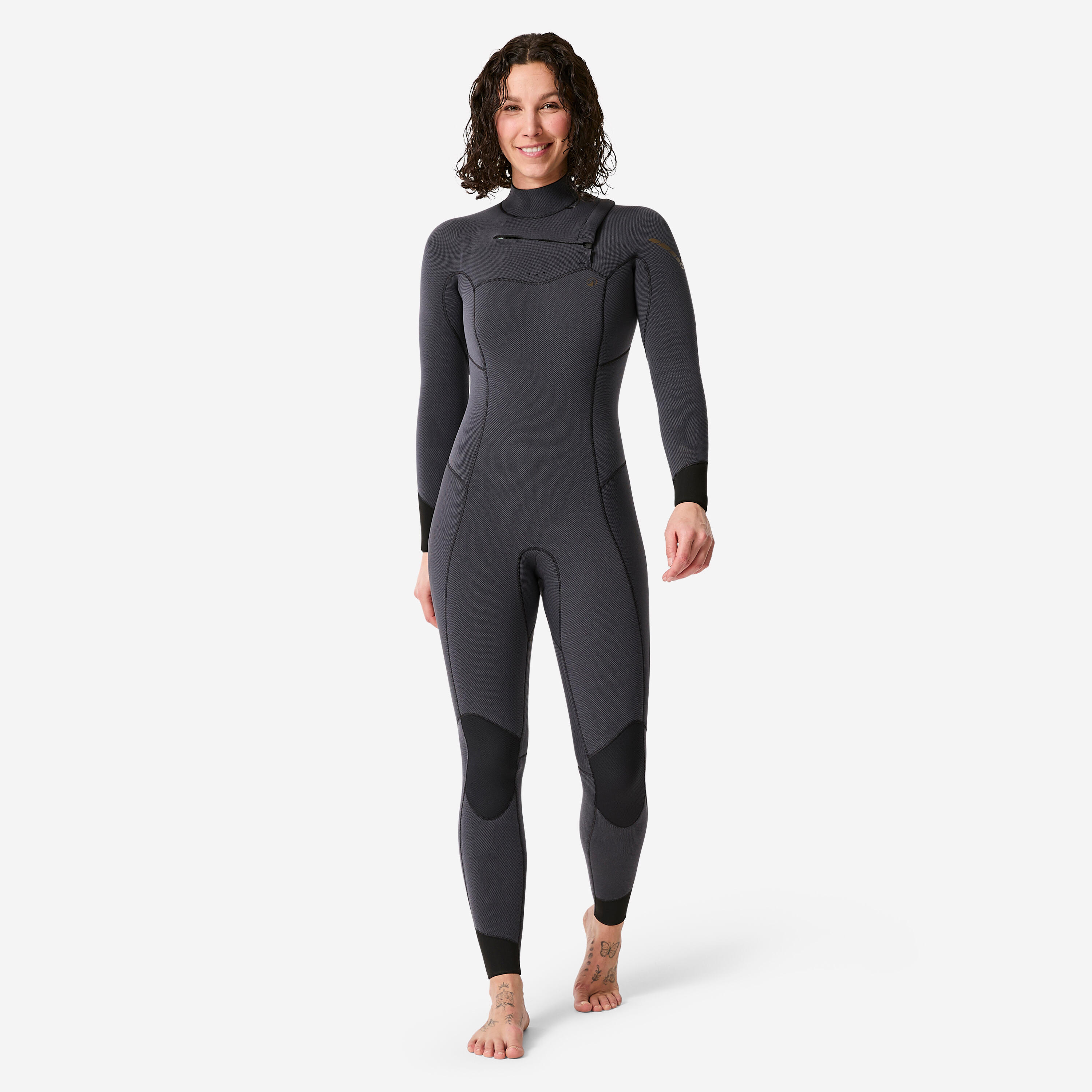
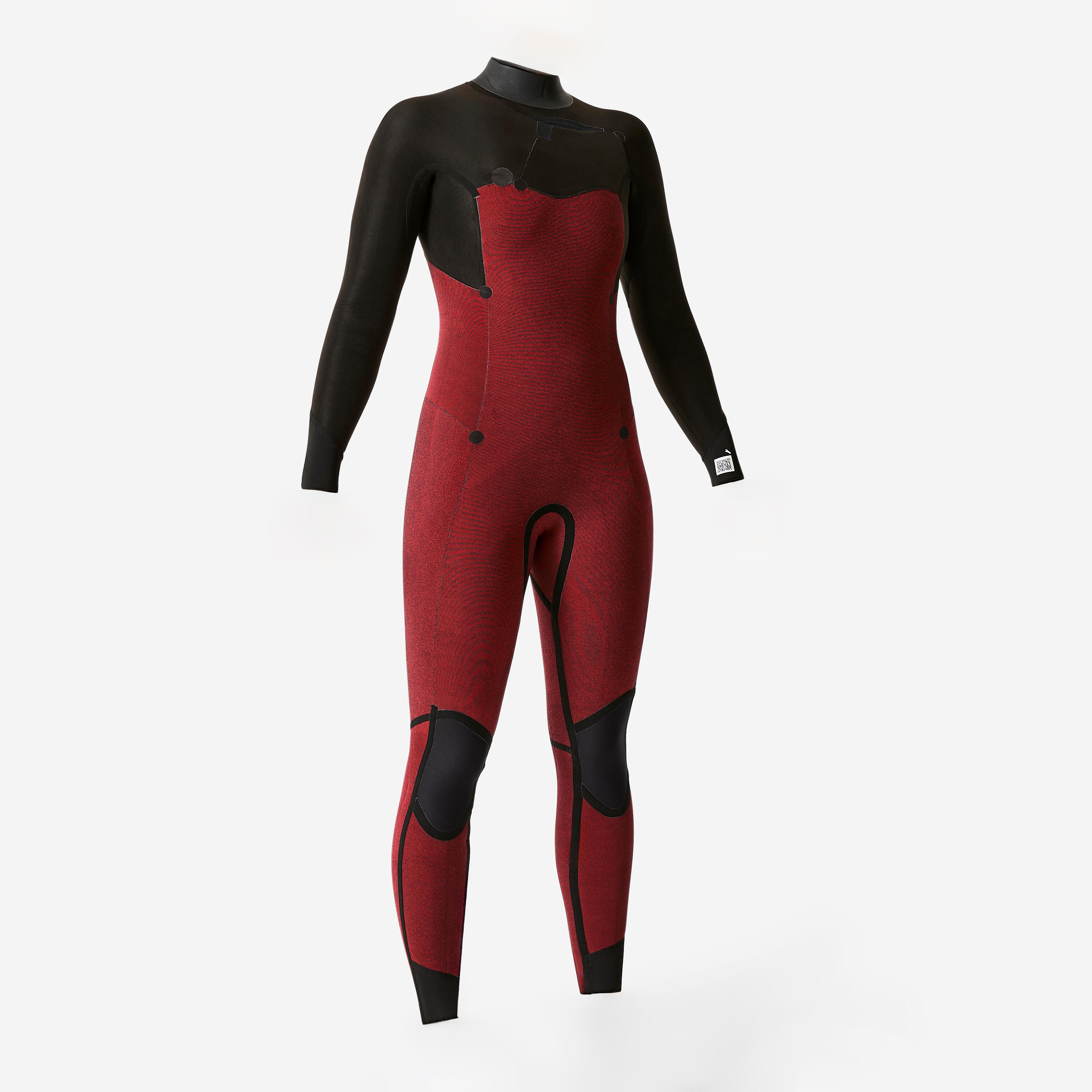
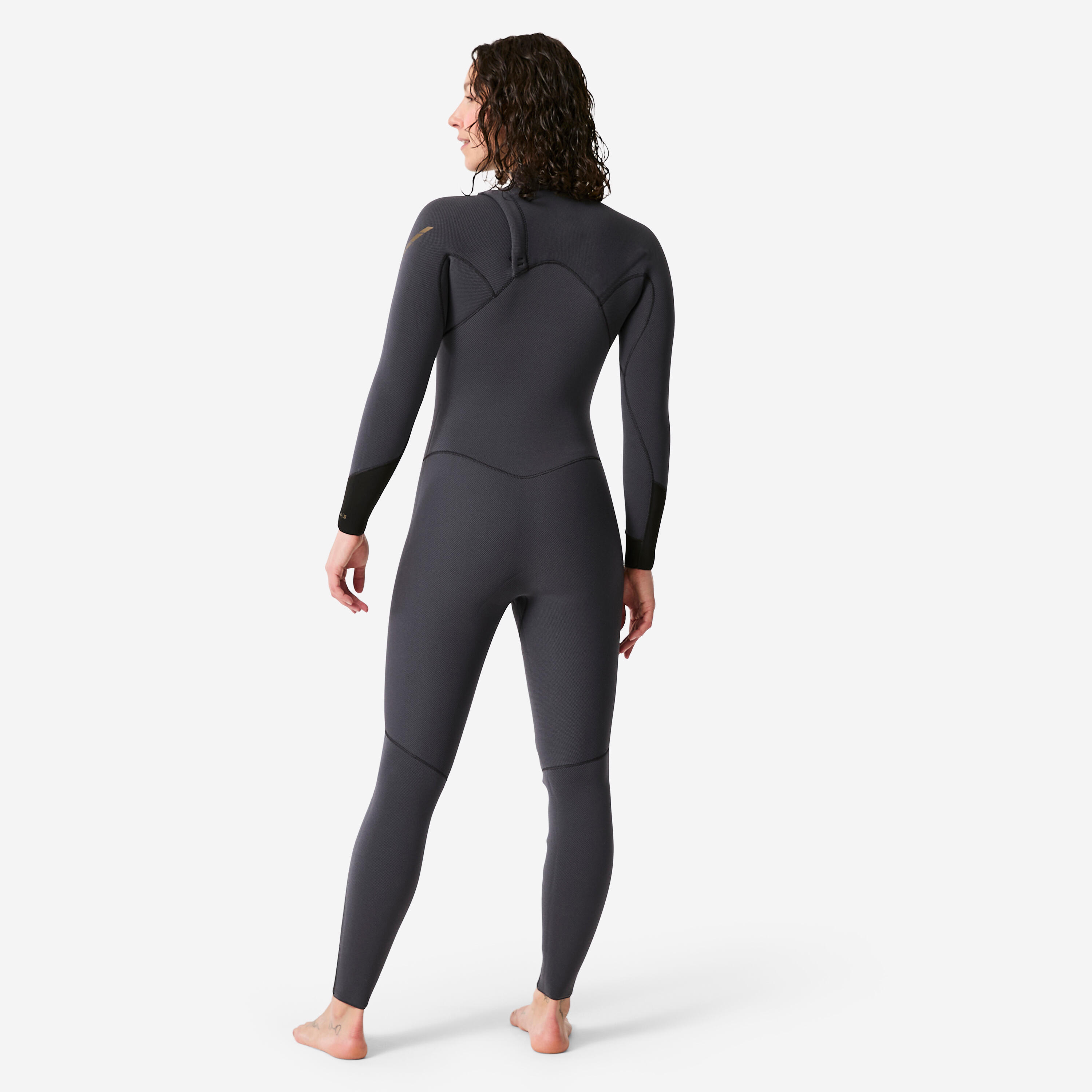
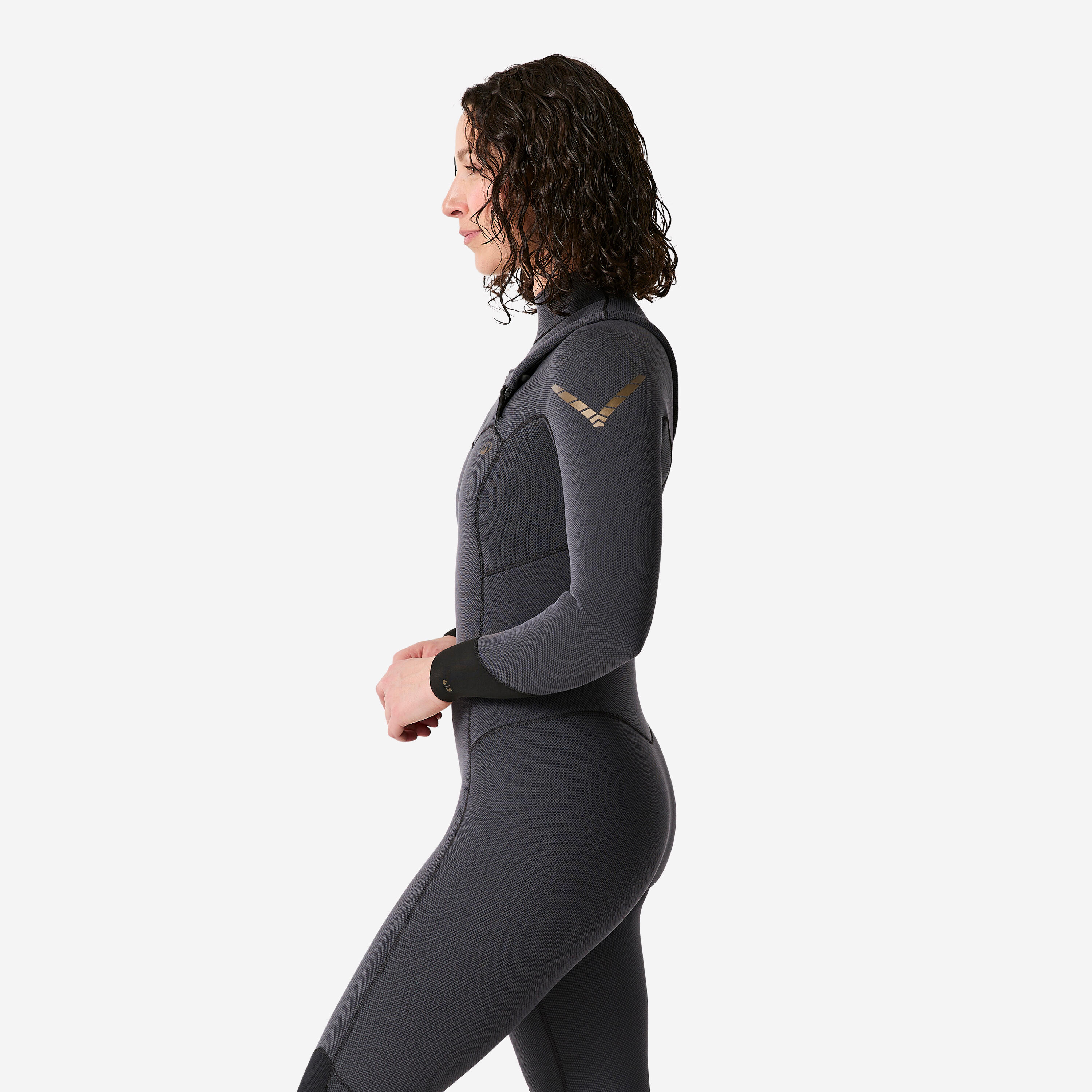
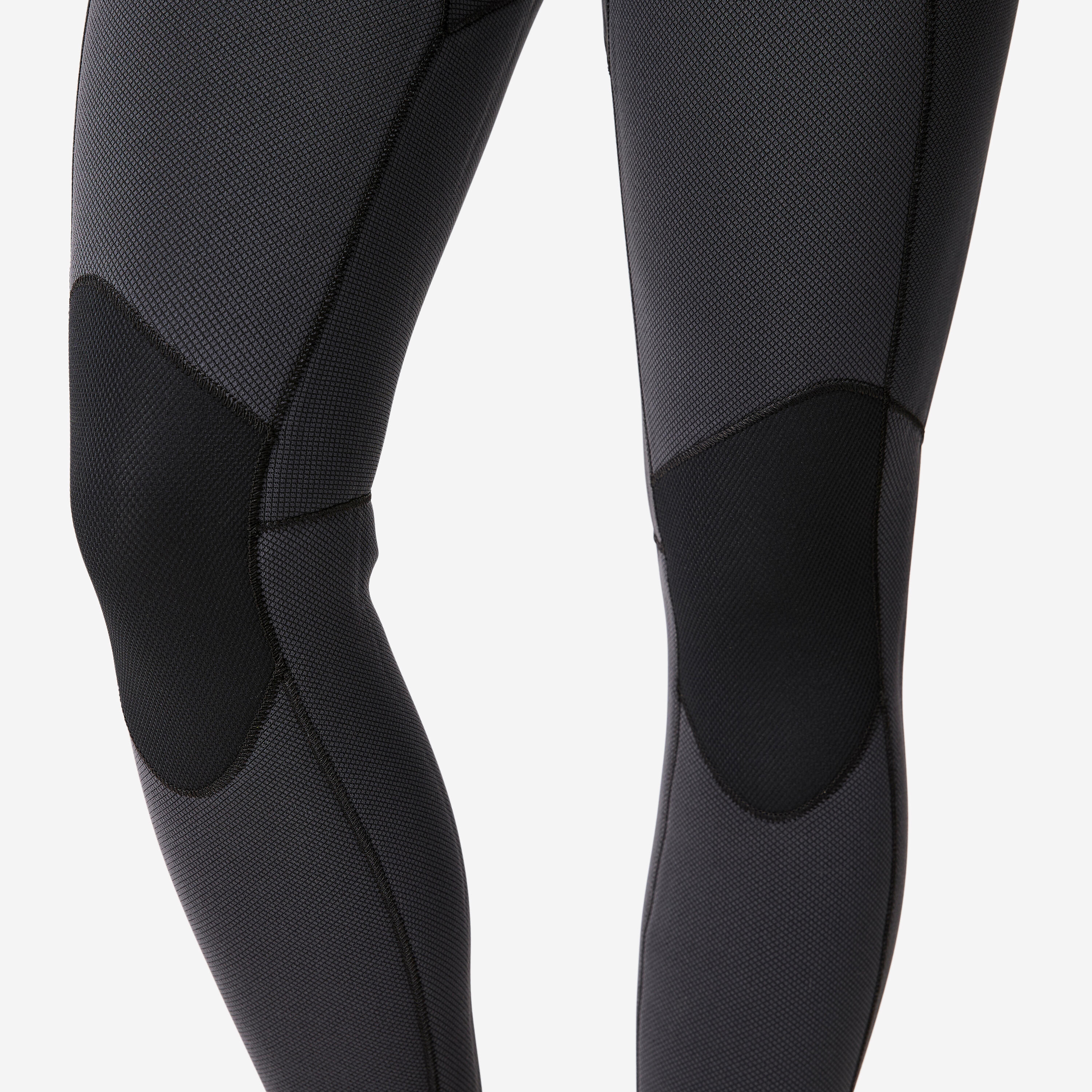
This 4/3 mm surfing wetsuit 900 is made from 85% natural rubber foam. The component is lined with synthetic textile for increased abrasion resistance and improved comfort against the skin.
4 mm foam over the back, chest and legs, and 3 mm over the arms and shoulders.
We test and guarantee the thermal quality of our materials.
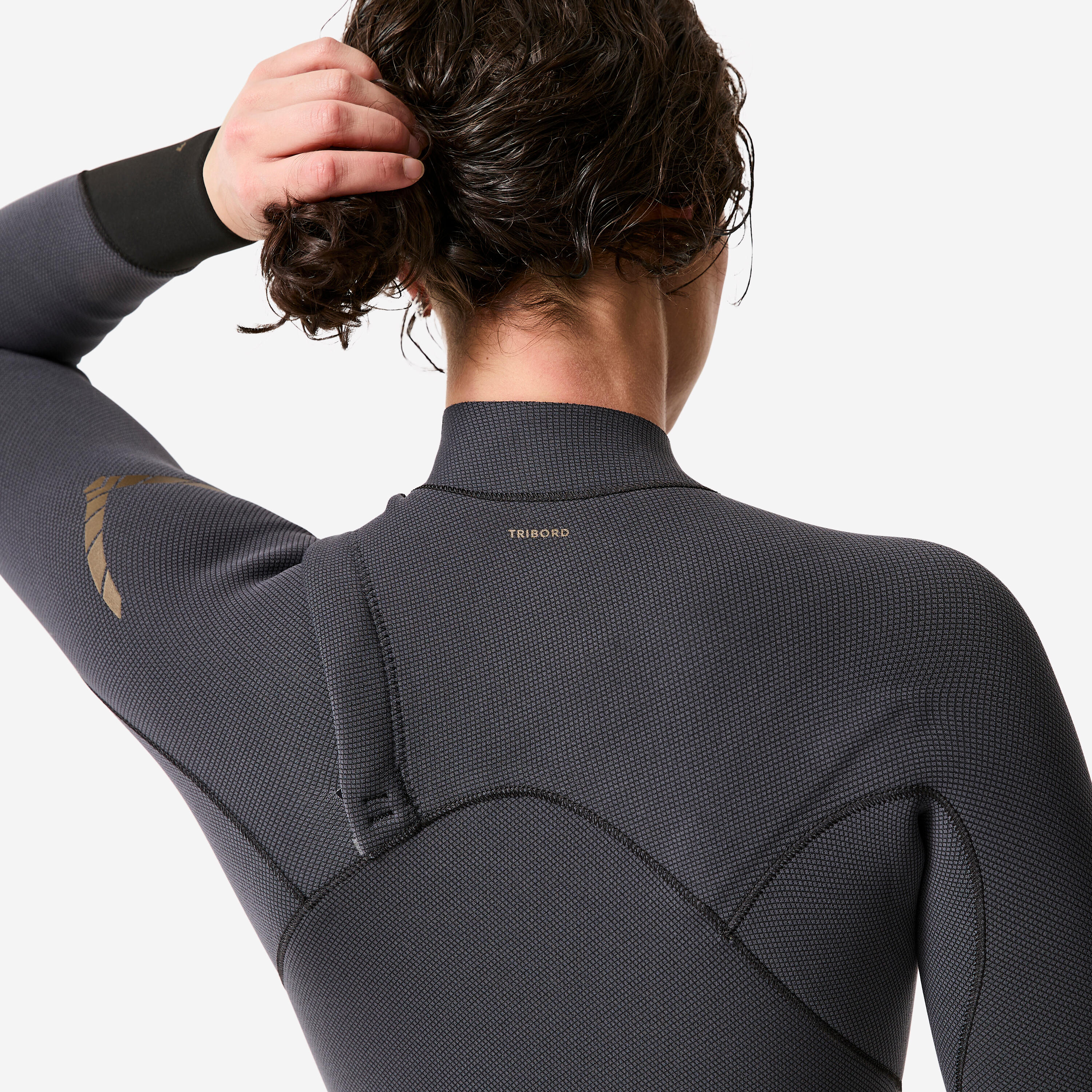
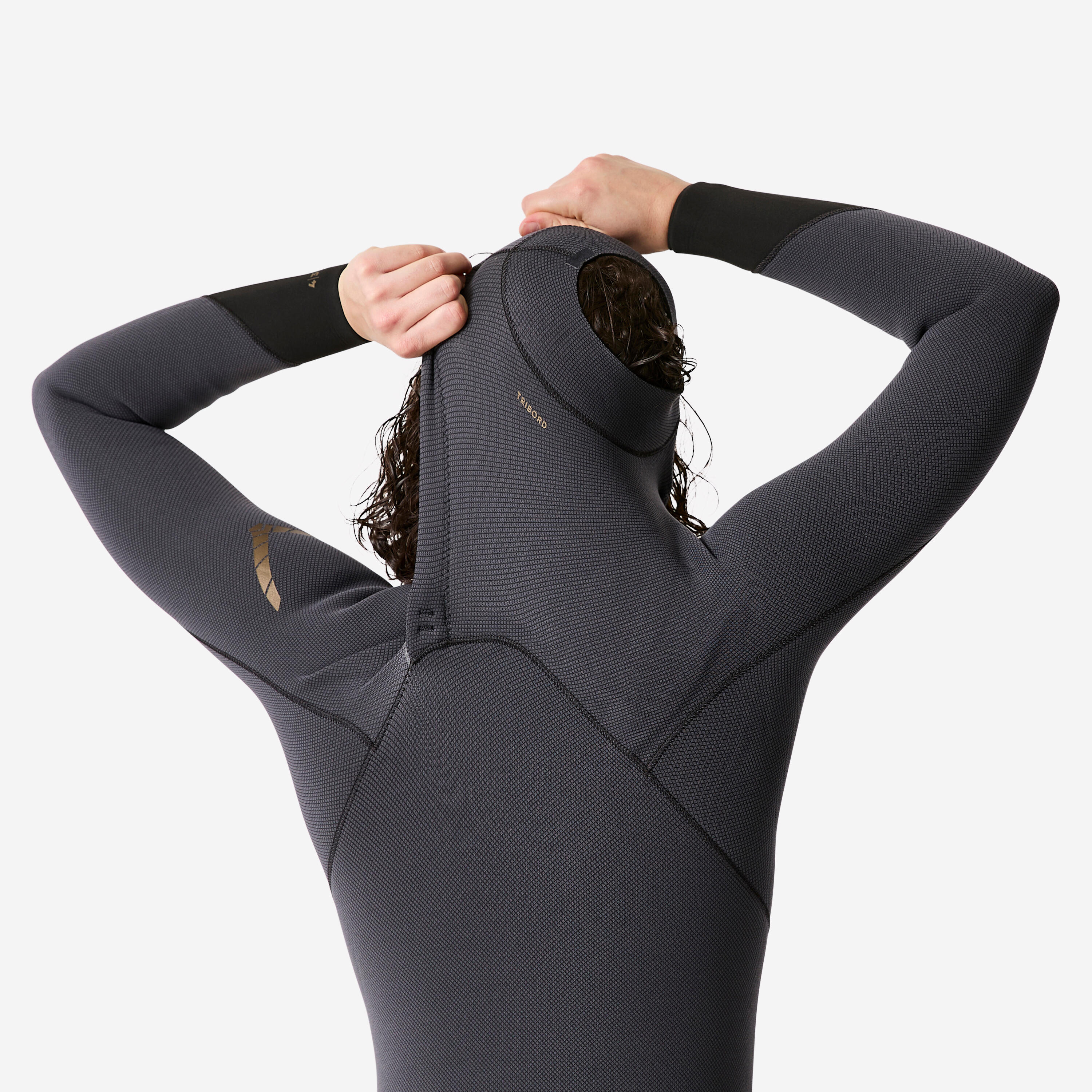
Neck
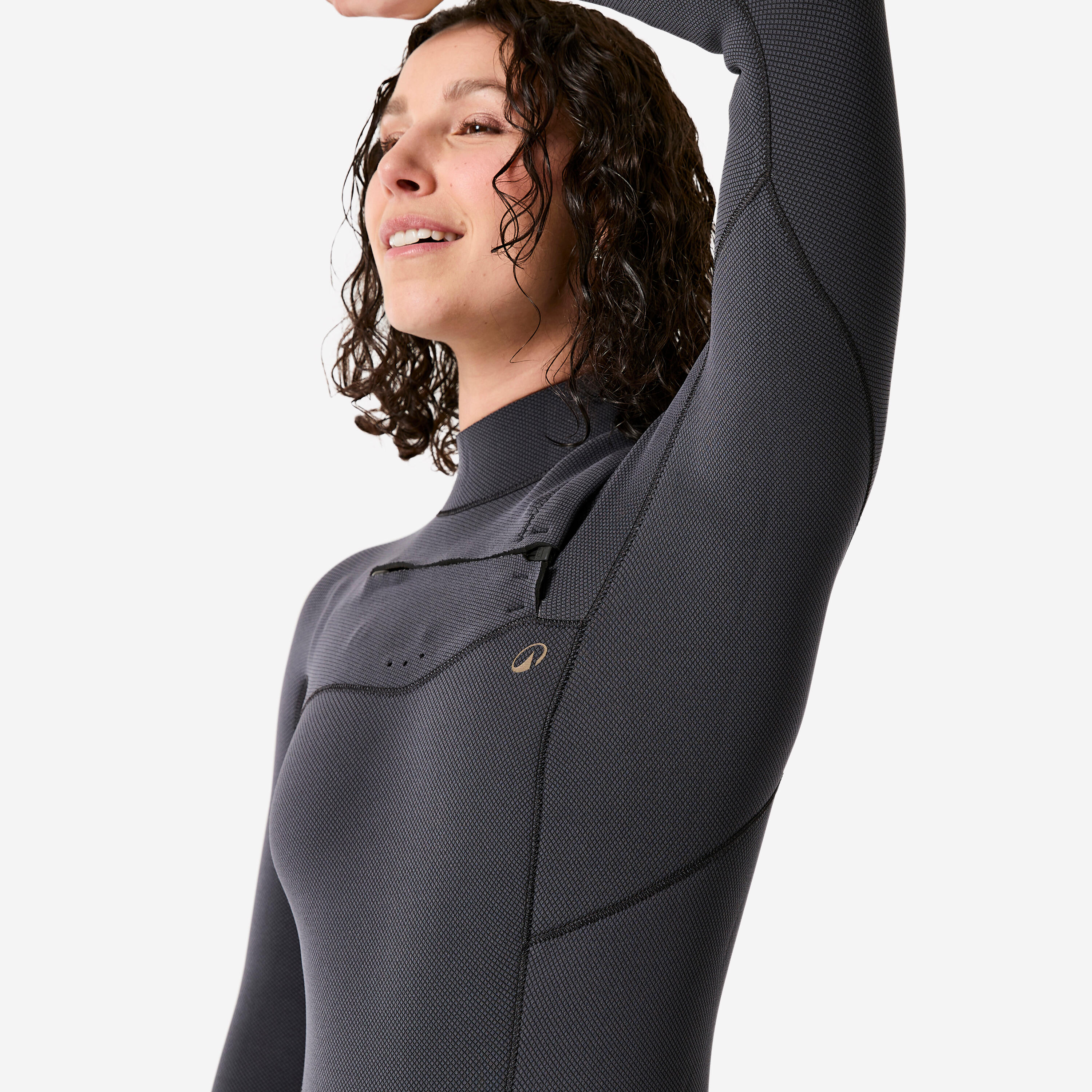
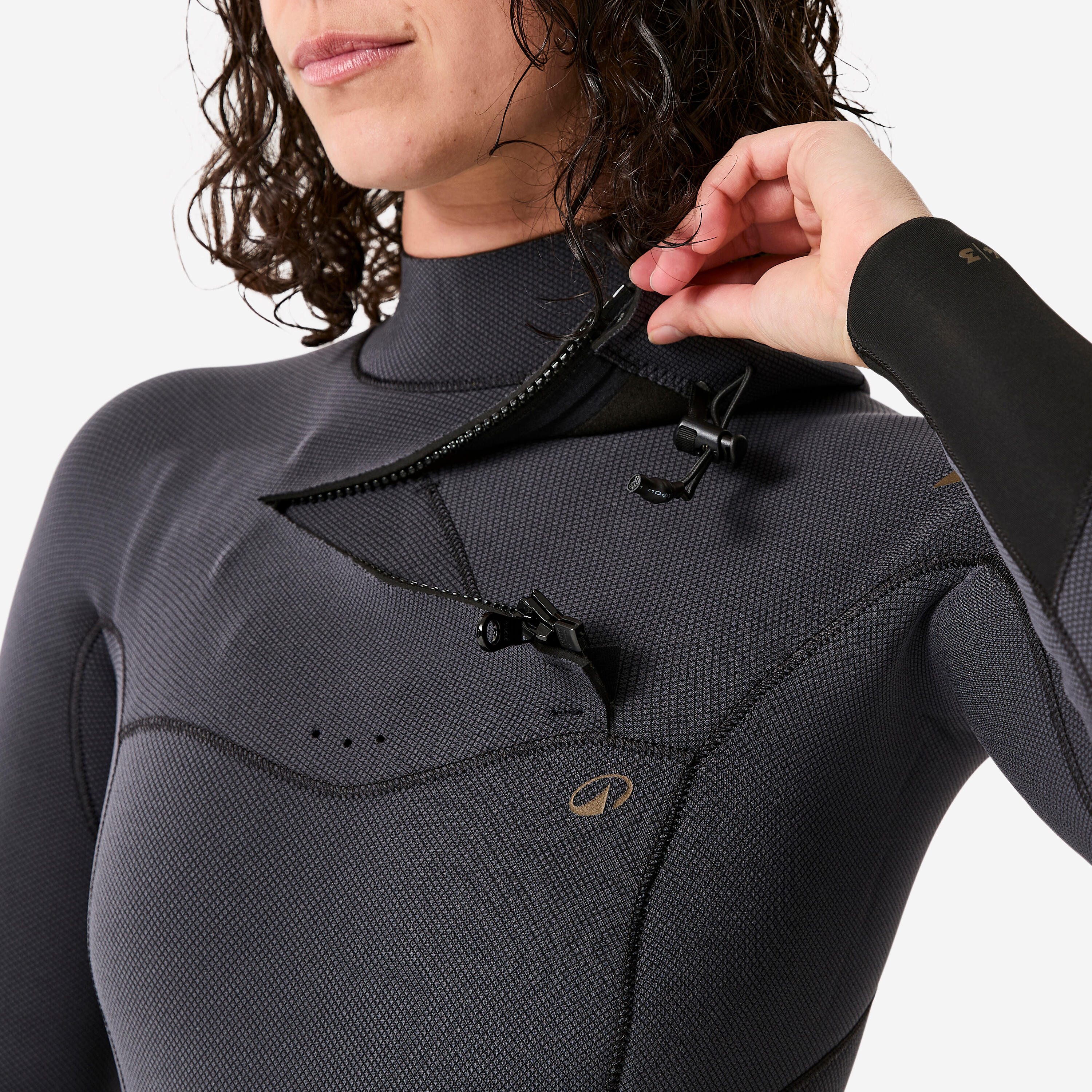
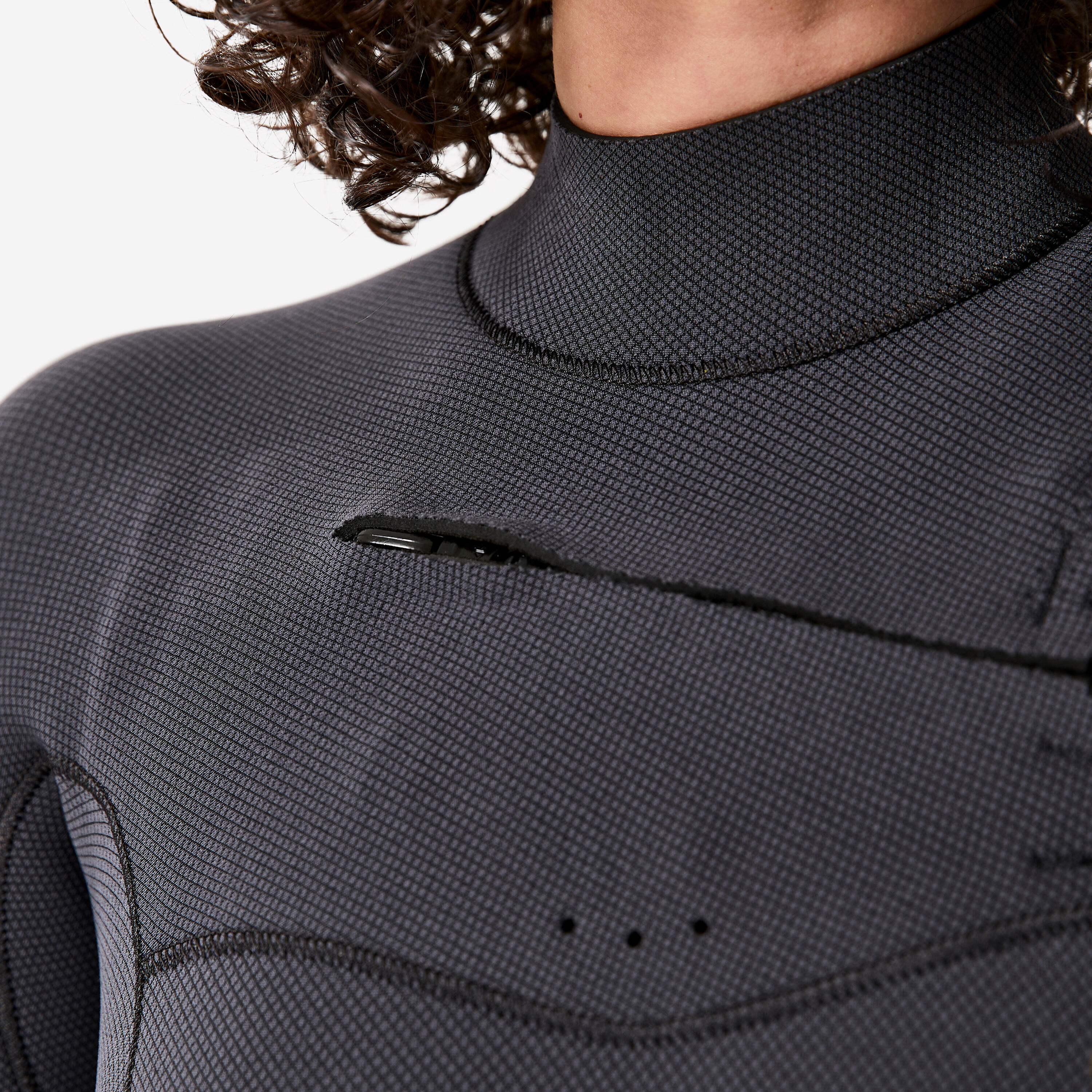
The neck finish has been developed to limit irritations. According to the sensitivity of the wearer, a UV top can be worn under the wetsuit to reduce the risk of irritation. The application of grease (e.g. Vaseline) in friction areas (neck, underarms) is also recommended if wearing the diving suit for long periods. Make sure the flap is always inside the wetsuit to limit the risk of irritation with the zip and the neck.
Closure
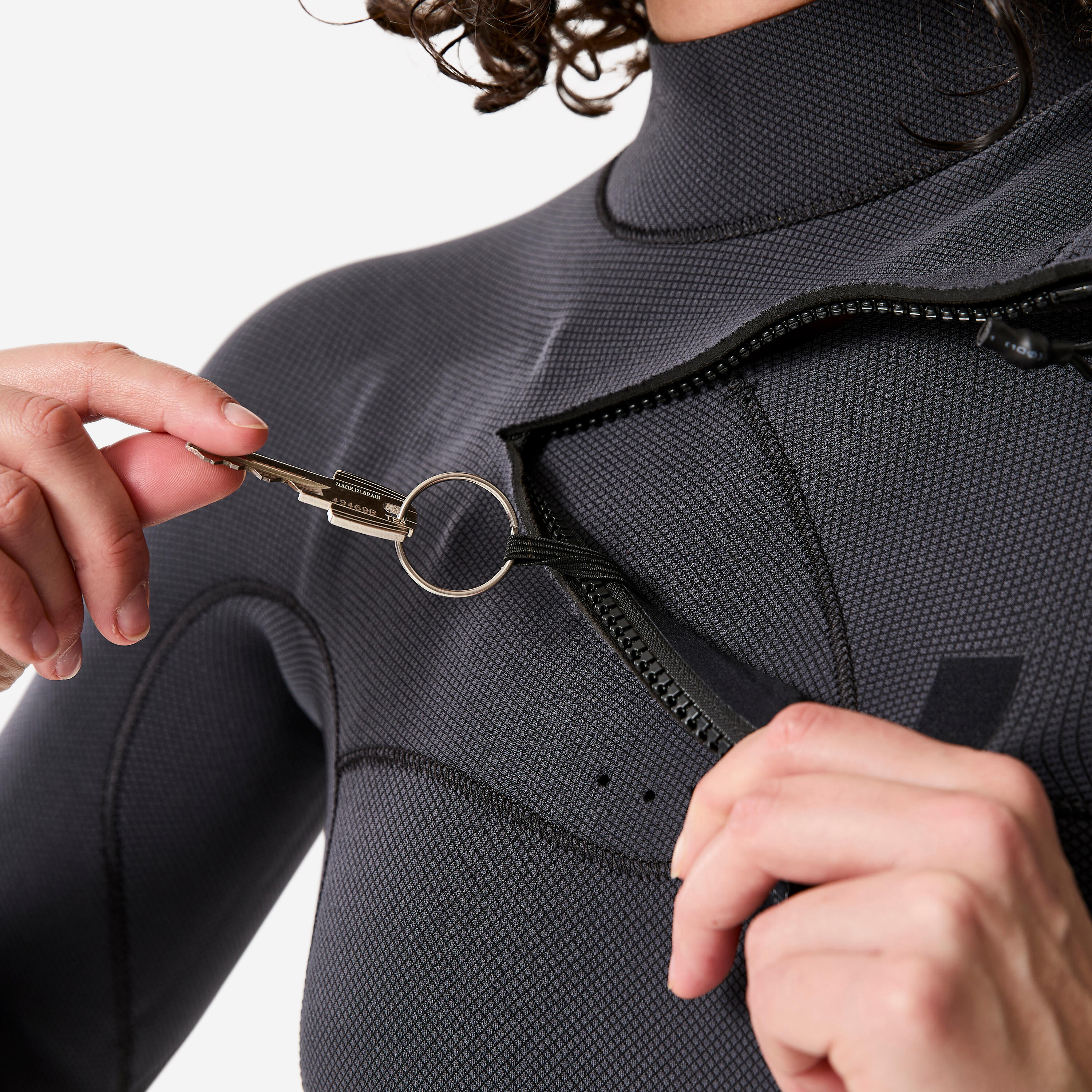
Our zips and fastenings are laboratory tested in order to ensure an optimal lifespan and good resistance to salt water. We have put the zip at the front of the wetsuit—across the chest, slightly angled—for more comfort and freedom of movement for surfing and other water sports.
Watertight assembly
The seams are glued and blind stitched (GBS) for a watertight seal. The seams are blind-stitched, which means the thread does not pass through the entire thickness of the component and so prevents water from getting through. The absence of threads on the inside avoids irritation and chafing. Taped on the inside for comfort and reinforcement in sensitive areas.
Ankle and wrist cuffs
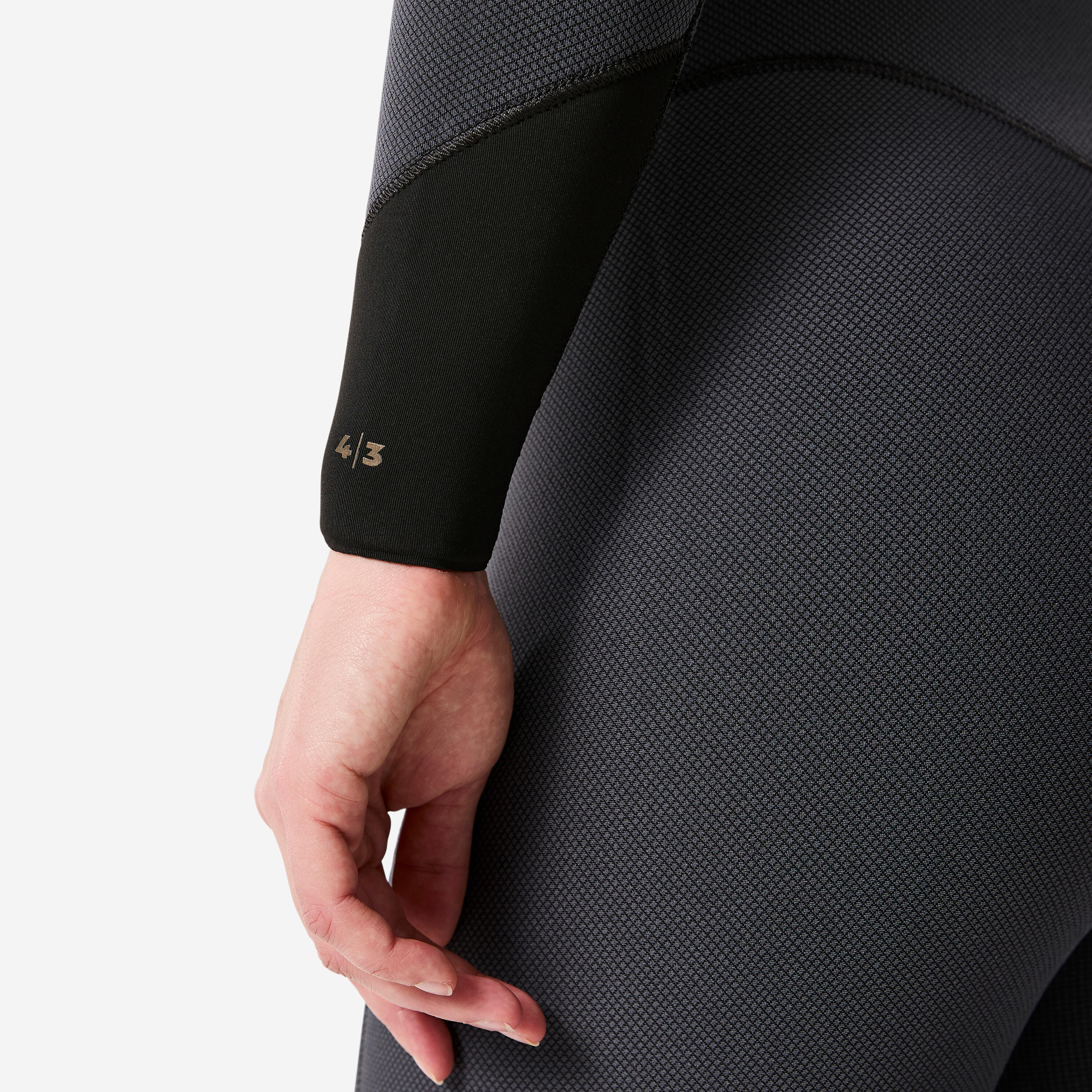
Cuffs at the ankles and wrists for a more watertight seal to minimise flushing during impacts or wipeouts.