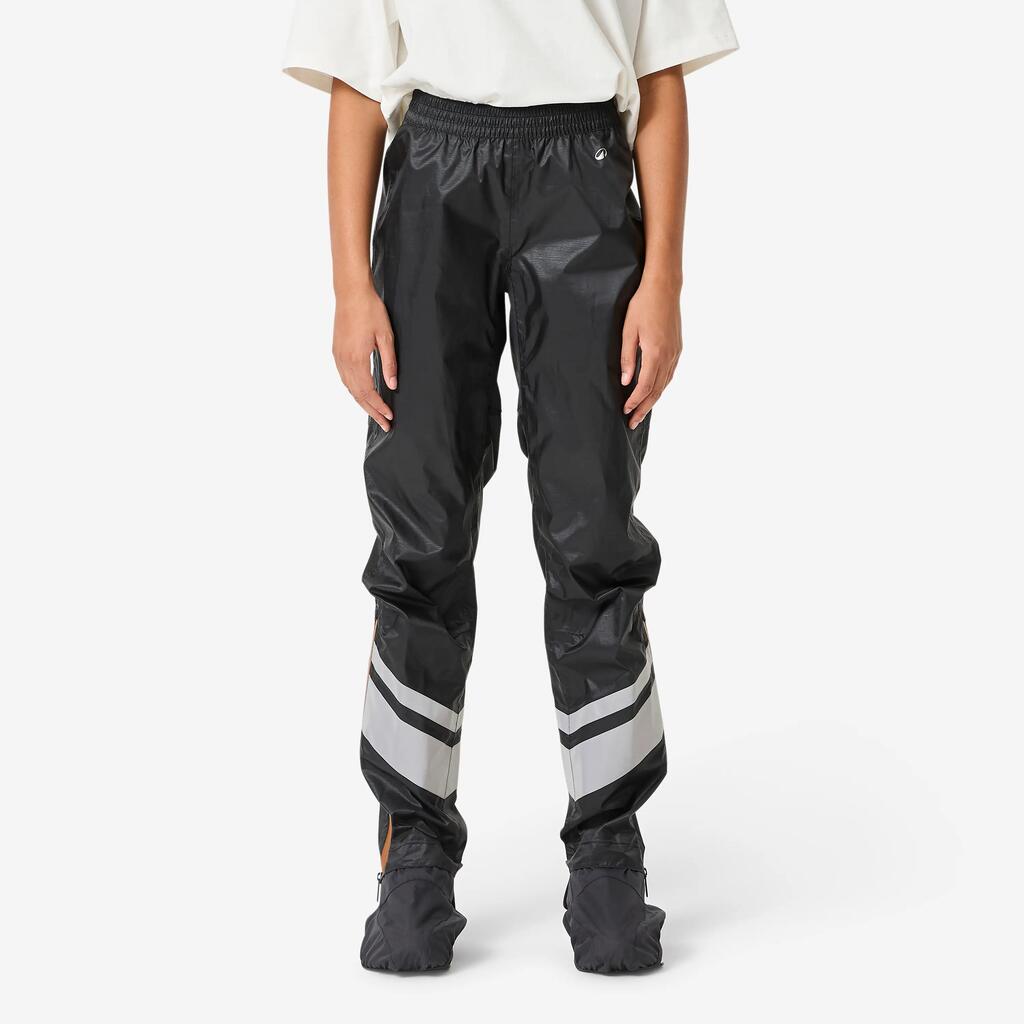
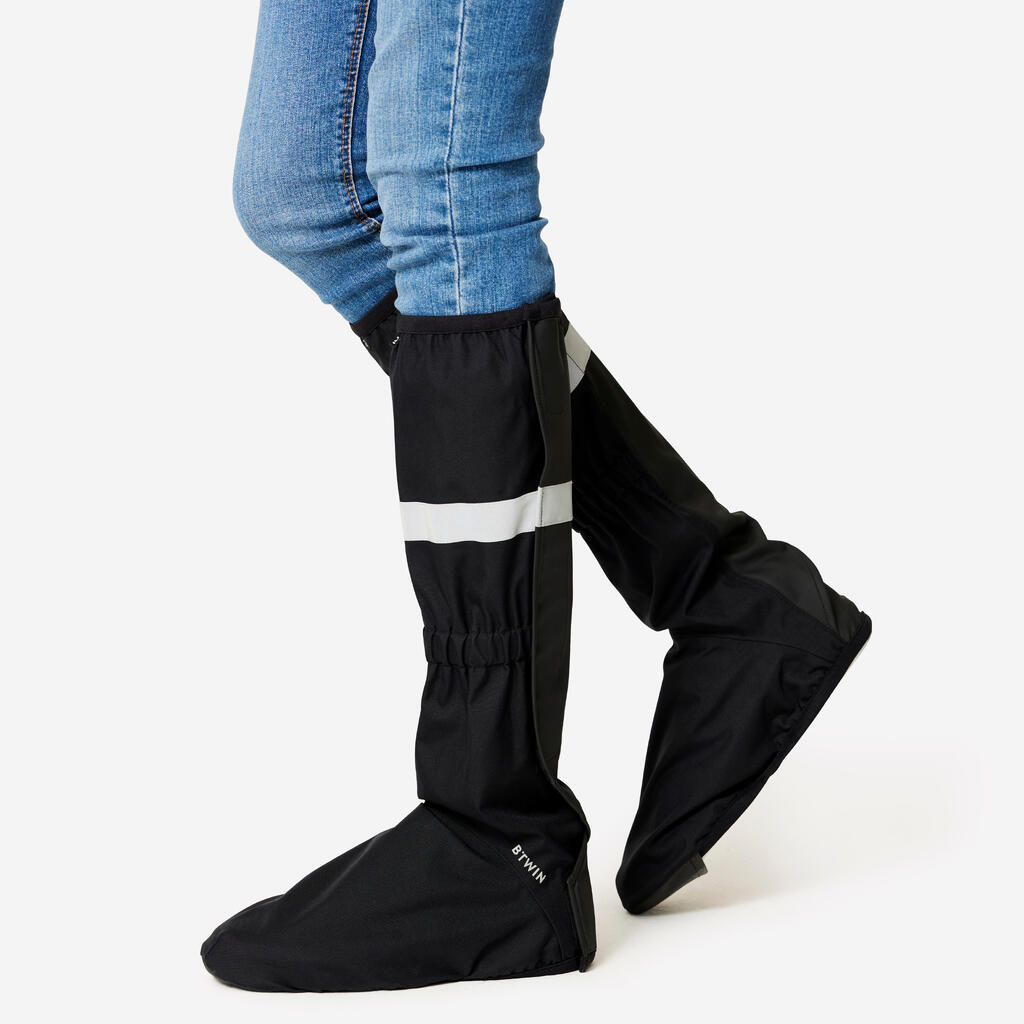
WHICH SIZE?
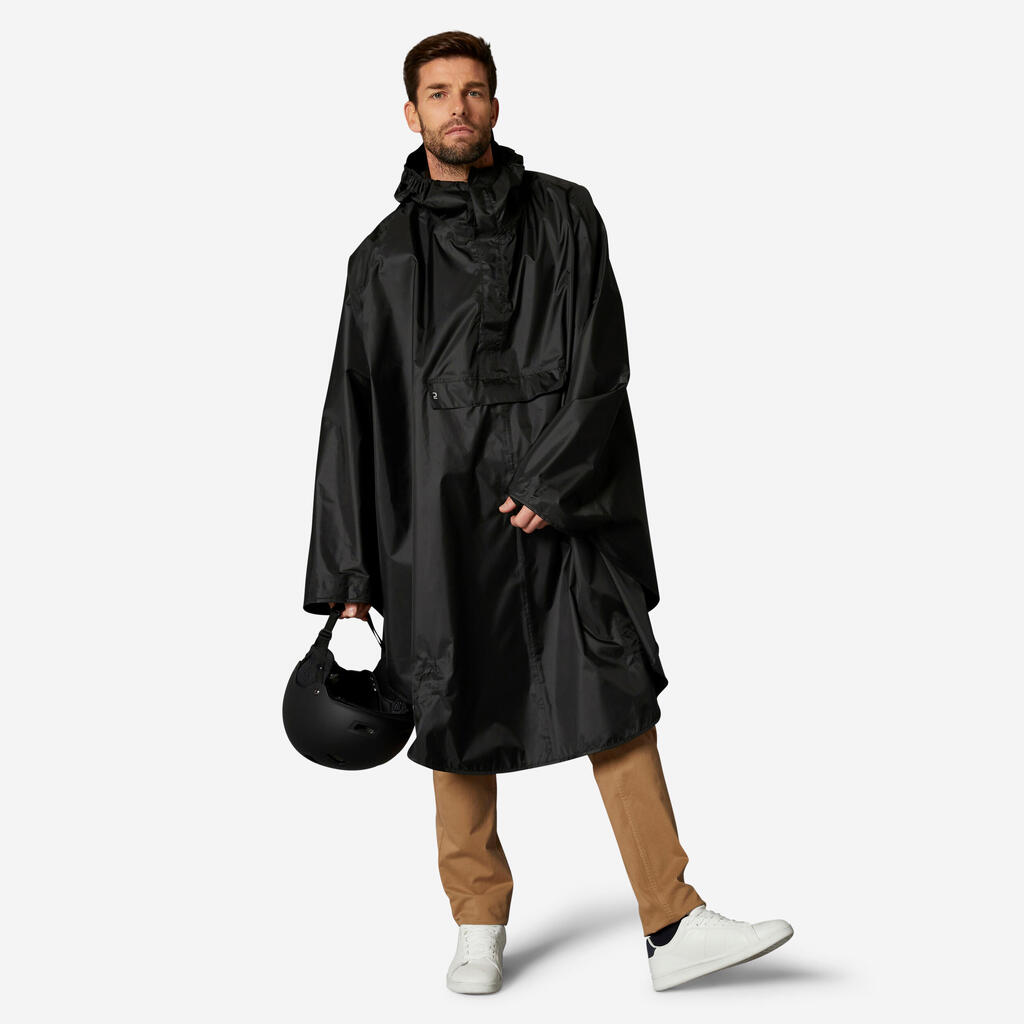
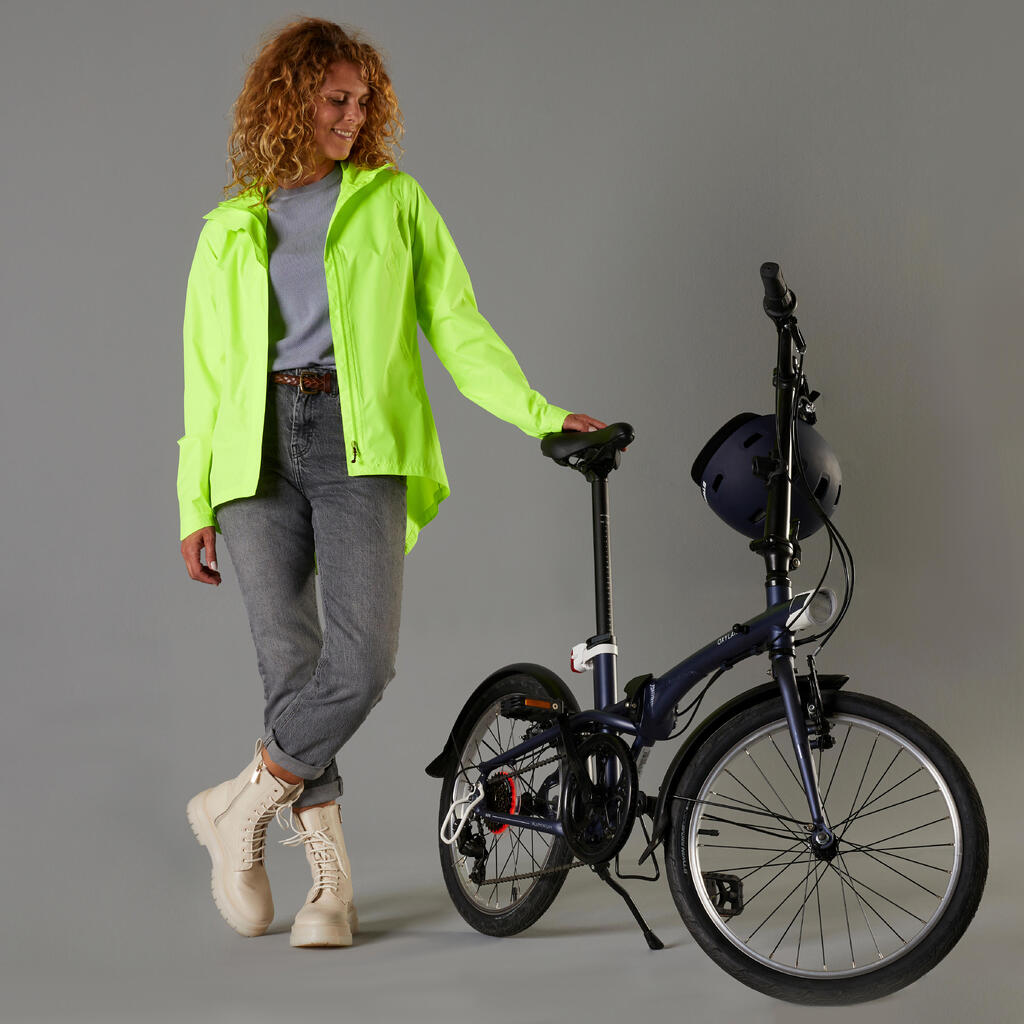
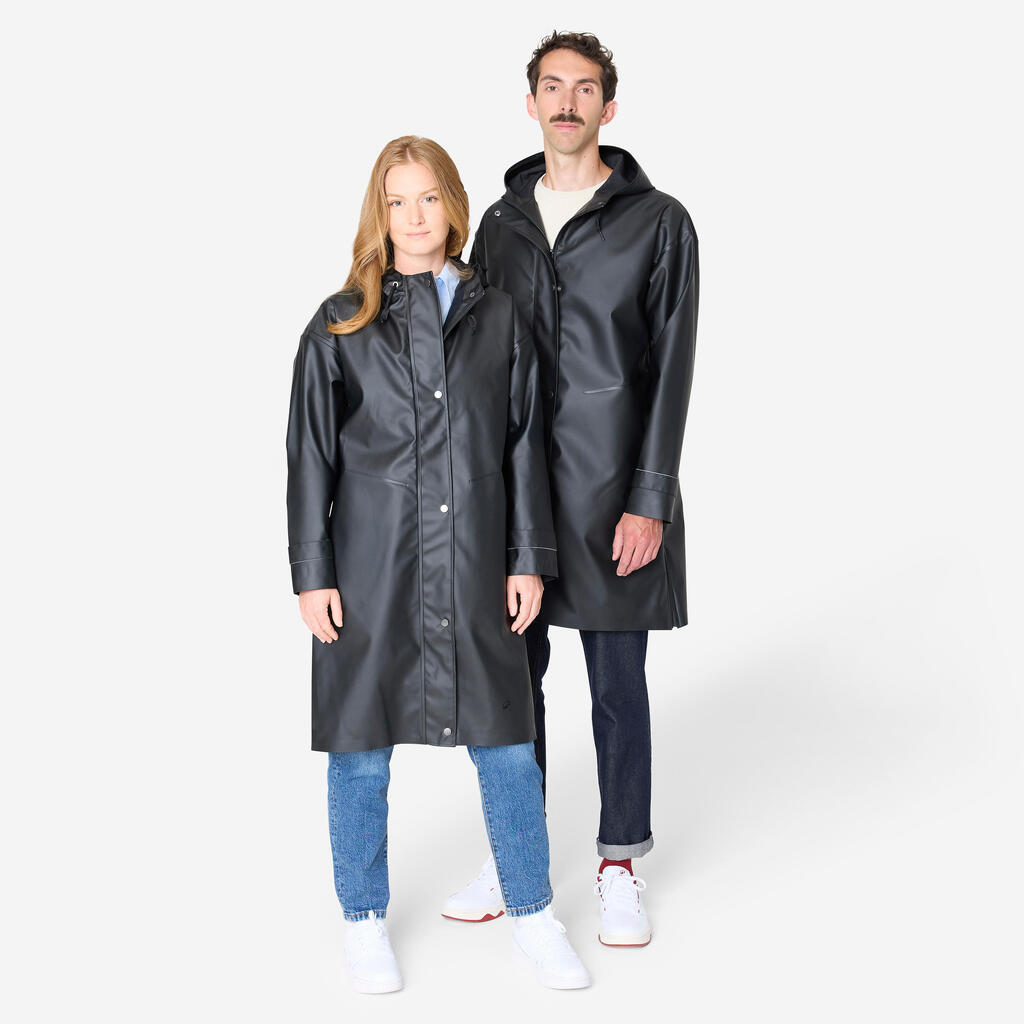
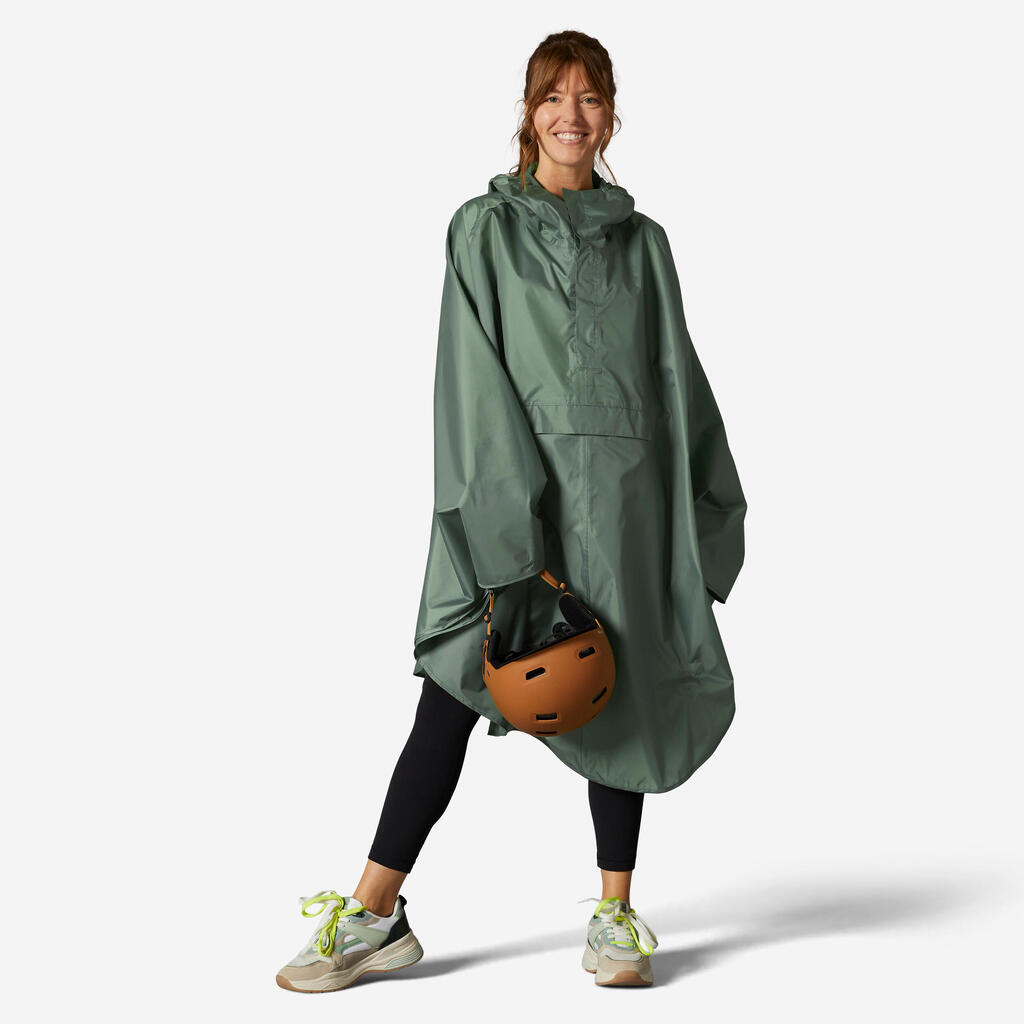
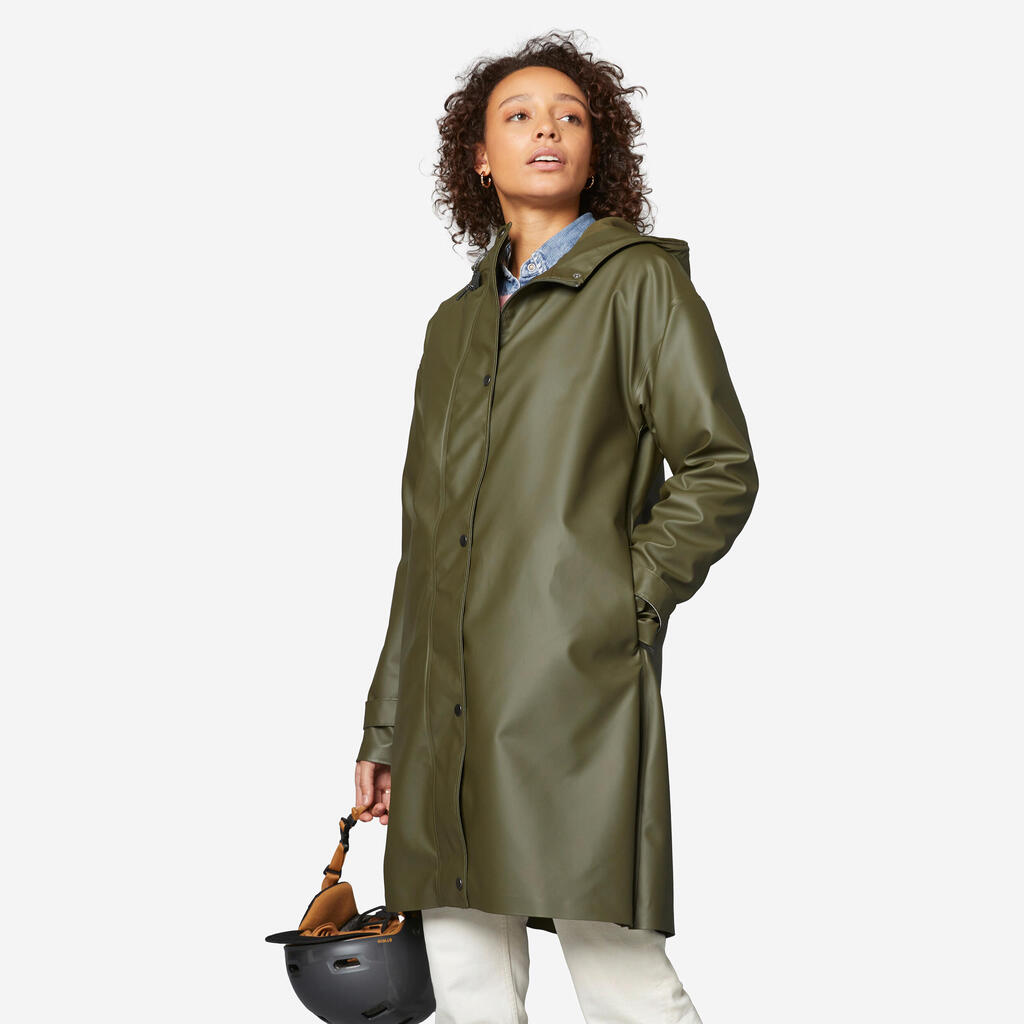
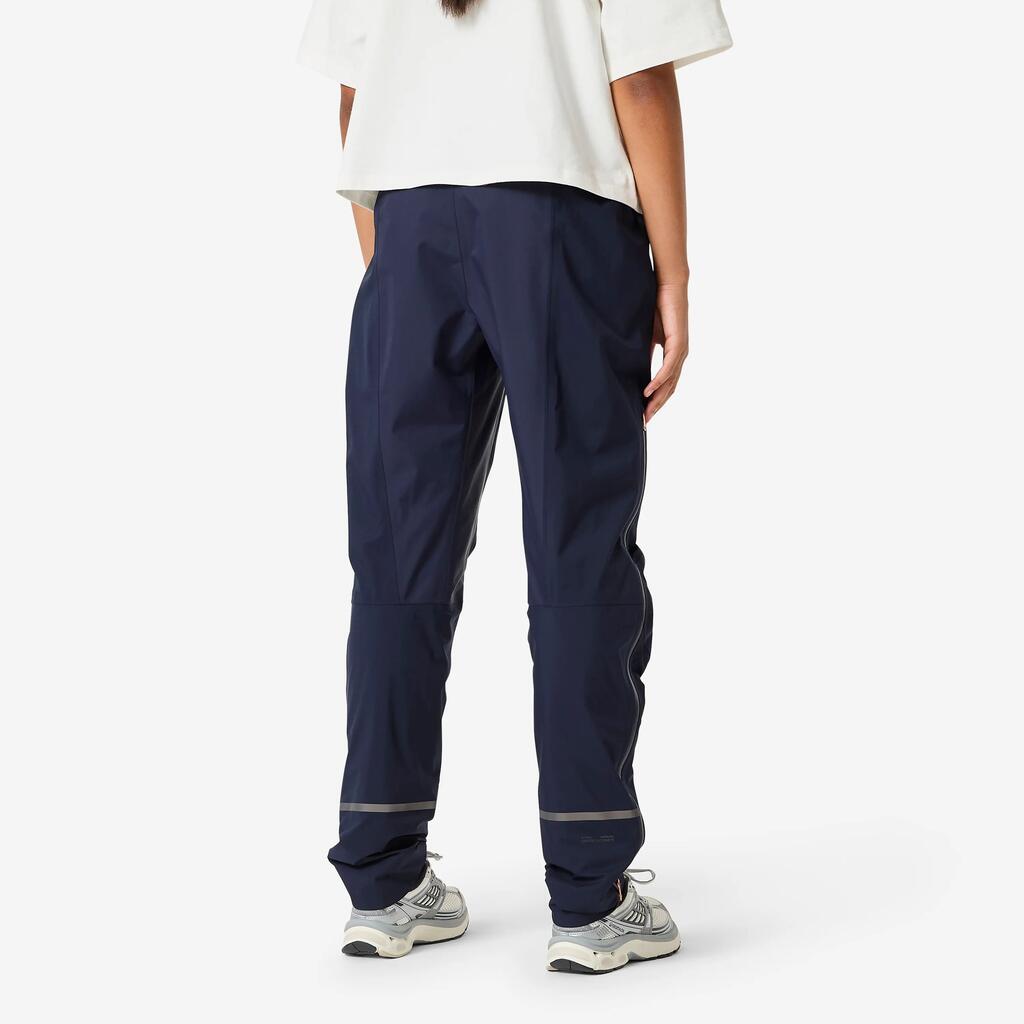
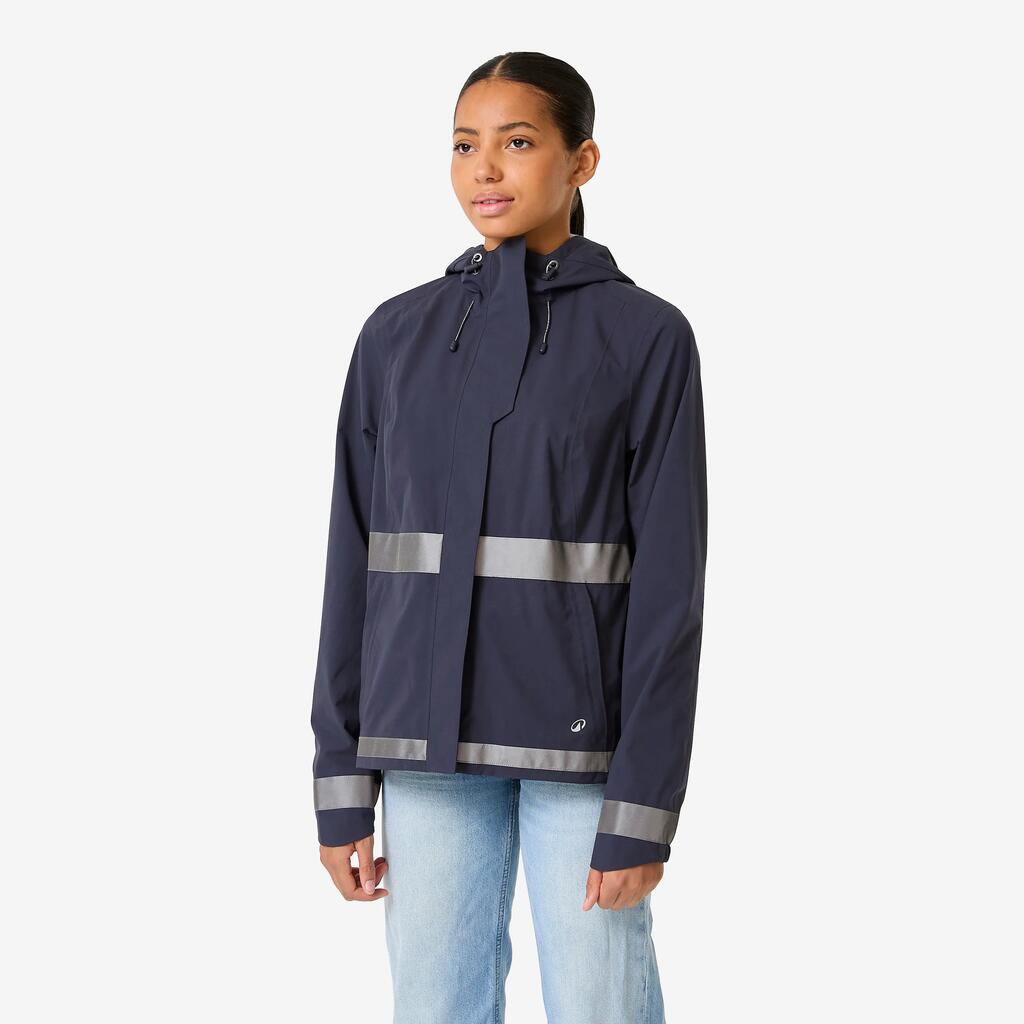
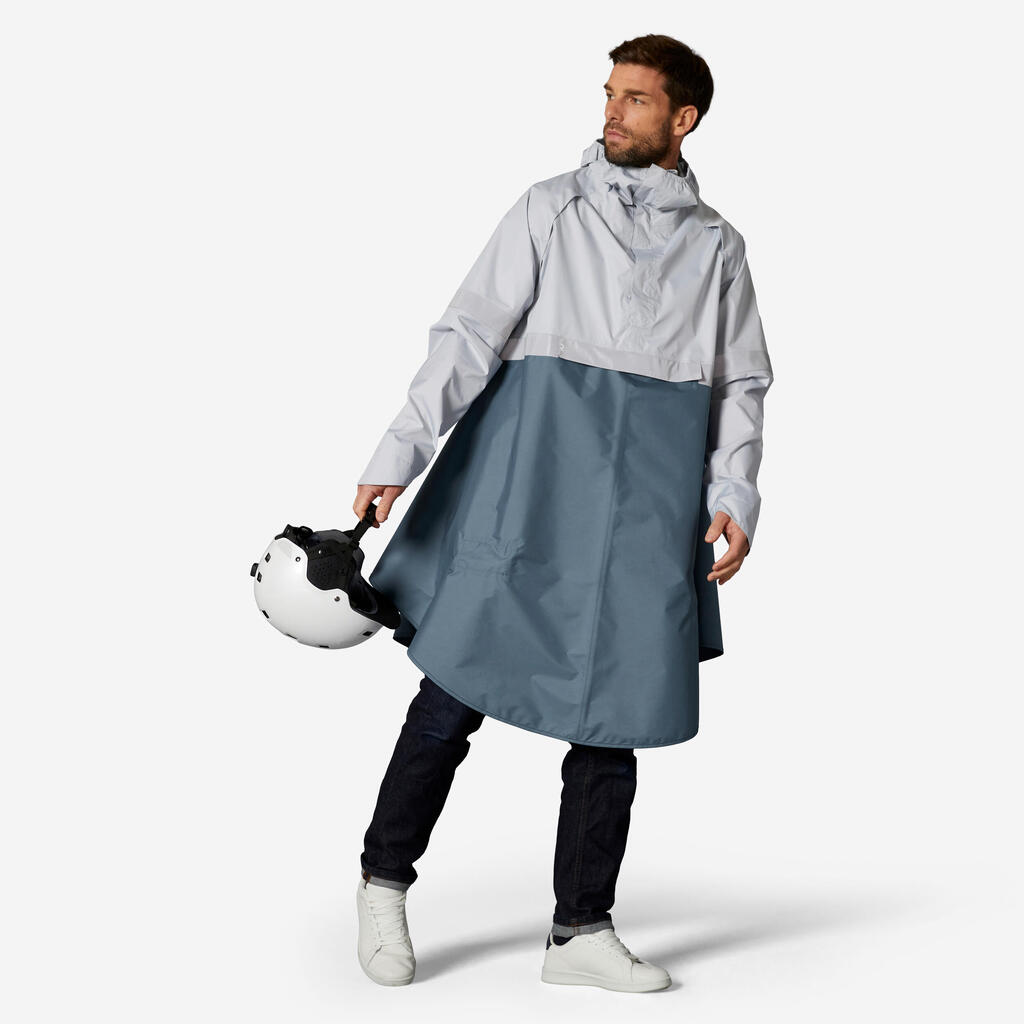
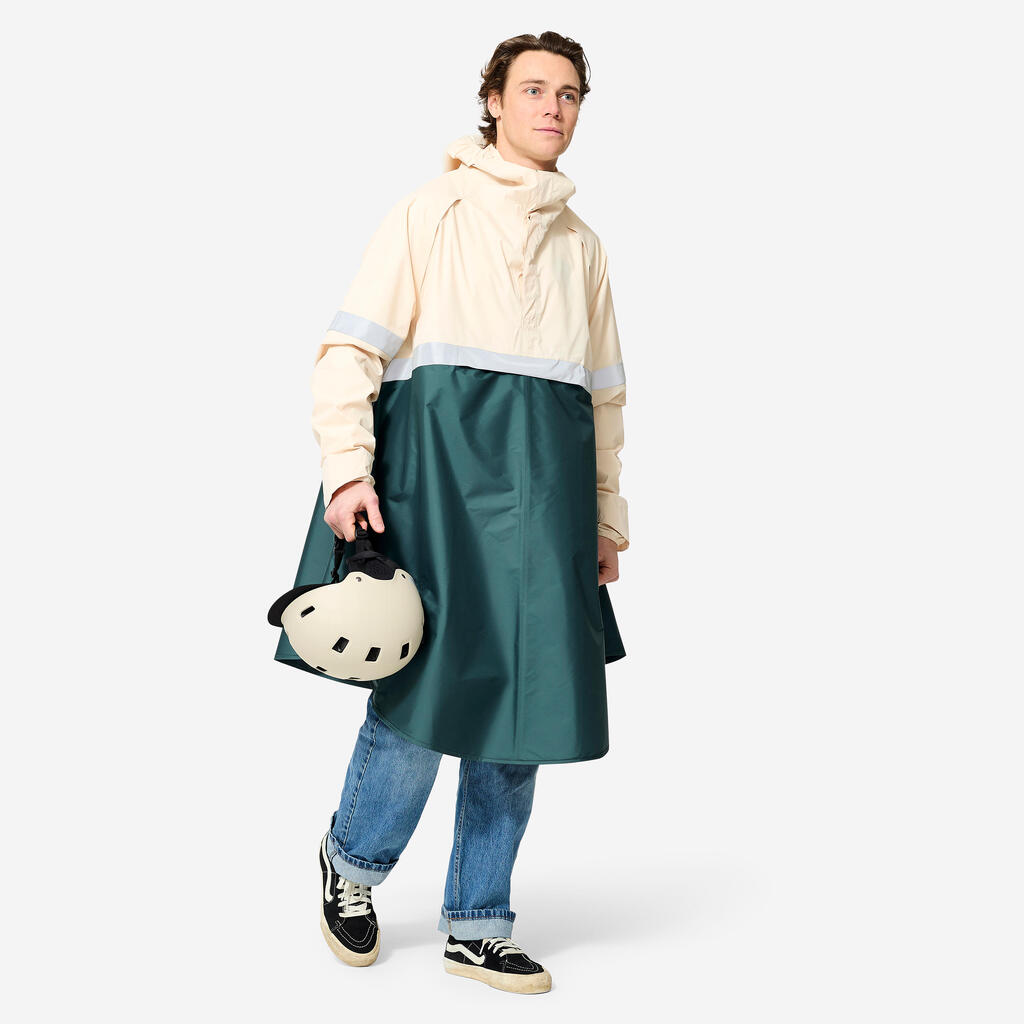
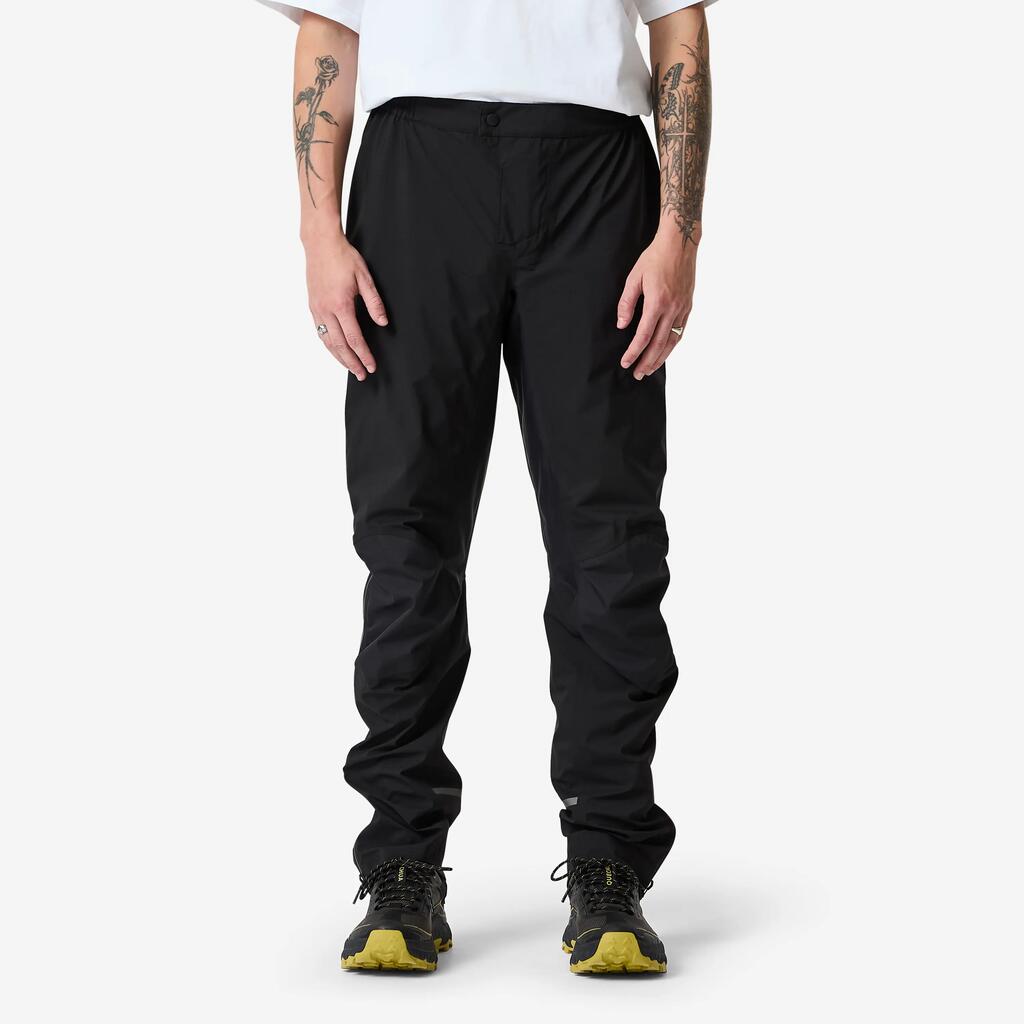
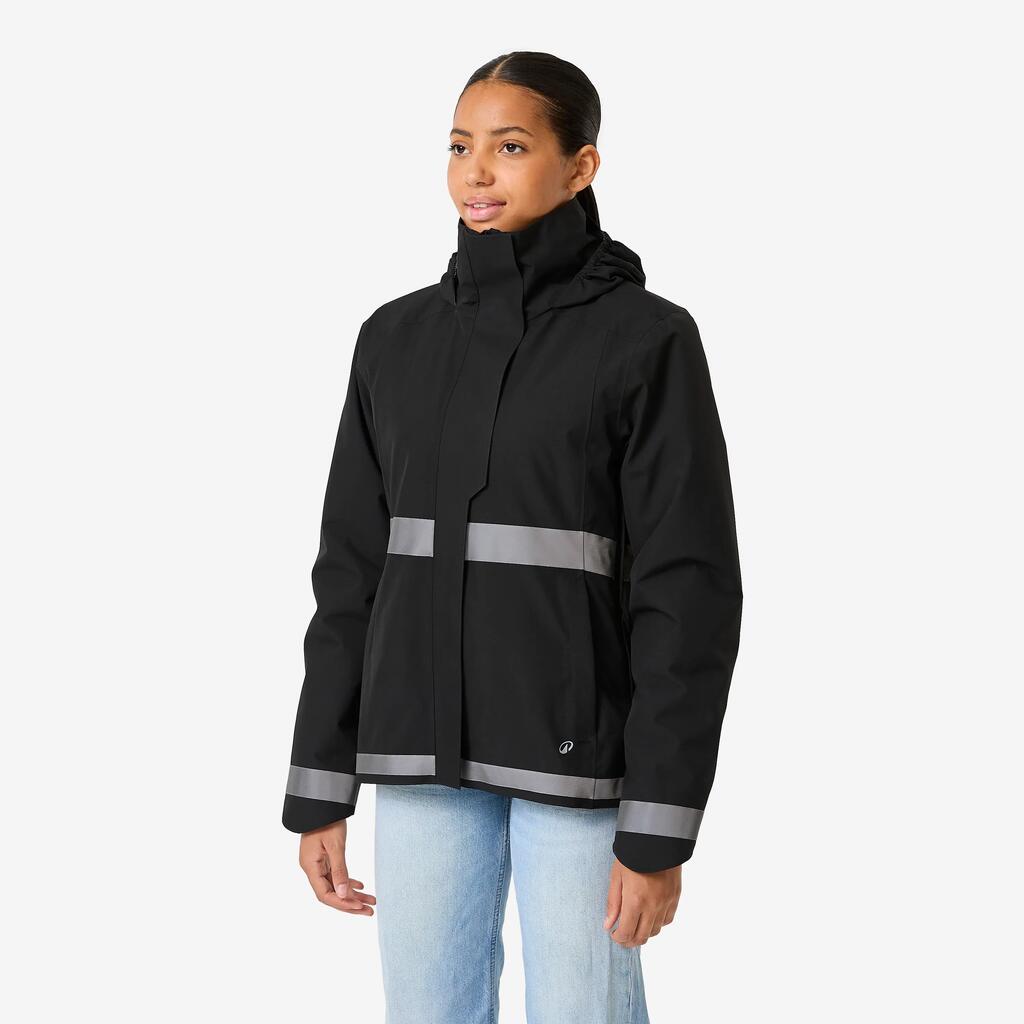
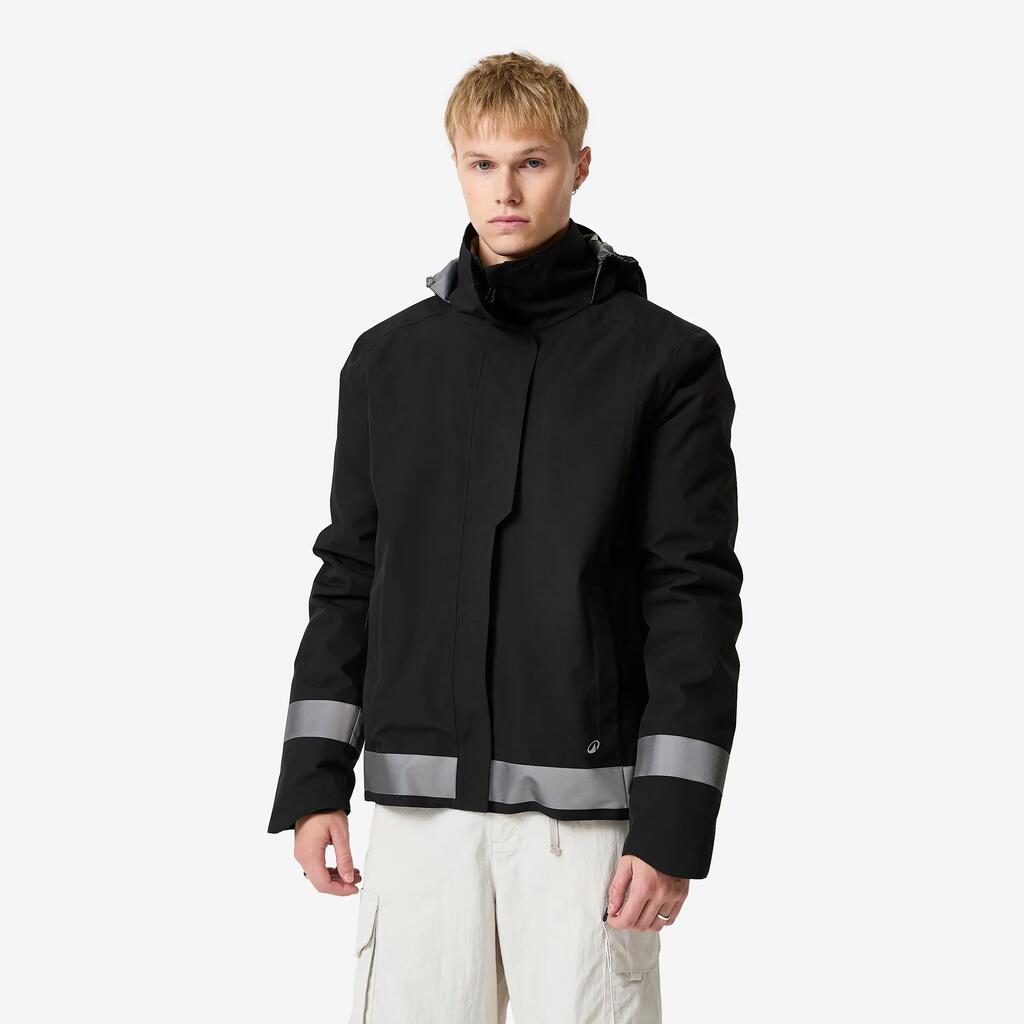
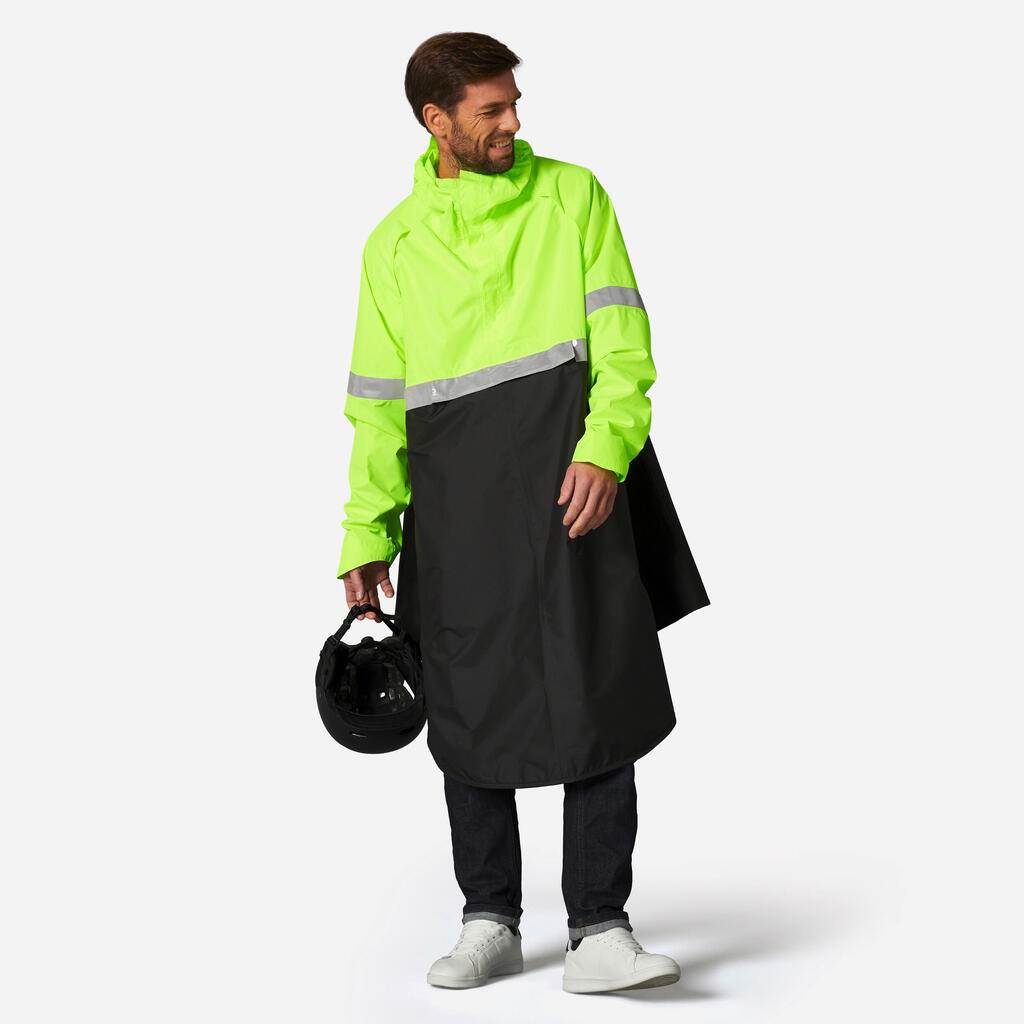
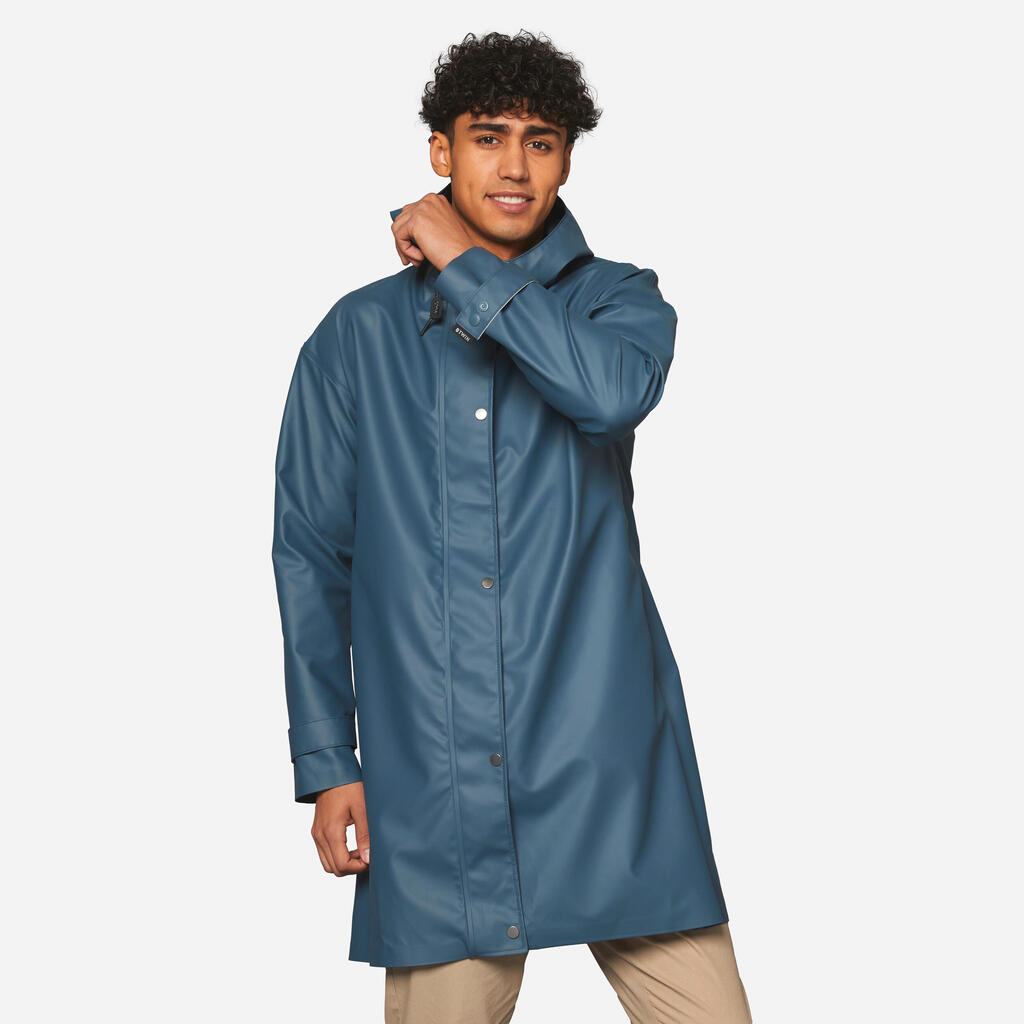
Our model is 1.73 m tall and is wearing a size S.
Click on our sizing guide at the top of the page.
WATERPROOFING IS:
- A WATER-REPELLENT TREATMENT
A fluorine-free chemical recipe placed on the fabric's surface to make water slide off it. This treatment can be reactivated by heat (10 minutes in the tumble drier on a gentle cycle).
- A WATERPROOF CONSTRUCTION
The aim is to avoid water getting in through the holes in the seams by placing a waterproof strip under the seams.
- A WATERPROOF FABRIC
A fabric's capacity to prevent water from penetrating it.
MEASURING WATERPROOFING
Waterproofing is measured in Schmerbers or mmH2O (the pressure exerted by a water column).
A material with a rating of 10,000 mmH2O can resist 10 metres of water.
The bigger the number, the more waterproof the fabric.
NIGHT-TIME VISIBILITY
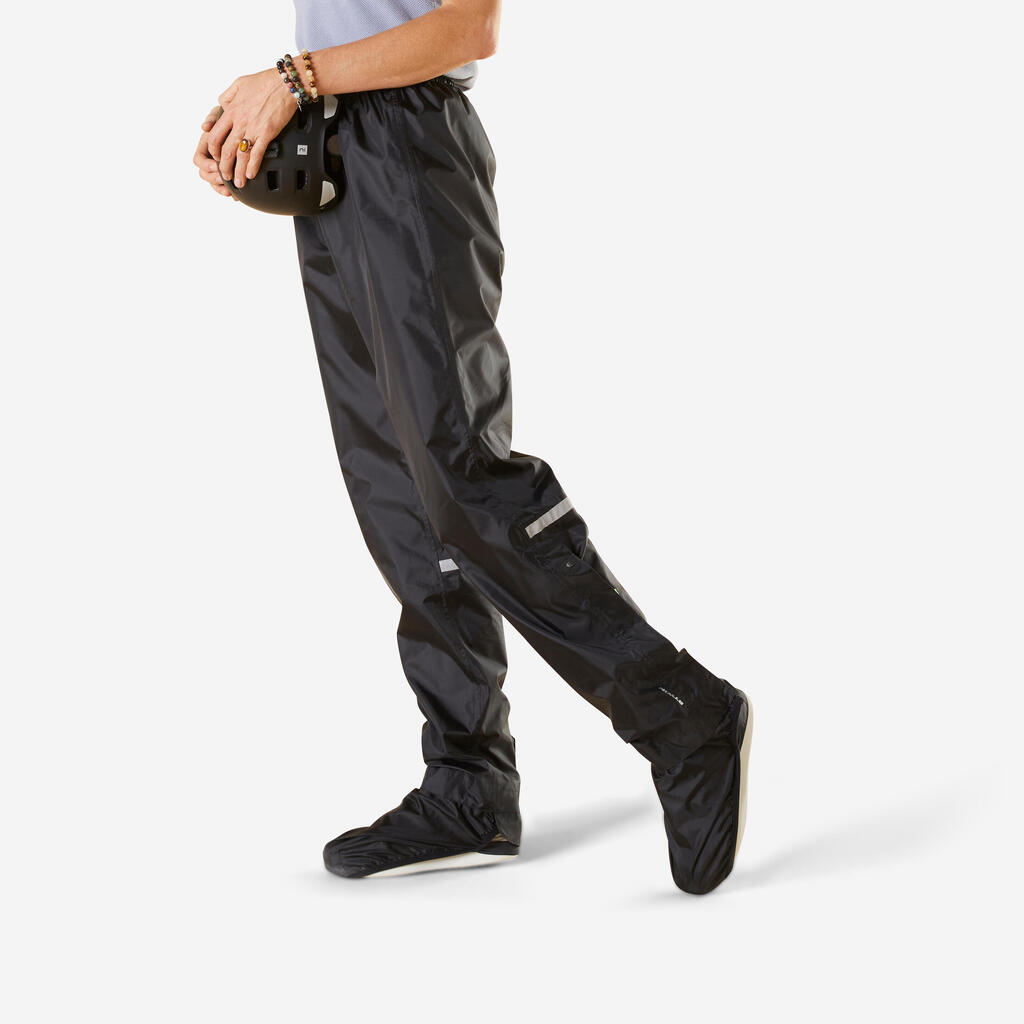
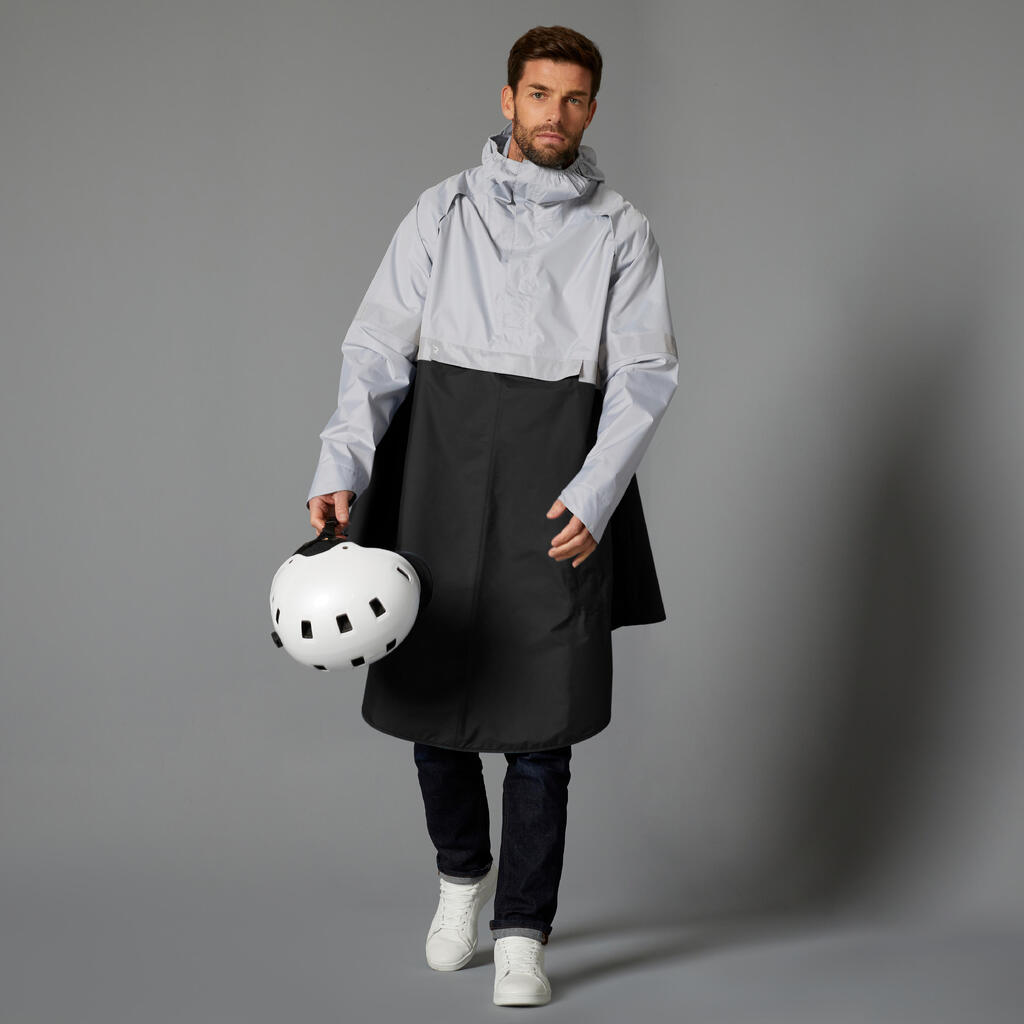
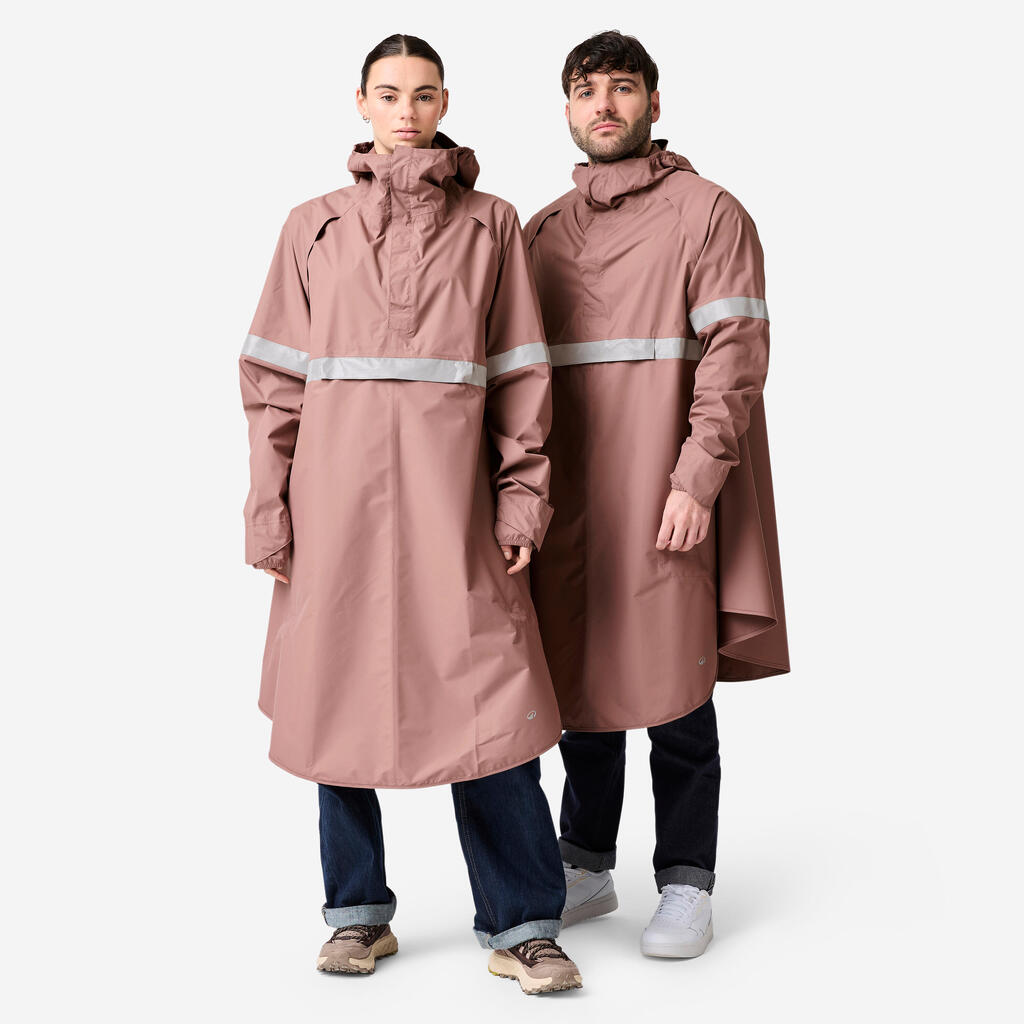
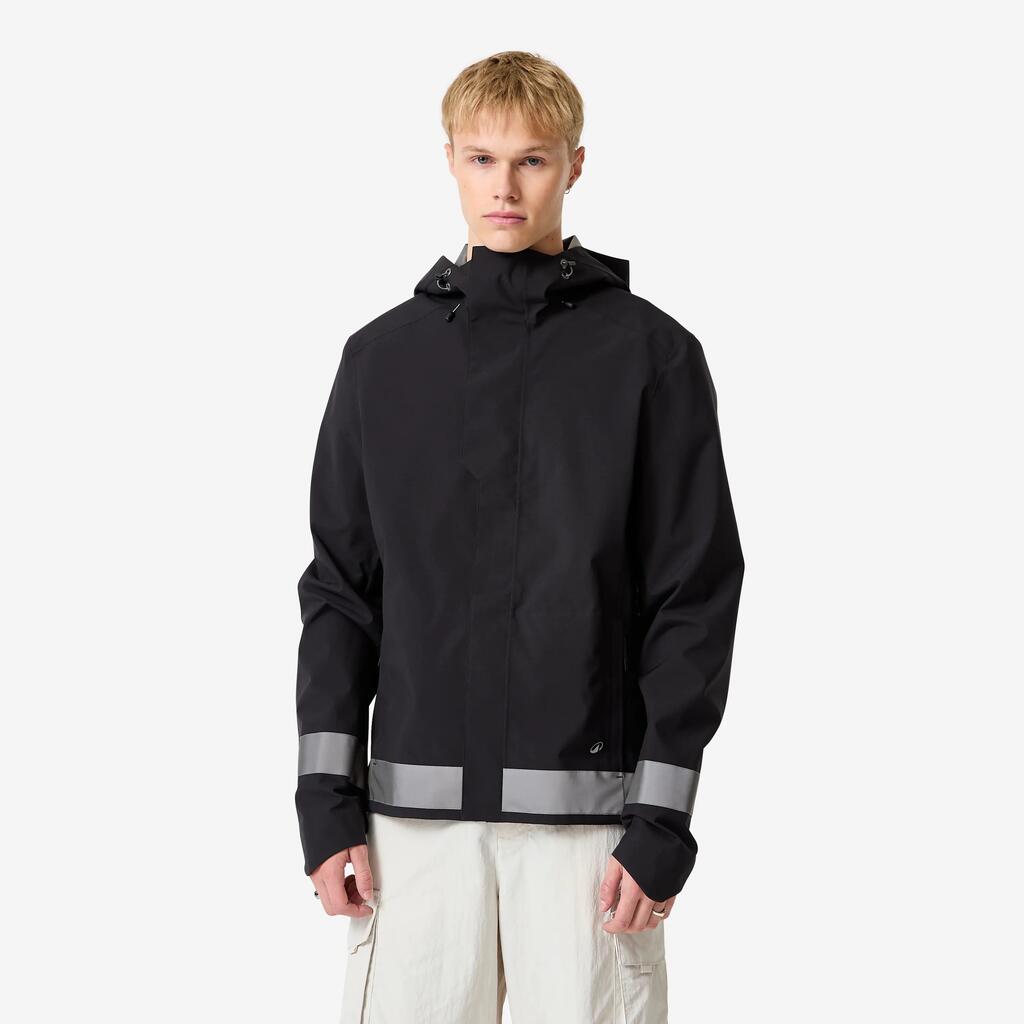
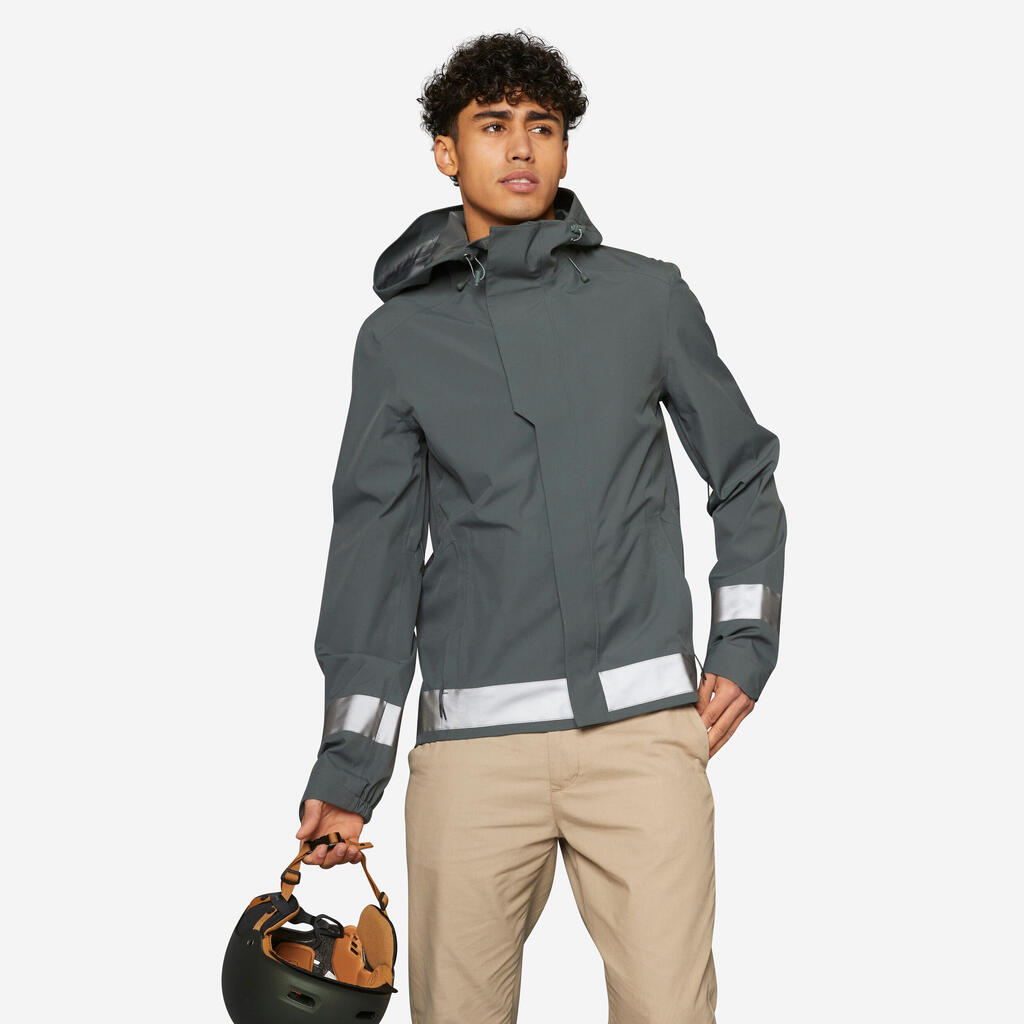
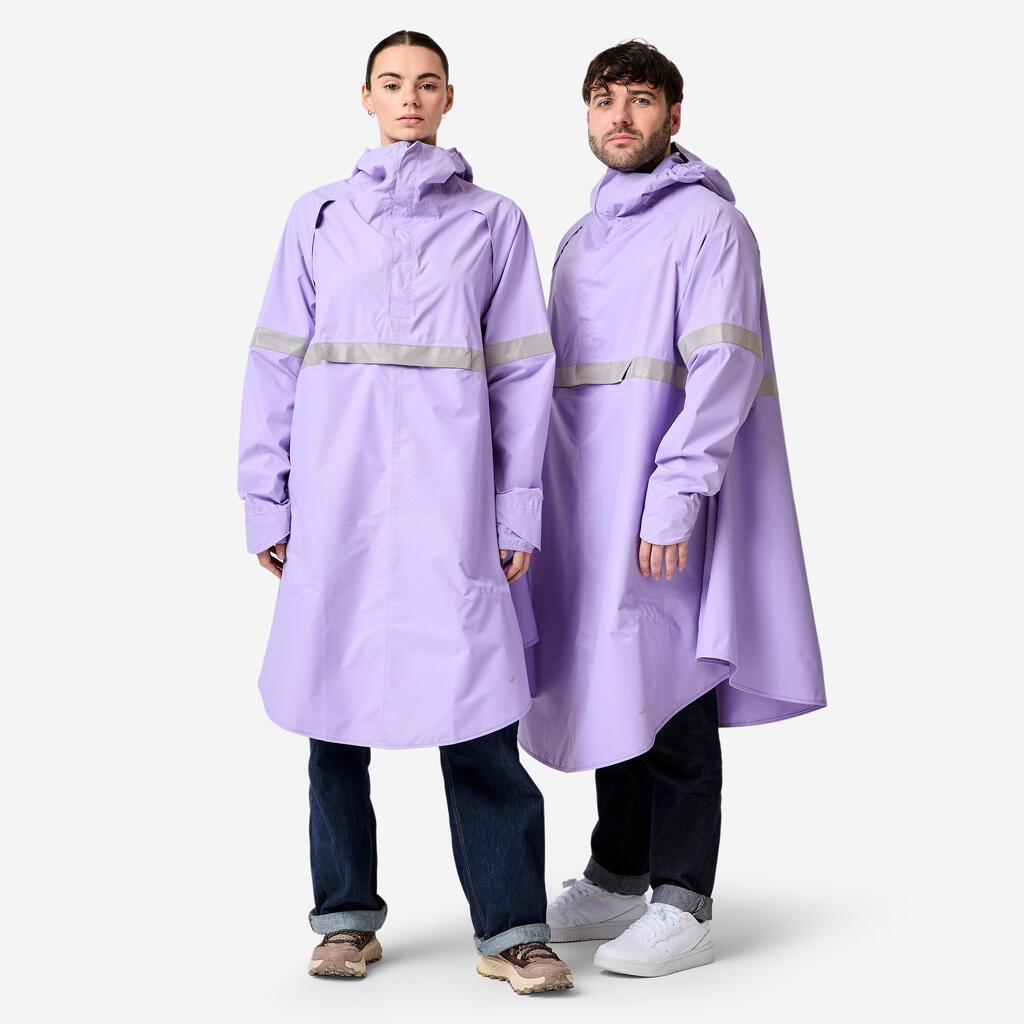
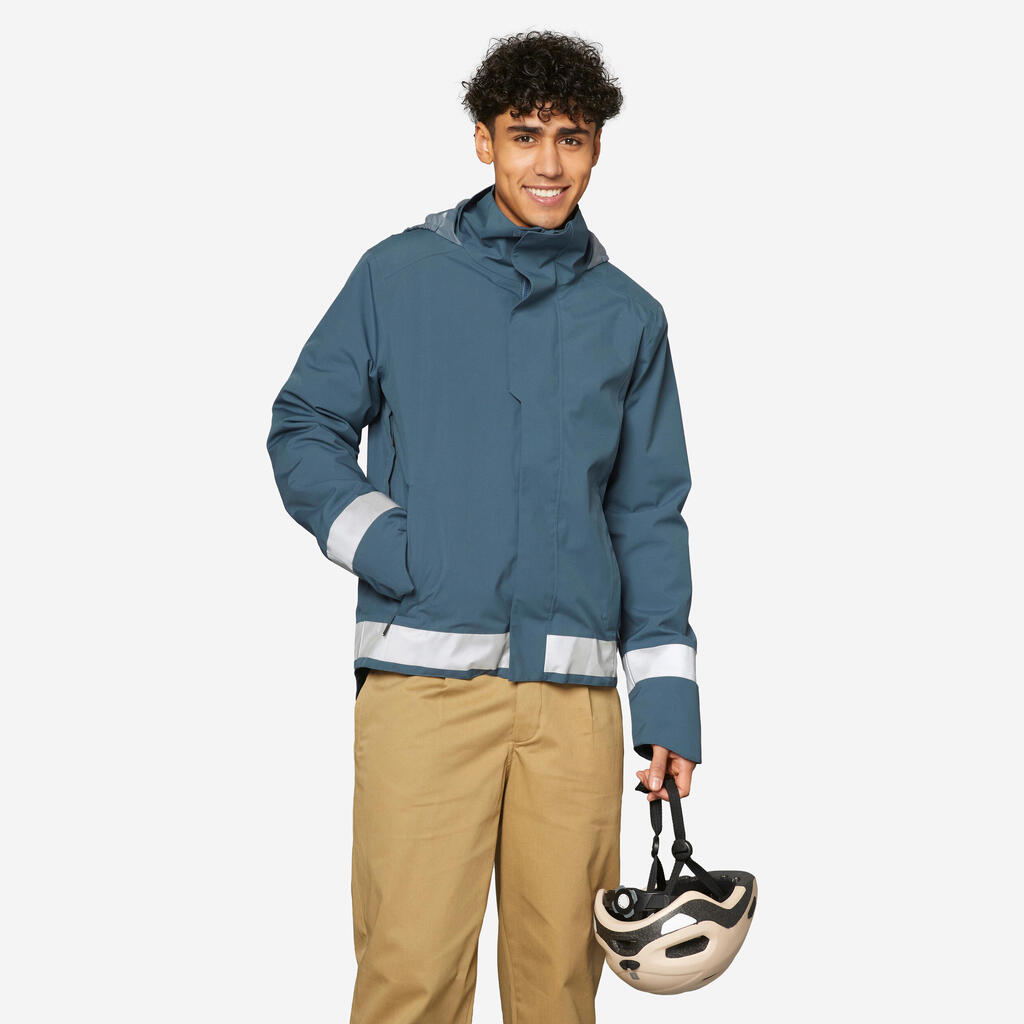
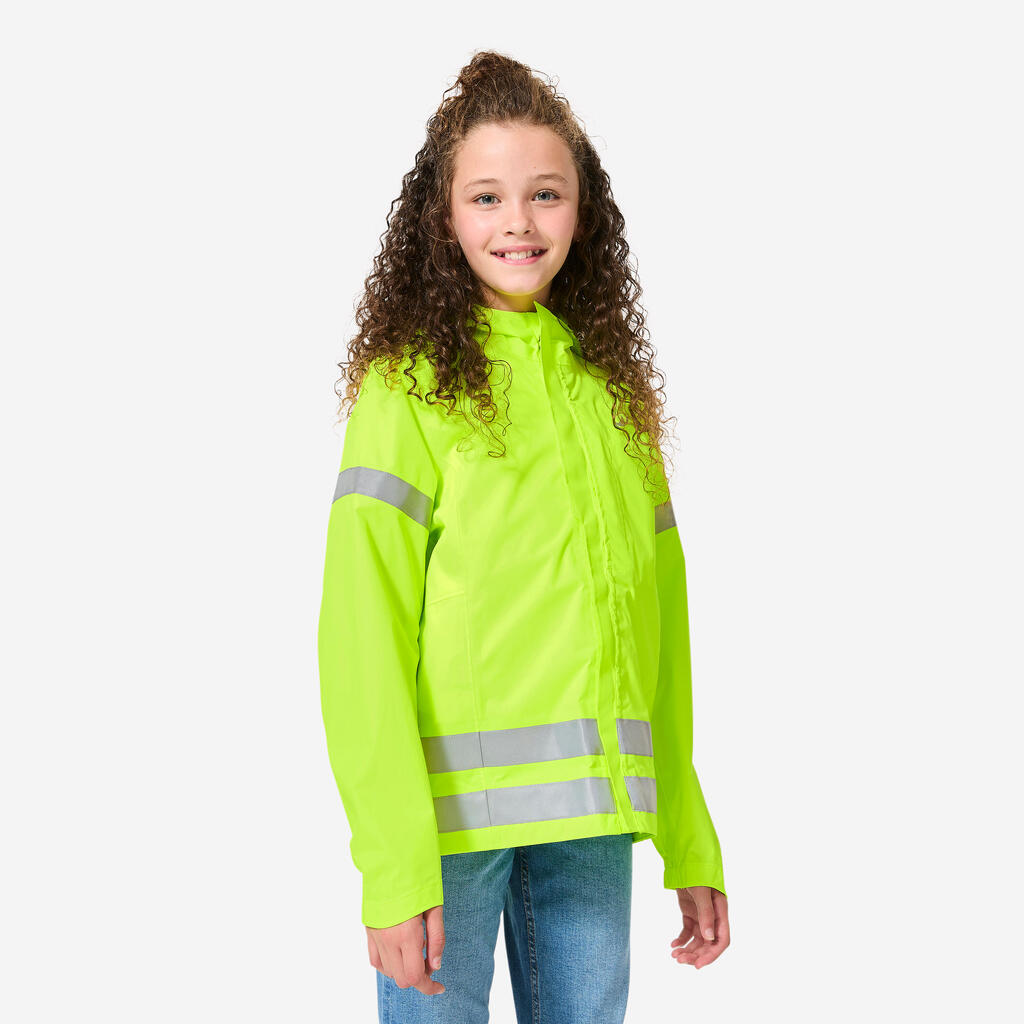
This trench coat is certified as PPE under standard NF EN17353. Cyclists can ride safely at night thanks to the certified reflective bands around the arms and torso.
The reflective parts have been positioned based on the constraints of cycling (leaning forwards, wearing a backpack, signalling with your arm, etc.) to guarantee 360° visibility at night from up to 50 m away when picked up by car headlights.
CYCLING-SPECIFIC CUT
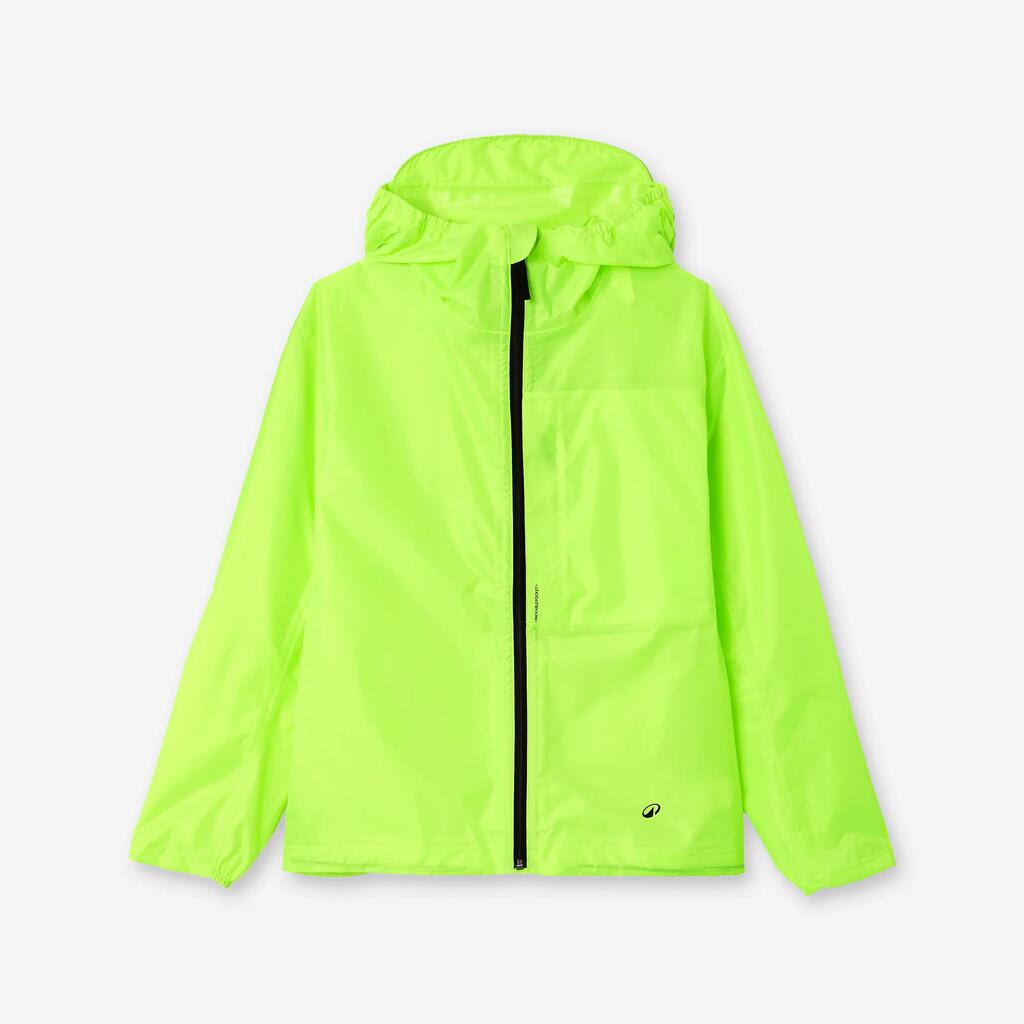
The 940 women's trench coat is designed to protect urban cyclists in rainy weather. Its cycling-specific, fitted cut provides good freedom of movement and covers the lower back, arms, neck and wrists when in riding position to guarantee great protection from the cold and wind.
Zipped vents under the arms to let air circulate freely.
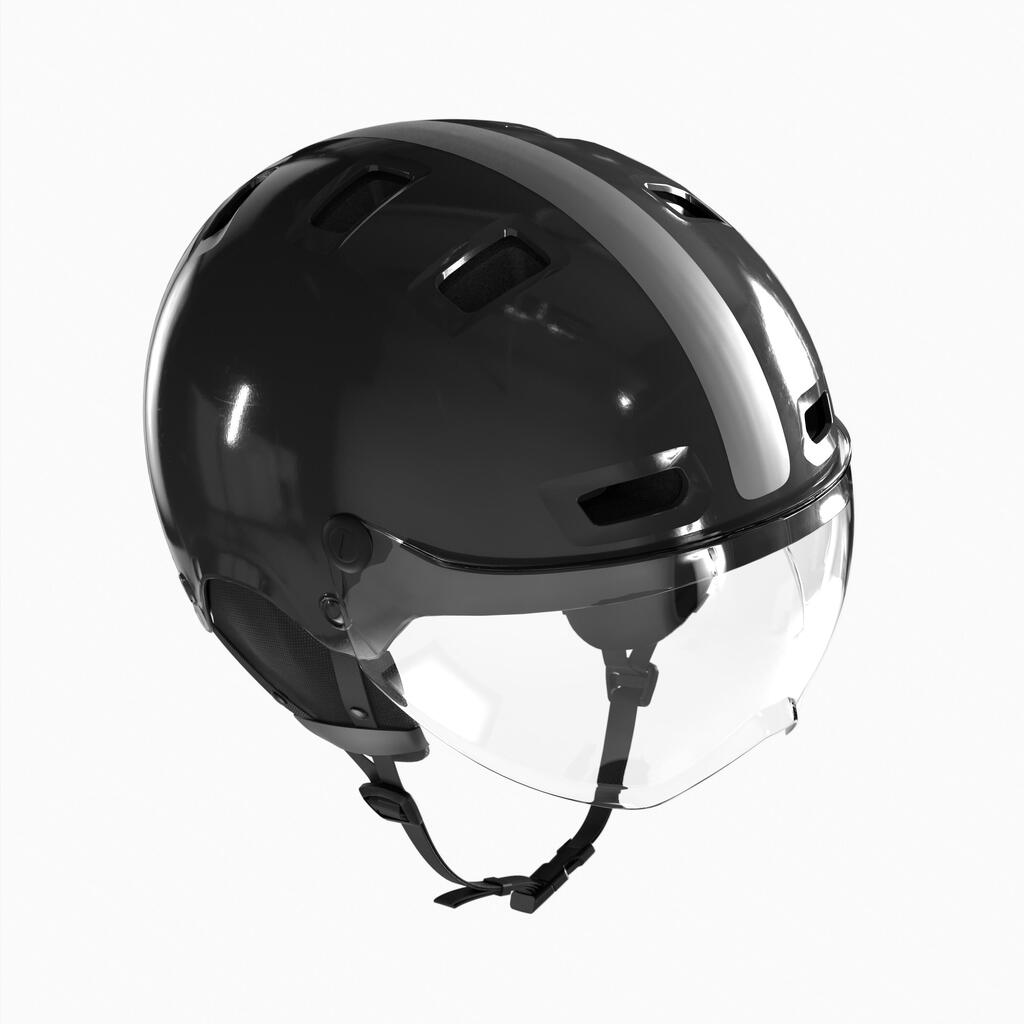
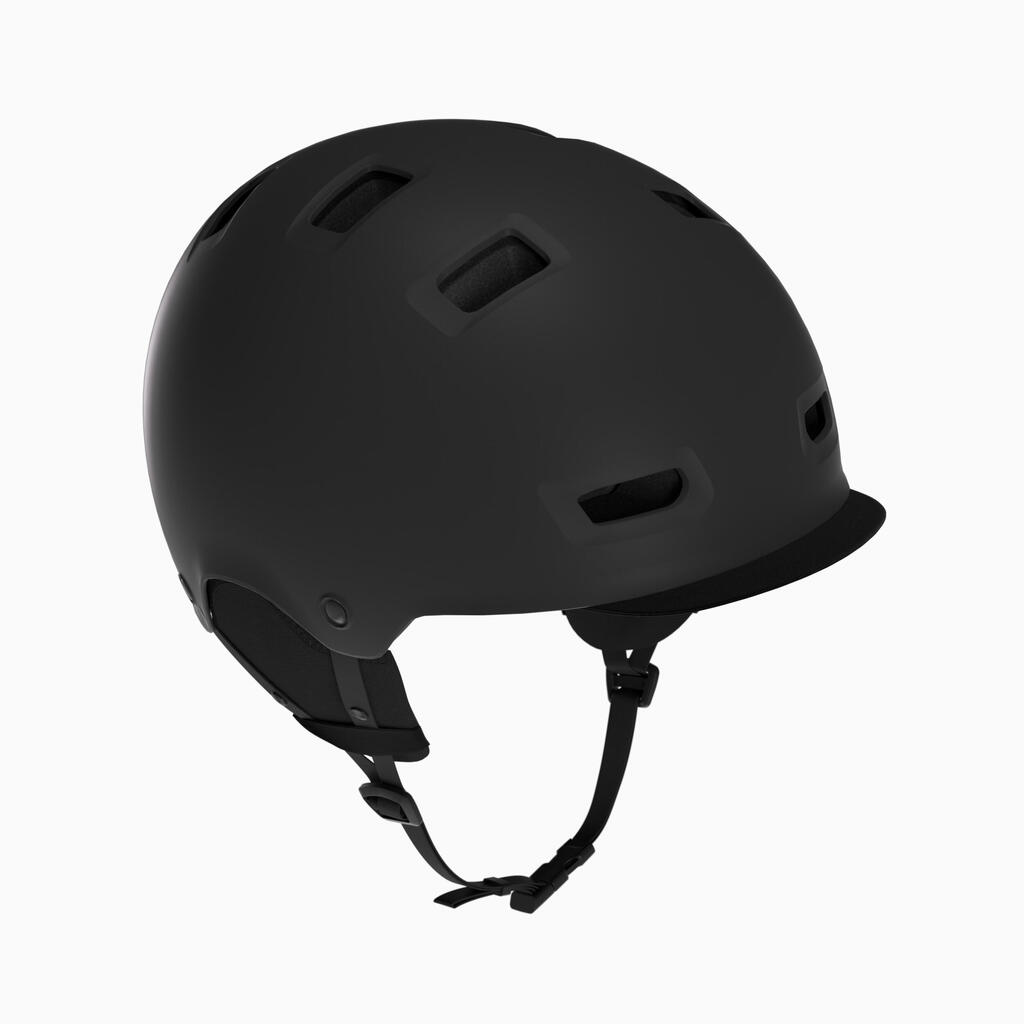
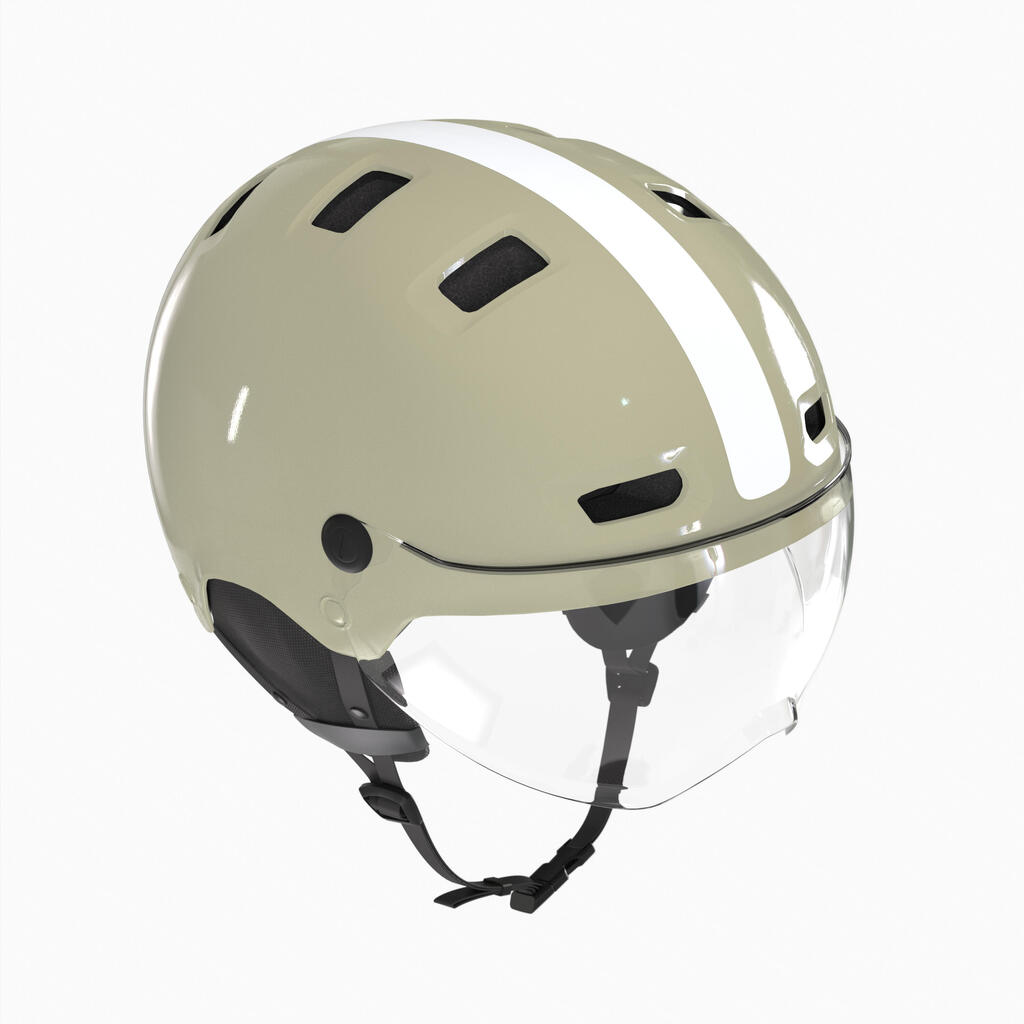
You can wear your helmet over or under the hood (except MTB helmets).
FABRIC BREATHABILITY
Hydrophilic coating (RET = 12): helps the garment to wick perspiration away. To see if a fabric is breathable, we test its evaporative resistance or RET (based on the ISO 11092 standard). The lower its resistance, the more the fabric lets water vapour produced by the body escape, and the more breathable it is.