
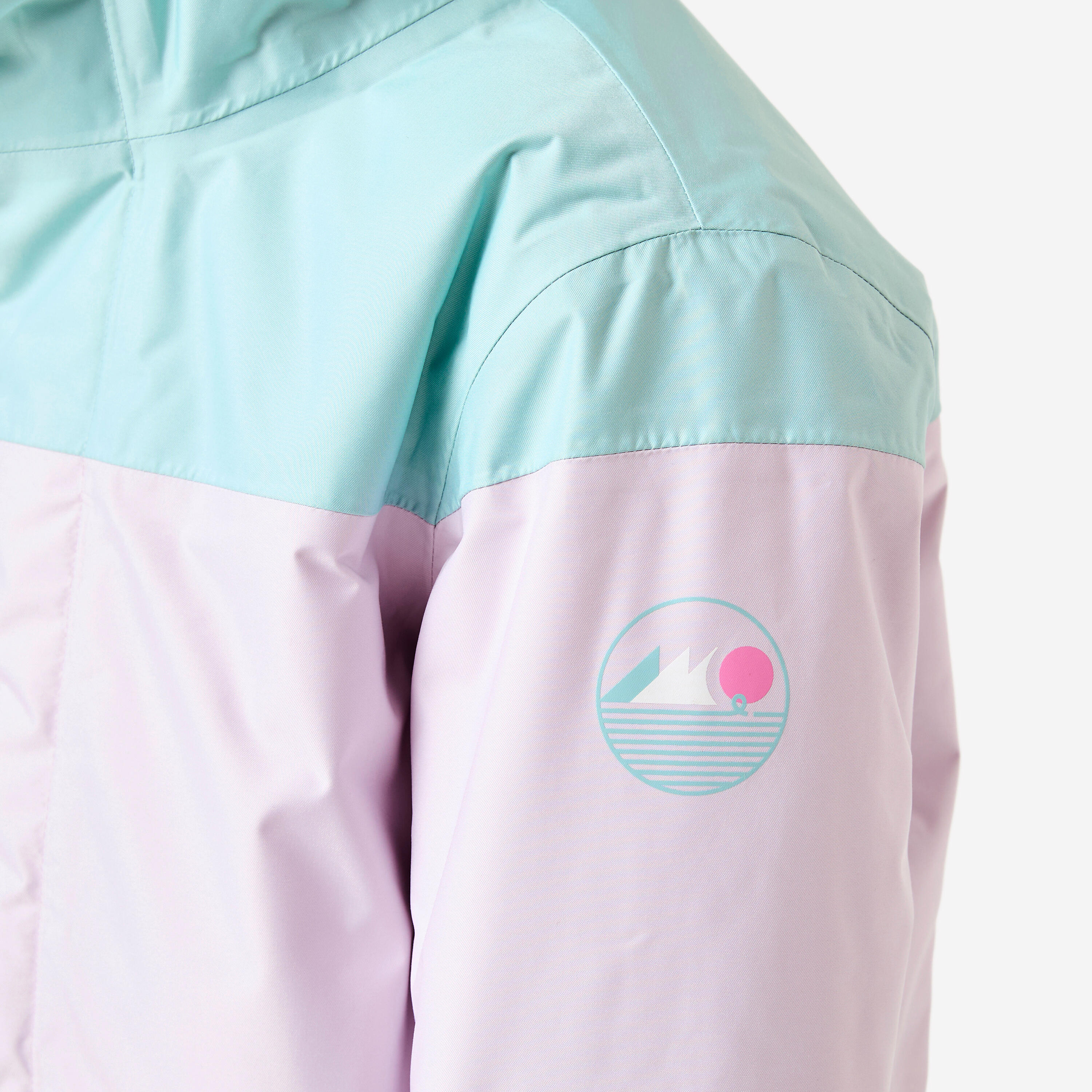
Water-repellent properties information
A fabric is water-repellent when water slides off the surface of the fabric, without seeping in.
Your jacket does not become waterlogged and remains lightweight and breathable. The water-repellent properties are achieved with a treatment applied to the external side of the fabric, but in practice these properties can be altered.
The water-repellent properties can be reactivated by putting the jacket in a dryer for 10 minutes at the lowest temperature.
How to reactivate the jacket’s water repellency
Drying is a crucial phase in reactivating the water repellent treatment.
We recommend that you lay your jacket flat on a clothes rack and leave it out to dry in the open. Caution: never dry your jacket directly on a radiator.
Then place them in the tumble dryer on a short synthetics cycle, i.e. 10 to 15 minutes, before turning it back the right way round. Caution: do not over-dry the garment.
Waterproofing
The anorak’s waterproofness was tested in a rain shower with 60 litres of water/m²/hour for 2 hours.
100% waterproof seams, non-waterproof pockets
Component resistant to 5,000 mm water pressure. This equates to 5,000 Schmerber average pressure exerted by the water during rain.
We measure the resistance of a fabric to water pressure in mm of water column (based on ISO 811 ). The higher the water pressure withstood by the fabric, the more waterproof it is.
How important is windproofing?
Protection from the wind is critical, as wind can chill the body significantly whether you are active or at rest. According to the “Windchill” model which measures the temperature felt depending on the wind and cold: at a temperature of 5°C combined with winds of 30 km/h, the temperature felt will be 0°C. If the air temperature is 0°C and wind speed is 40 km/h, the temperature felt will be -7°C. Your 100 warm jacket counters the windchill effect.
How to wash your jacket
To maintain the water repellent properties, infrequent washing is recommended.
Close all zips and flaps, empty all pockets and then turn the garment inside out to wash it. You can wash it on a synthetic cycle at 30°C or 40°C with your usual detergent. Do not use fabric conditioner, which could damage the existing performance of the garment, or bleach. Very important: choose a full rinse cycle or extra rinse.