Other features worth noting
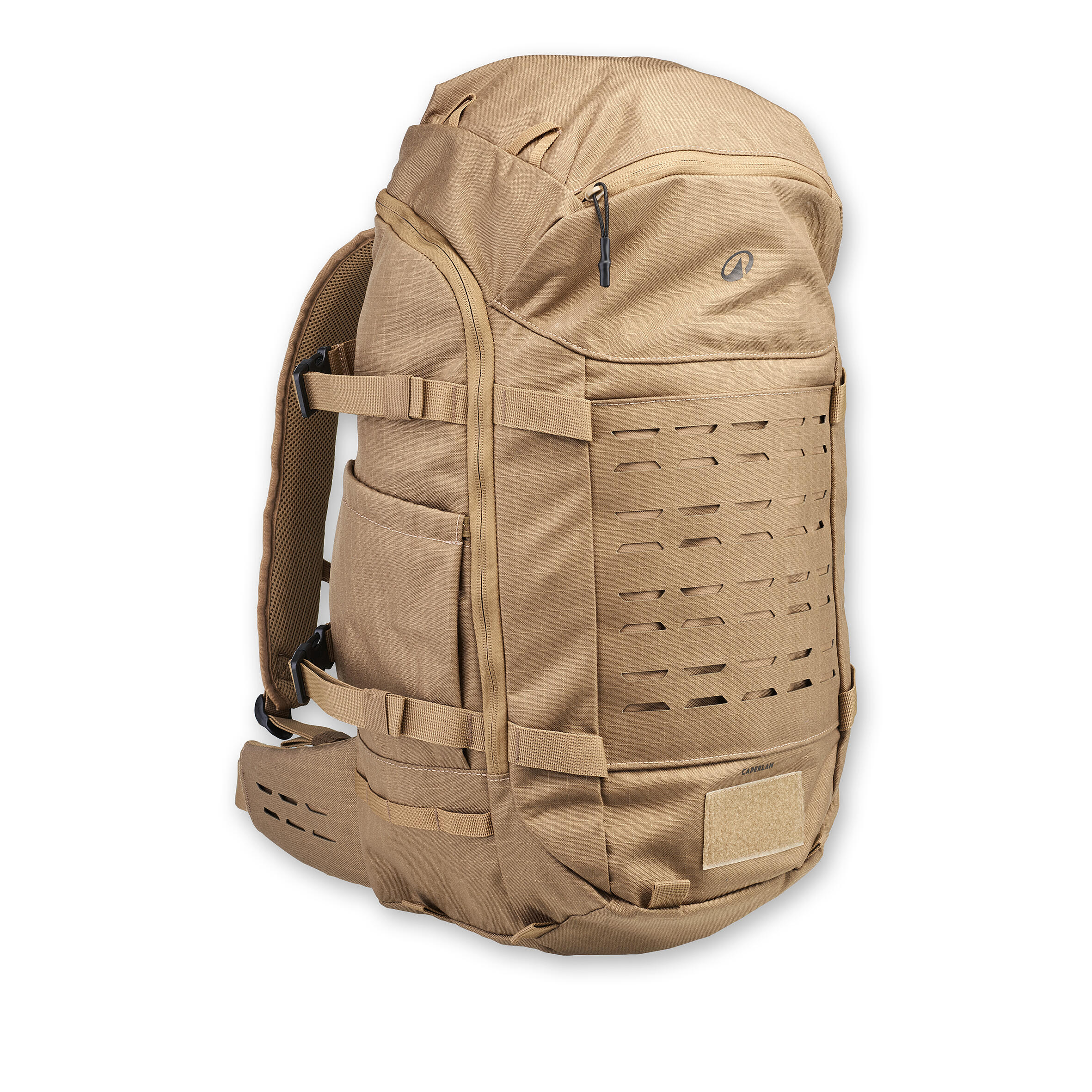
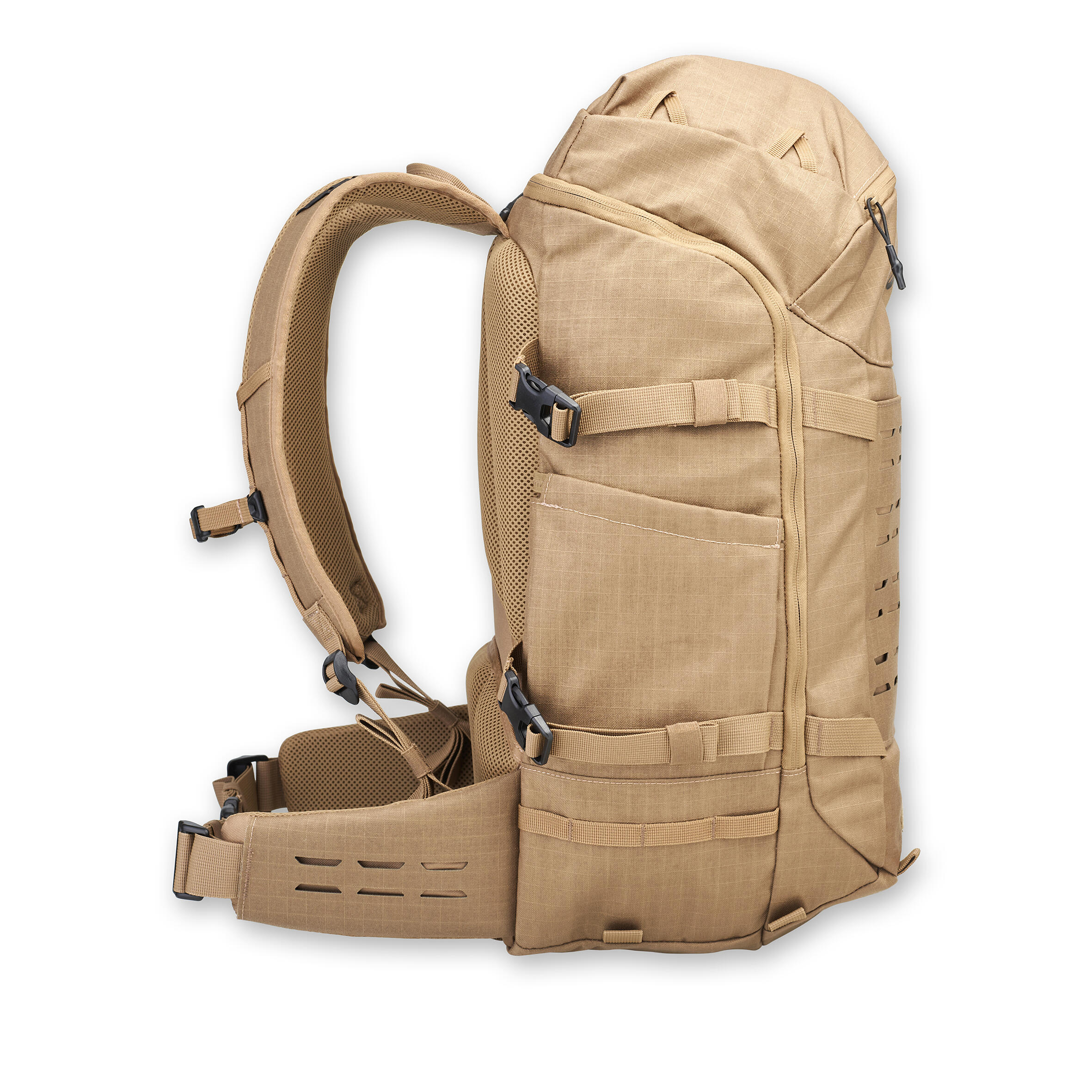
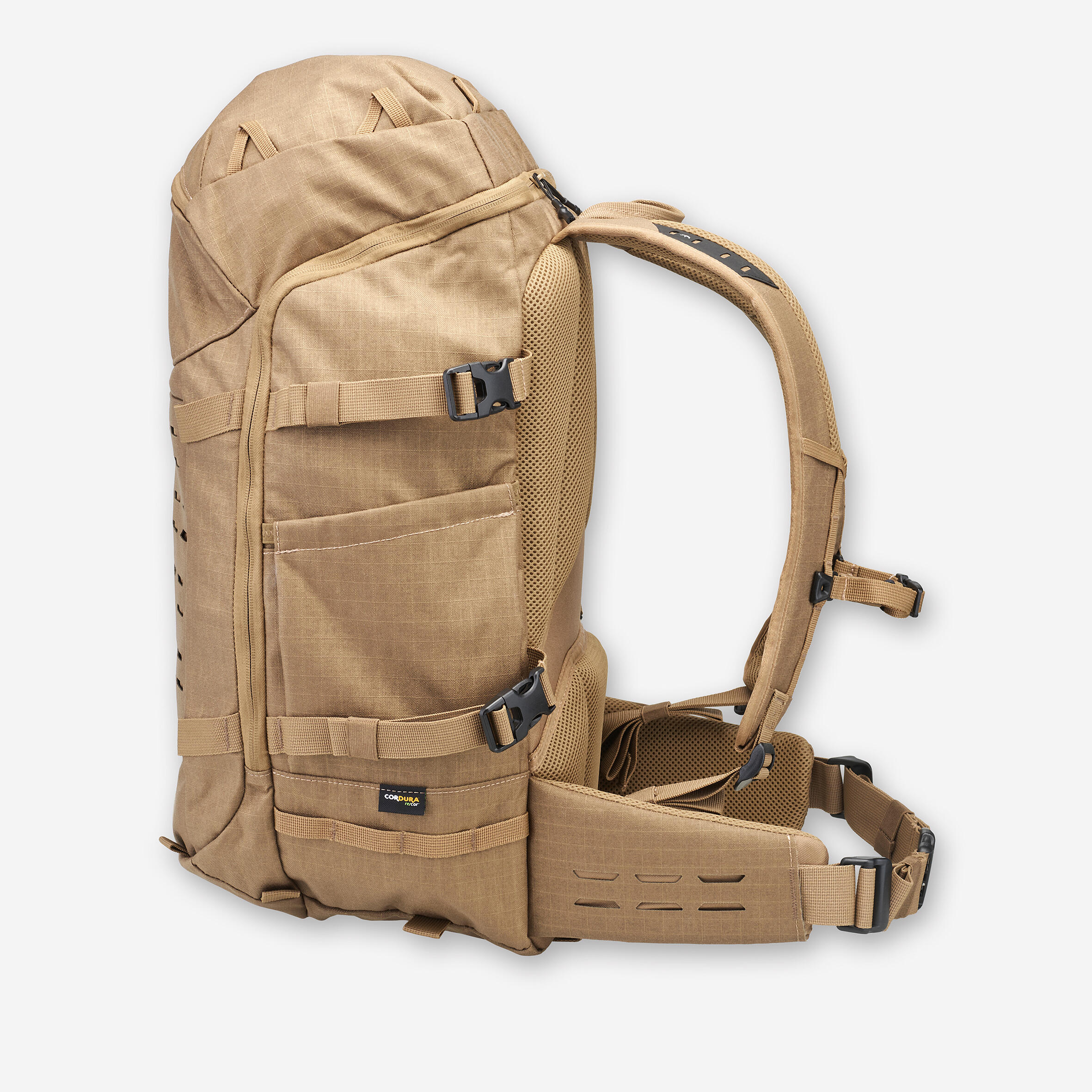
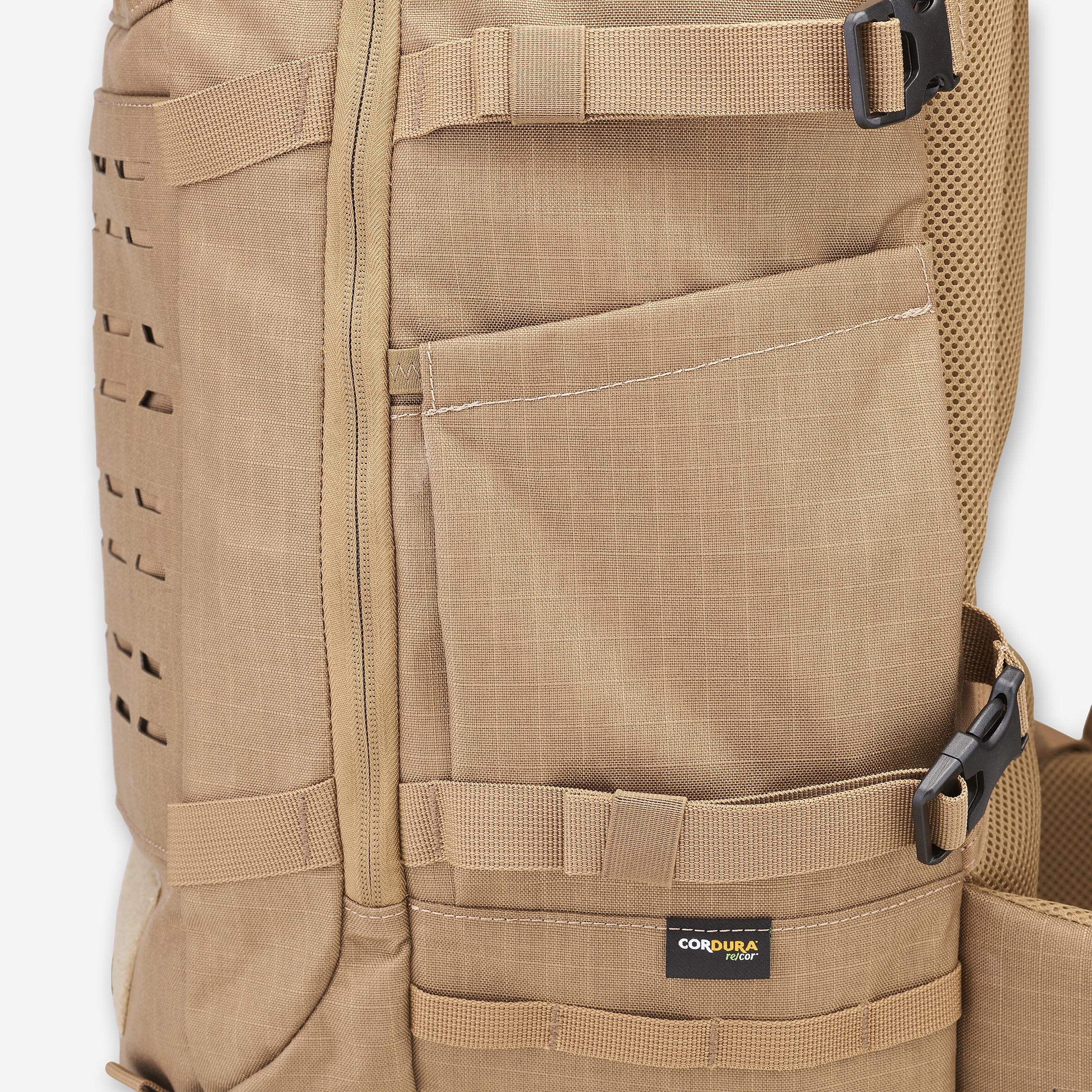
On the outside, 2 water bottle pockets with elastic are present. A few centimetres above, 1 strap is fitted: it allows you to carry long items (such as tripods or folding chairs). For example, you slip the tripod legs into the water bottle pocket and the strap secures the whole thing.
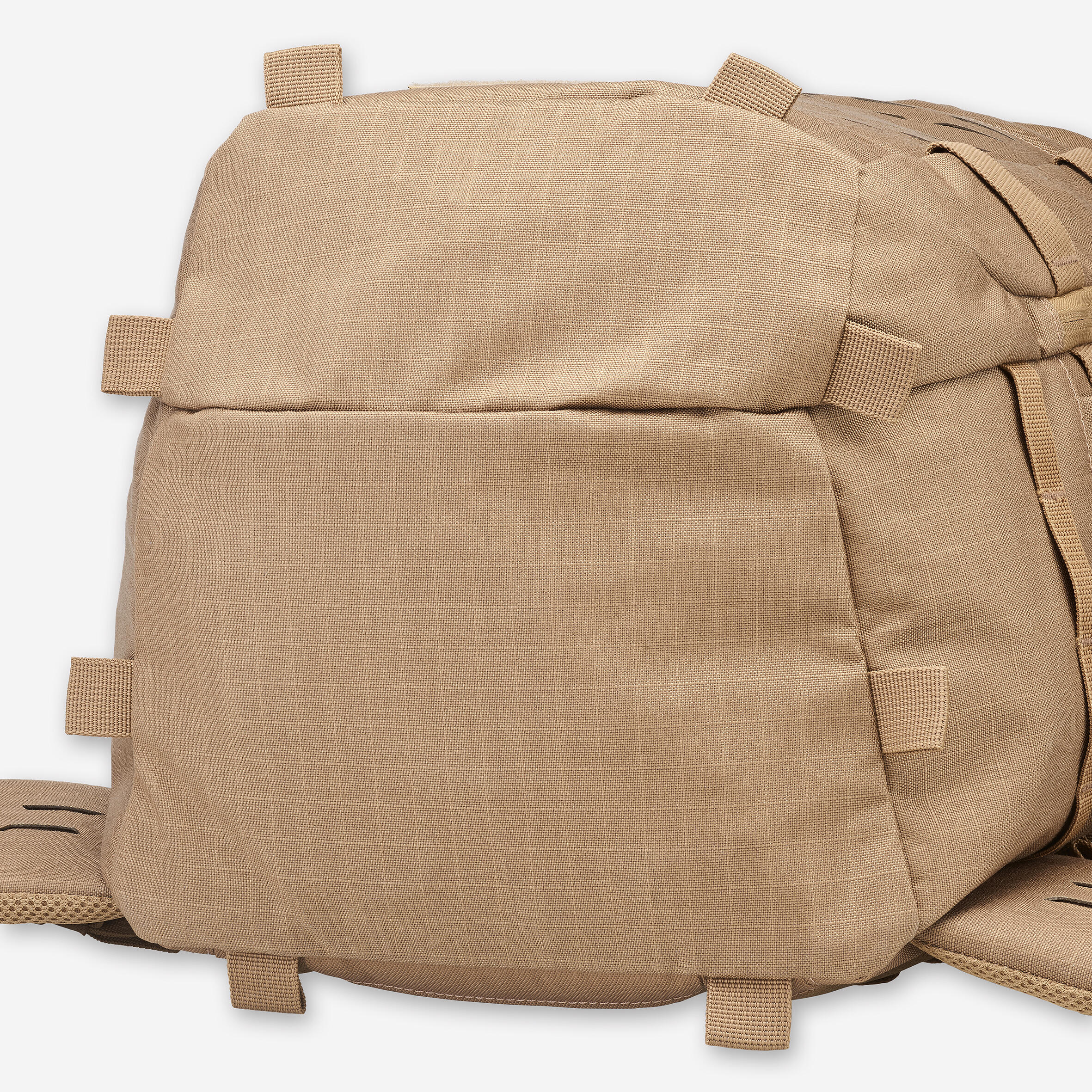
On the bottom of the bag, still on the outside, are 8 small loops. They serve as an additional hanging system (you can hang a sleeping bag, mat, etc.).
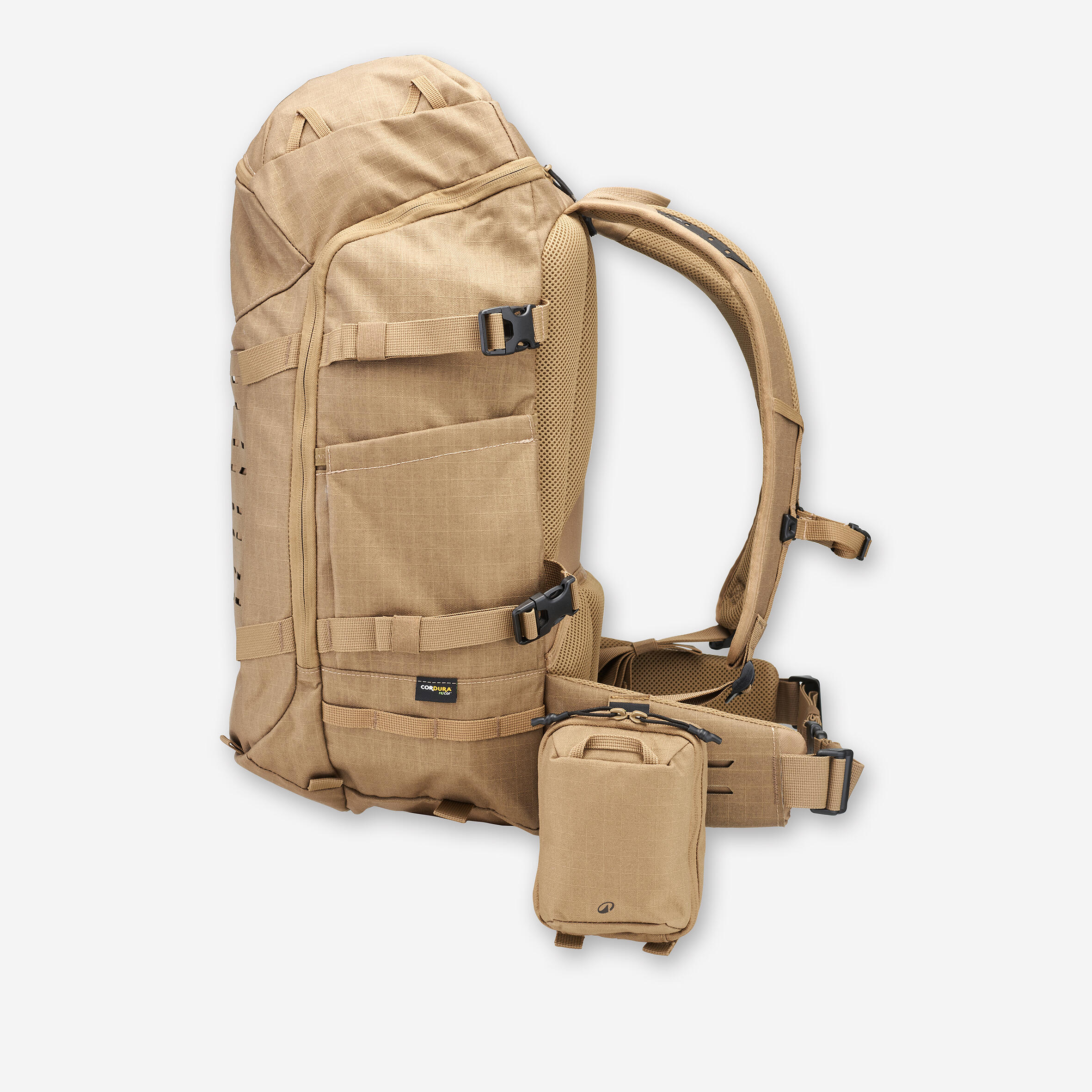
X-ACCESS compatible pouches
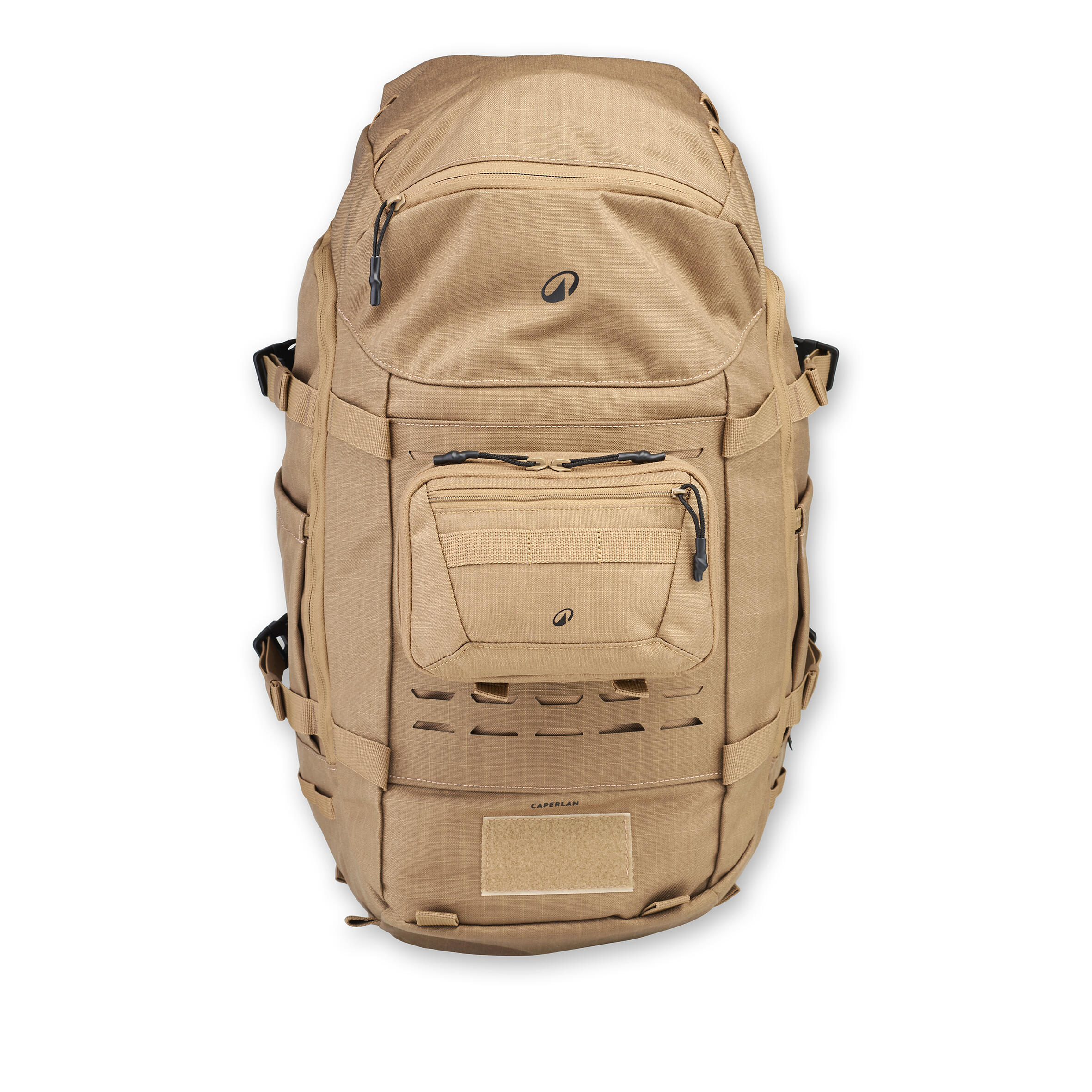
They can be clipped to the front of the backpack, as well as to the ventral pockets on the sides for quick access to particular equipment when the bag is on your shoulders.
Compatible Cordura pockets: reference 8994167 (vertical EDC soft pouch in Cordura® size S) or reference 8994059 (horizontal EDC soft pouch in Cordura® size M).
Other compatible pockets: reference 8826785 or reference 8826786.
How to adjust your WILD 500 backpack
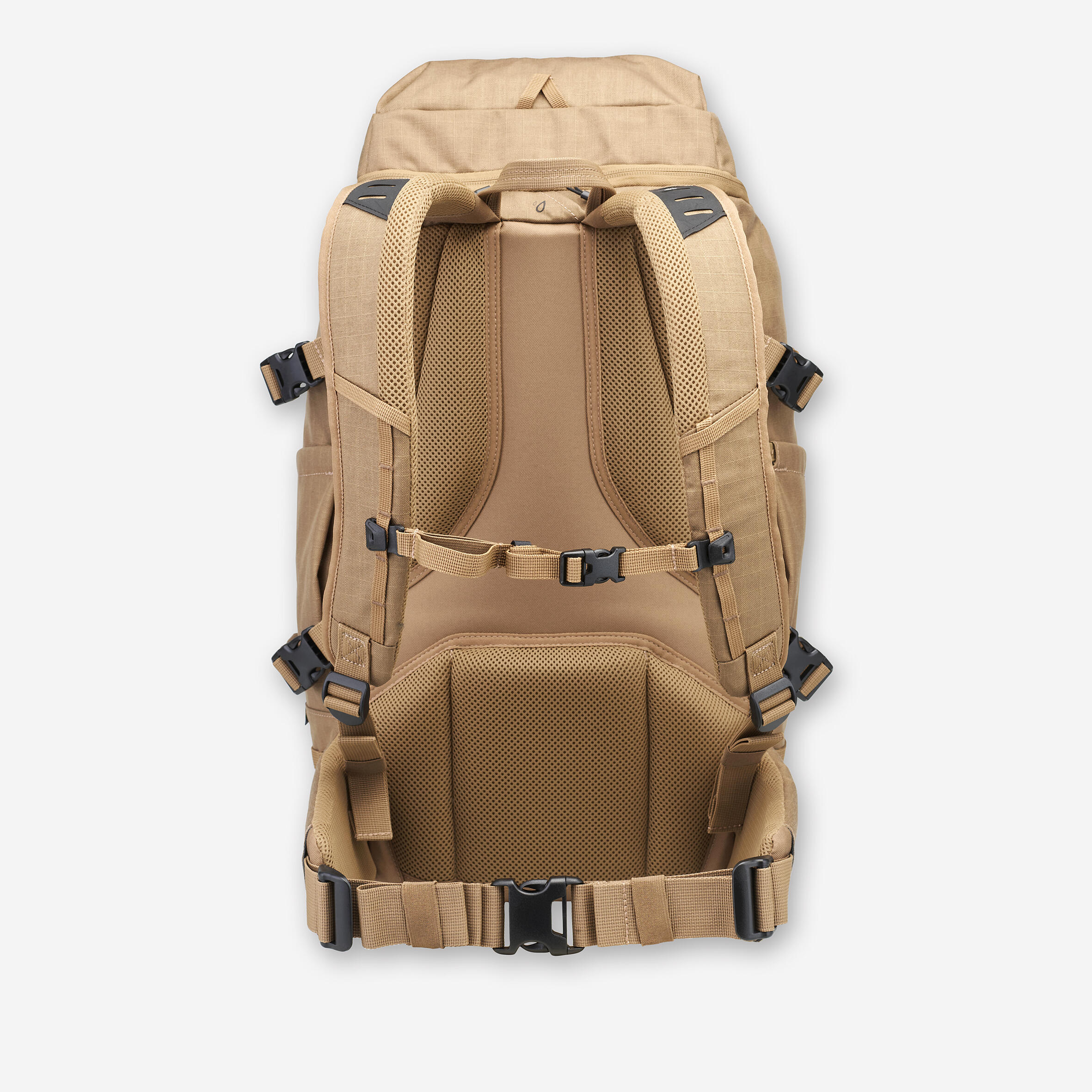
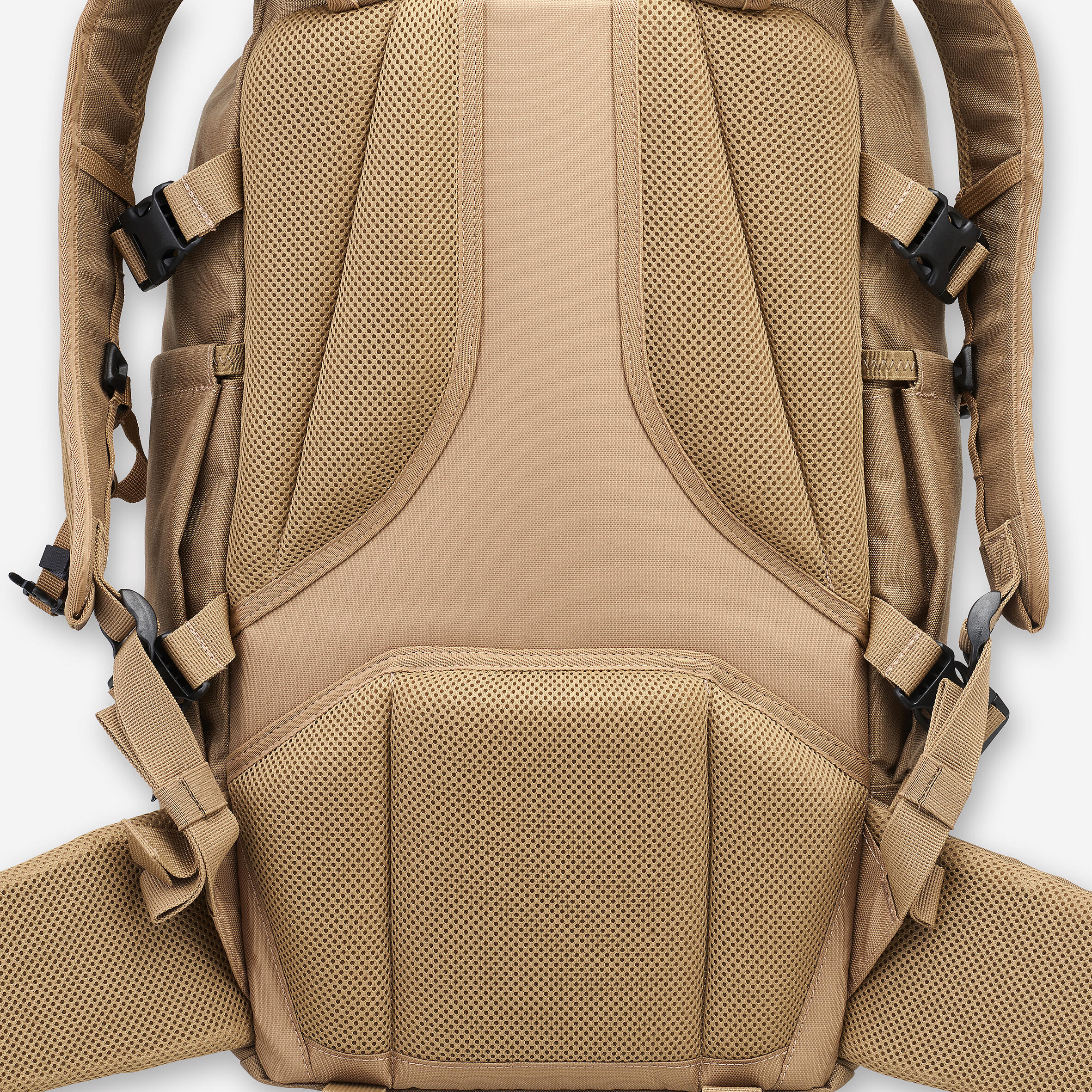
Once the bag is on your back, fasten and tighten the sternum strap: it is elasticated and adjustable in height to fit your chest size. This also prevents the shoulder straps from falling to the sides when the bag is fully loaded.
The bag also offers a lumbar belt system: you have 2 straps on the sides that you can adjust and tighten so that the weight of the backpack rests on your hips too.
A word about carrying comfort
The shoulder straps feature padded mesh and 10mm of eVA foam.
All over the back is a plastic plate and then 5mm Pe foam. Then, in strategic areas (upper shoulders and lower back), we added 20 mm of PU foam with 3D mesh. This makes them very comfortable to wear. This assembly also provides back ventilation.
Laboratory tests: the data
This bag has been tested on several major strengths:
-handle tensile strength test: 100 kg
-strap tensile strength test: 100 kg
-tensile strength test of MOLLE loops: 100 kg
It has also undergone the “jerk” test. This causes 35,000 shaking cycles on the shoulder straps and handle. Result: at the end of the cycles, and with a bag loaded to 20.5 kg, these elements are still functional.
Can it be carried in the cabin?
Each airline sets its own regulations on the size and weight of baggage allowed. We therefore encourage you to read their rules carefully beforehand to find out whether your backpack will be considered as cabin baggage or checked baggage.
It’s possible to accessorise this bag!
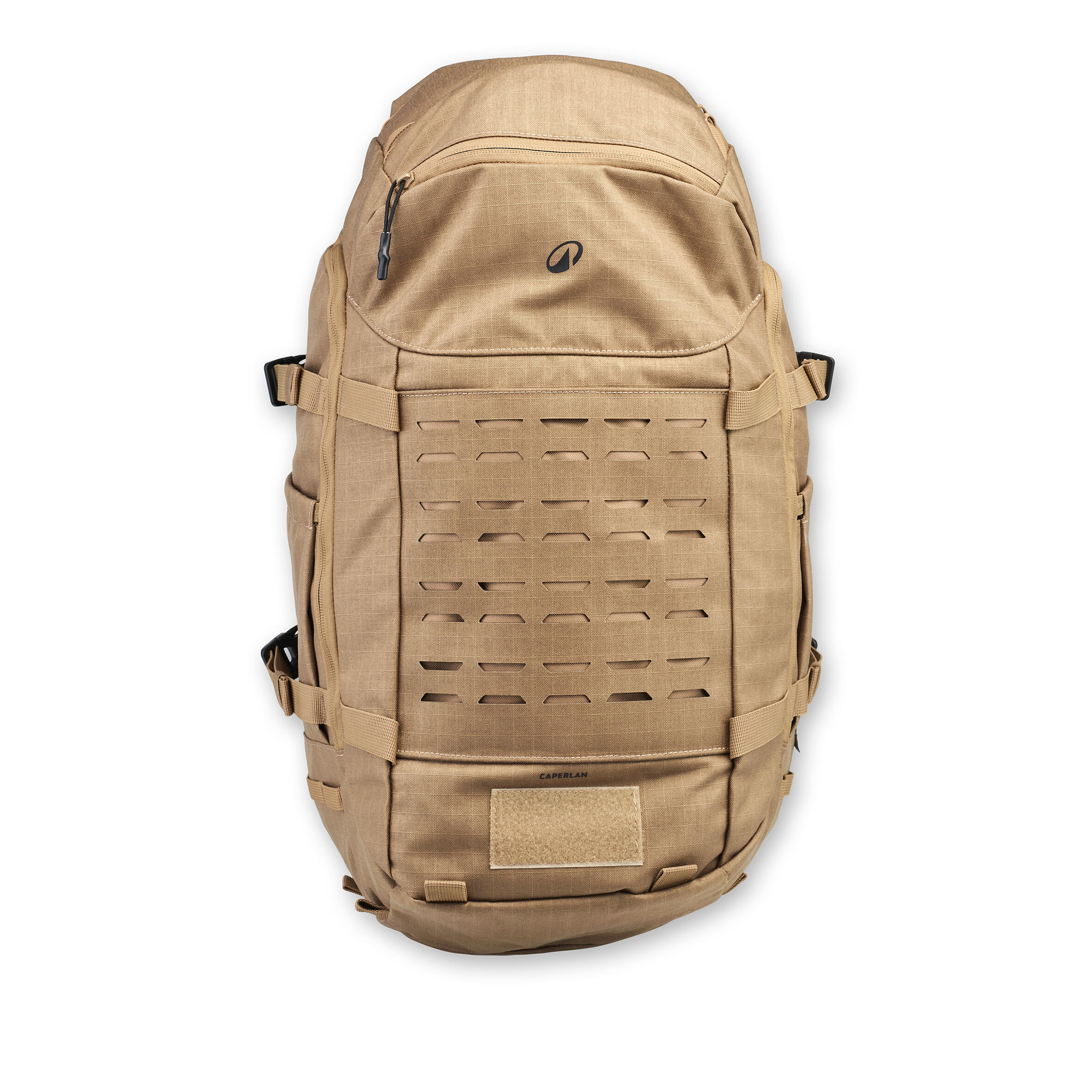
To add a personal touch, you can add a patch: there is a 5 cm high, 9 cm wide rip-tab fastening on the front at the bottom of the bag.
Also, inside the bag you’ll find a large rip-tab strap (23 cm wide by 6 cm high): it can be used to attach X-ACCESS pockets with rip-tabs for quick removal from the bag.
The little bonus
You have the option of fitting a warning light on the left or right sling (or both). On the black hypalon area. For example, you can choose to use a lamp with a red diode to signal you discreetly, or a lamp with a white diode to light you up and make it easier to see what you’re doing in the dark.
An extra-strong backpack thanks to Cordura® fabric
Our teams wanted to enhance the range with a very hard-wearing backpack. That’s why we chose Cordura®, a label often associated with equipment that has to stand up to the test (defence professionals, for example). It has the advantage of being very durable. What’s more, our laboratory tests have shown that it is 2 to 3 times more resistant to abrasion than P600, the conventional component found on most backpacks.
New architecture for the X-Access concept
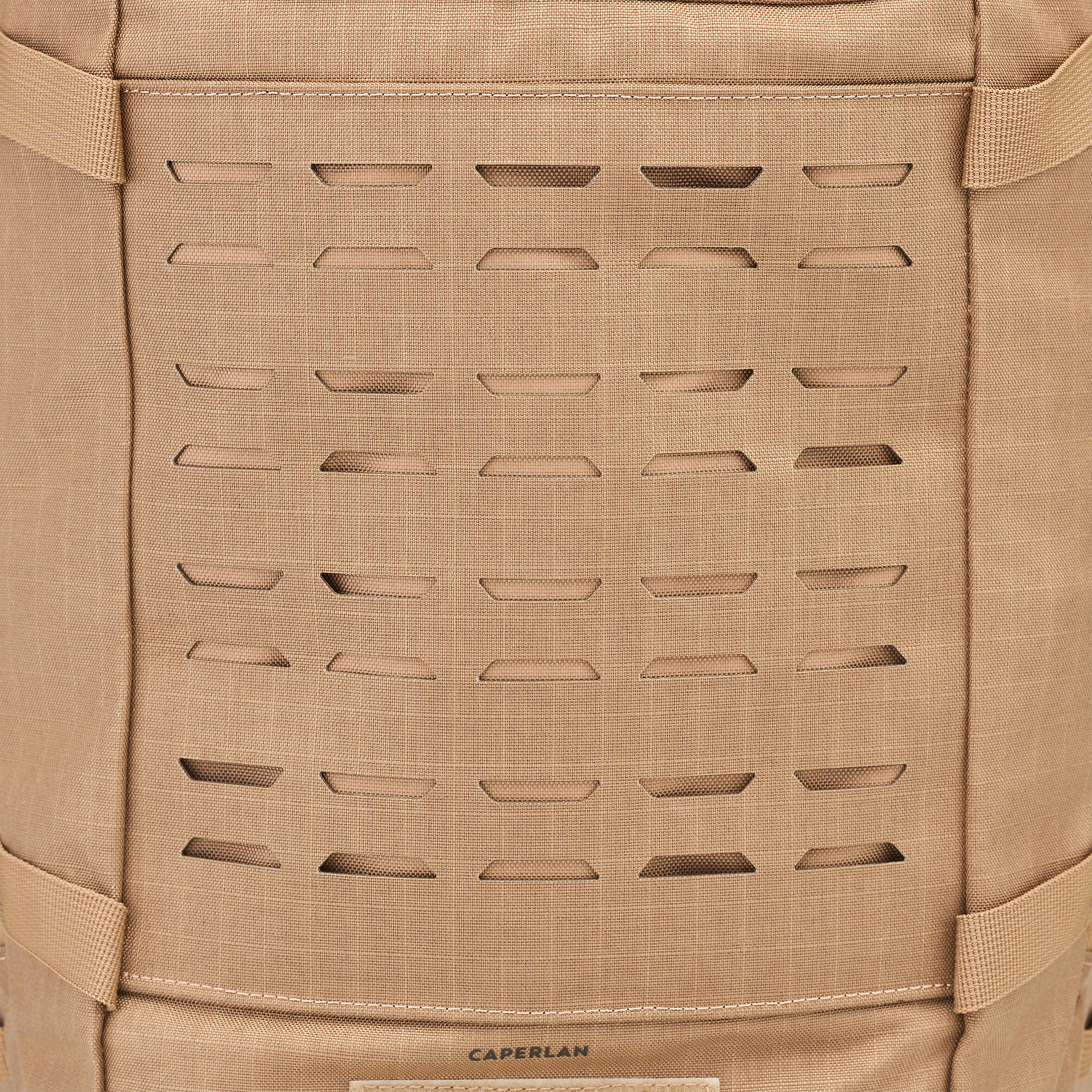
Some bags usually have horizontal strips (straps with MOLLe loops) which can then be used to attach X-ACCESS pouches to carry even more equipment. On this model, we chose a laser cut: it’s a modernised version of the sewn-on hook and loop system. In practical terms, several layers of components are heat-bonded and then cut to size: this guarantees the robustness of these laser cut strips and offers very good tensile strength.
Bag dimensions and volume
55 cm high
28 cm wide
24 cm total depth
Volume: 40 L
Waist circumference up to 140 cm with shoulder straps on sides
The volume of each backpack is measured using a standardised method: we then empty the balls into a graduated container which then displays the equivalent volume in litres. We then empty the balls into a graduated container, which gives us the equivalent volume in litres, with a tolerance of a few percents.
The different pockets and volumes of this model
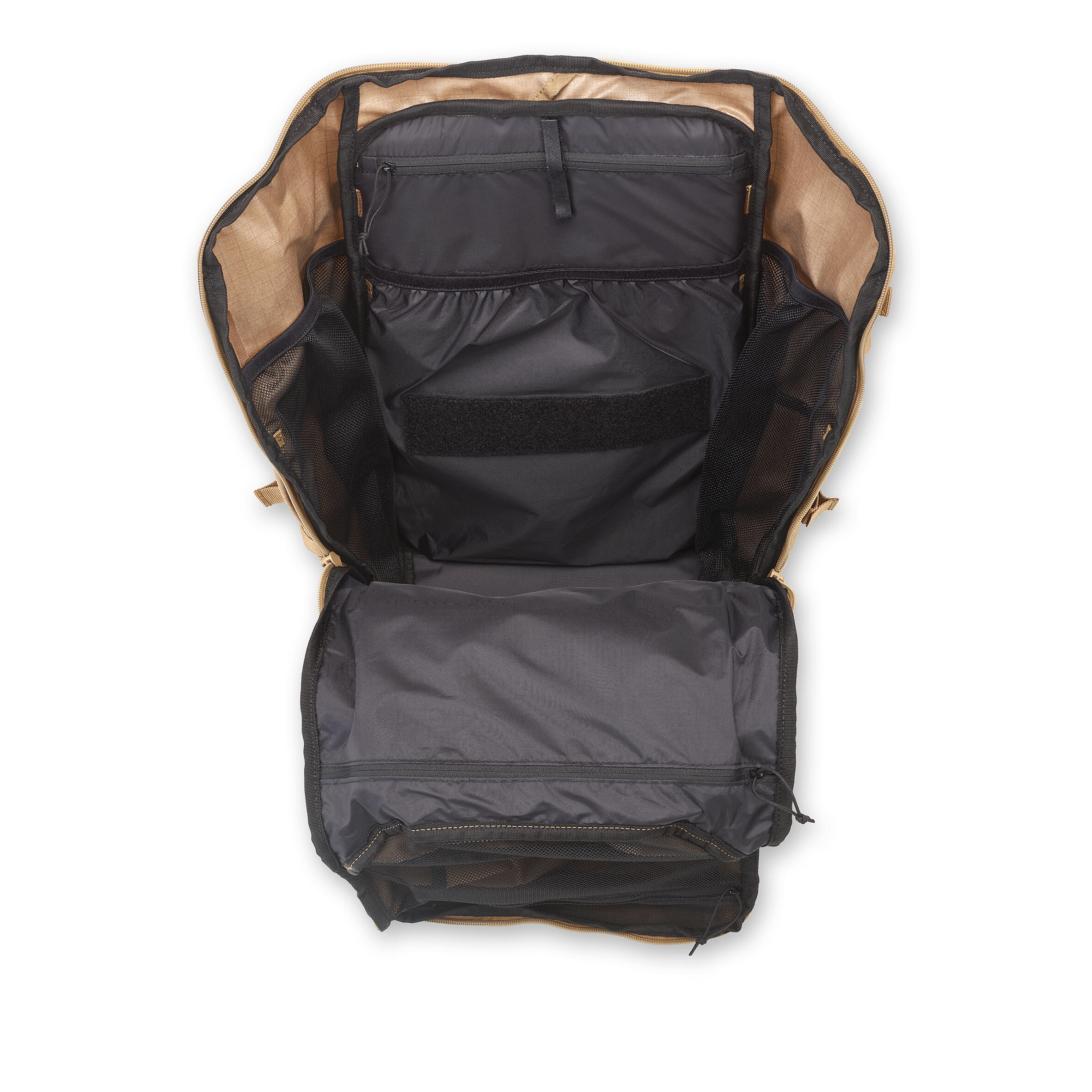
On the compartment side, there are:
>a central volume with, inside:
- 1 zip mesh pocket for quick identification of equipment present
- 1 zip pocket located below the mesh pocket
- 1 other small zip pocket on the back
- 1 elasticated pocket for slipping in a computer or water pouch (not included)
- 2 elasticated mesh pockets on the sides
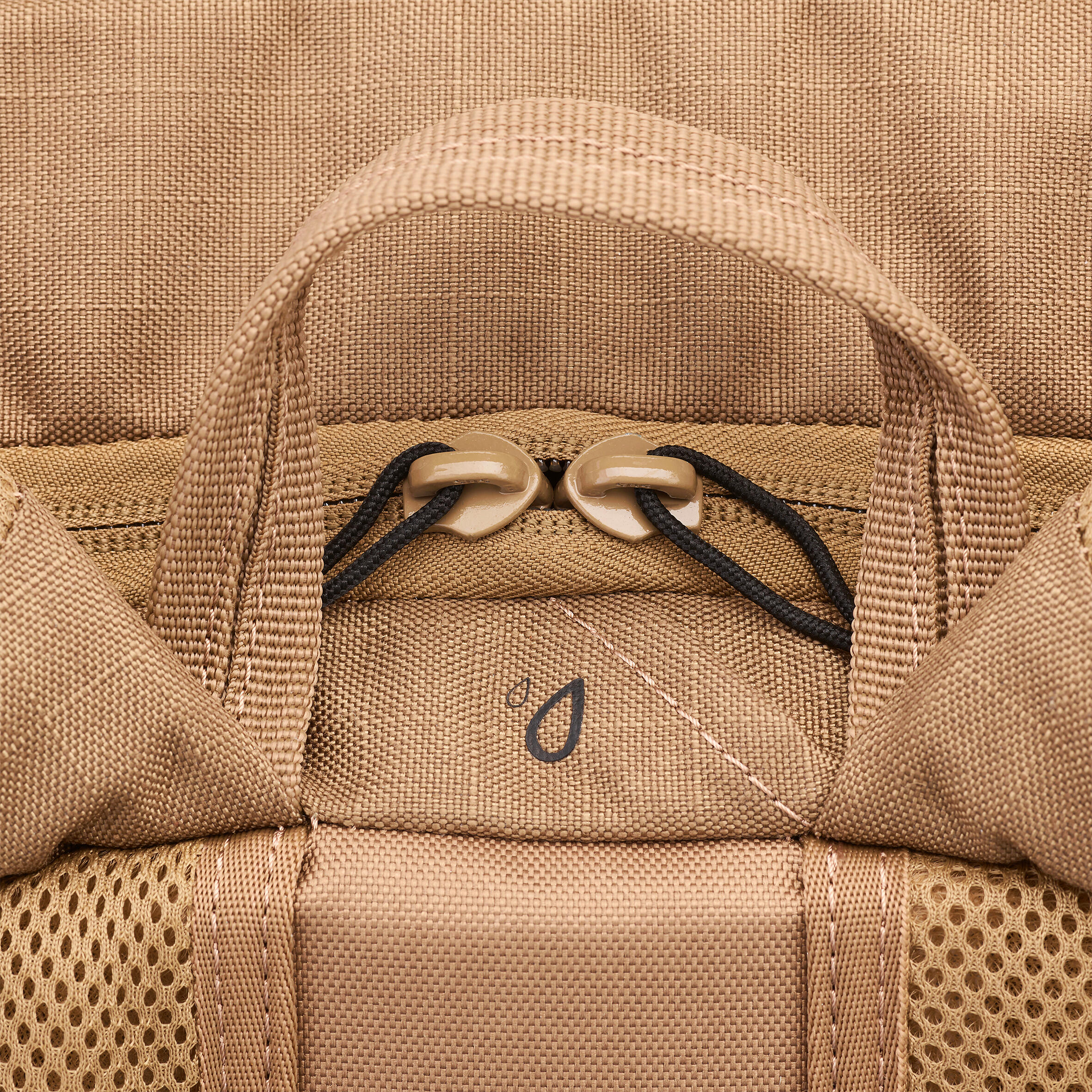
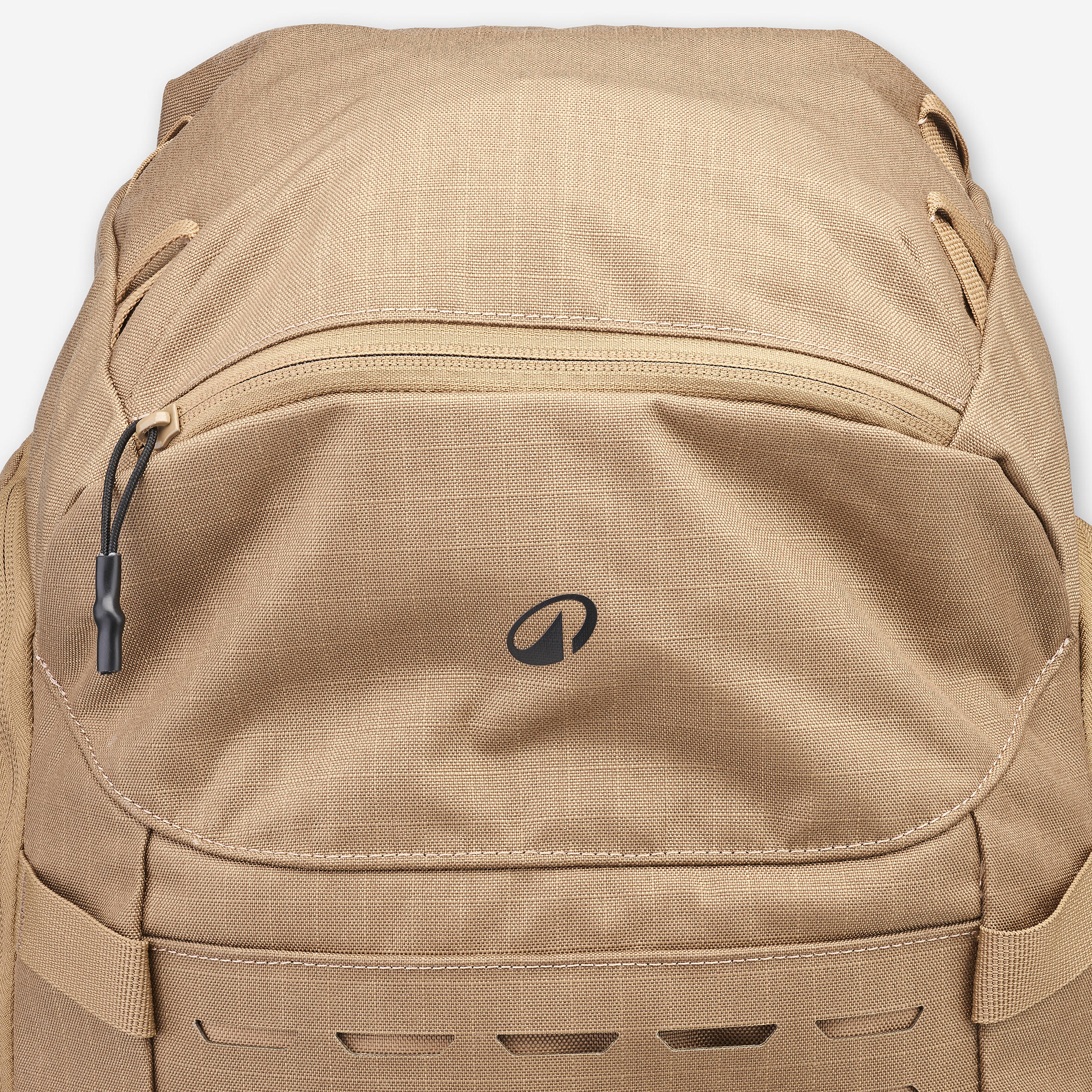
>a secondary pocket on the top of the bag, accessible from the outside so you don’t have to open the whole bag