About multifilaments
For multifilament strings, Decathlon recommends a maximum tension of 25 kg. These strings are recommended for people who are prone to tendinitis, youngsters, and people who don't break their strings often. Multifilament strings keep their tension very well and stay dynamic for a long time.
Tips from Decathlon
High tensions should be avoided as your performance will be affected. A loosely strung racket will let you play a more relaxed game, giving you more power without having to force it. Over time strings can become worn without breaking. They lose their elasticity and initial properties. The gauge (or diameter) also affects play. The smaller the gauge, the more power and spin you'll get. The larger the gauge, the more durable the strings.
About monofilaments
For monofilament strings, Decathlon recommends a tension of between 19 kg and 22 kg. To prevent injury, we strongly recommend against children under 15 using monofilament strings. These strings are best for players who break strings in under 10 hours of play because they quickly lose their tension (20% loss within three hours of play).
Which tension is best?
Moderate tension (18 kg to 23 kg) offers more comfort, spin and power. The flip side is that you'll have less control and accuracy.
High tension (>23 kg) provides greater control and accuracy. However, it is important to remain vigilant about the risk of tendonitis. In addition, spin rate and power will be reduced.
Details
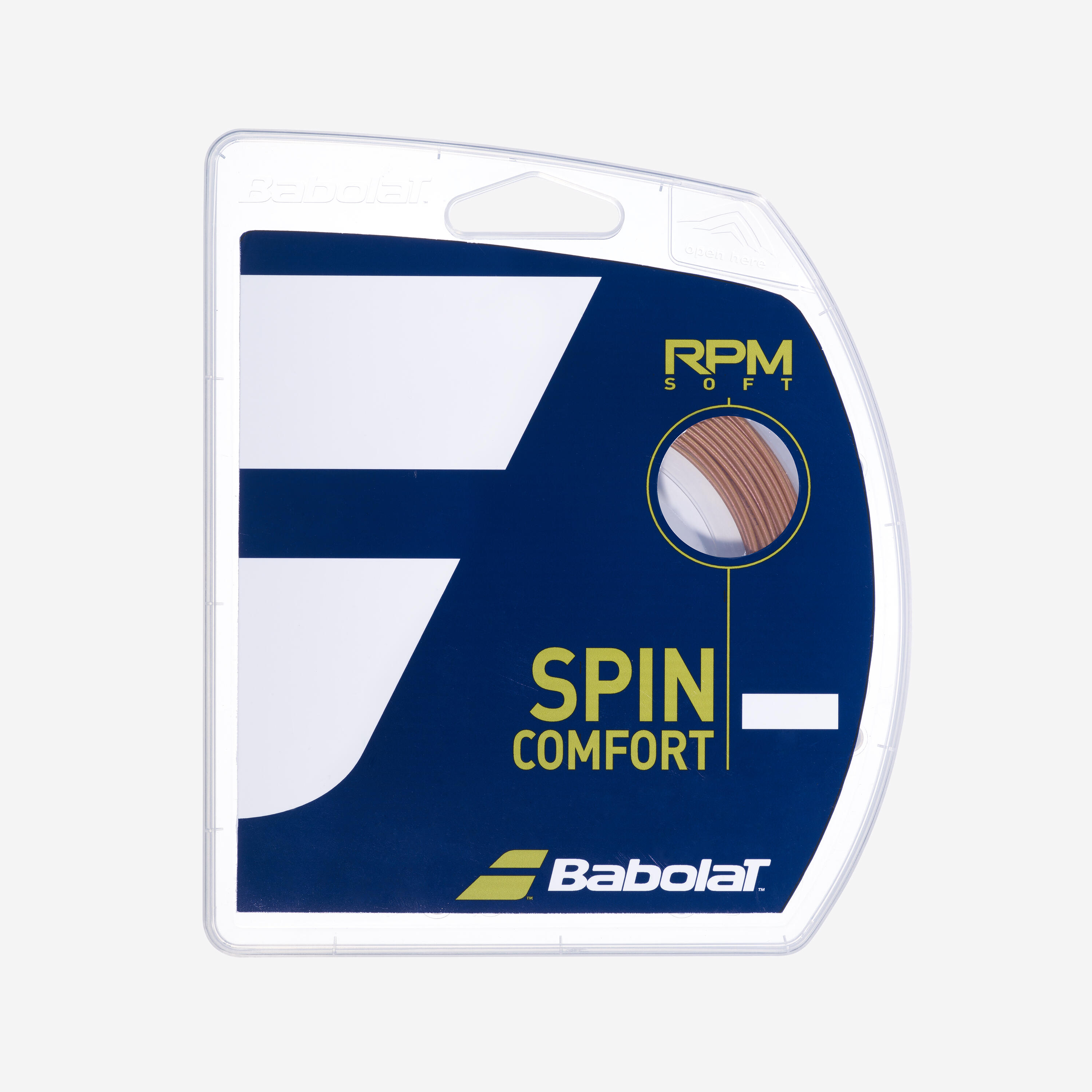
Gauge 1.25 mm.
12 m long.
Monofilament string
When should you change your strings?
Your racket's performance depends 50% on your frame and 50% on your strings! Be sure to take the time to choose the right strings.
For those who break strings often, change your strings every time they break.
For those who rarely or never break strings, Decathlon recommends changing your strings as often as you play each week. E.g.: if you play once per week, change your strings once per year. If you play three times per week, change your strings three times per year.